
MADRID - More than two months after a wave of migrants swept into Ceuta, Esperanza Ansede still avoids conversations about the crisis that has polarised the Spanish territory in north Africa.
Migration will be a key issue in Spain's November 29 general election, but on the eve of a landmark royal visit to Ceuta, Ansede prefers to defuse potential rows.
"We have Muslim colleagues. And when a colleague tells me, 'Good people and bad people entered,' I say, but the thing is, they must all be returned," Ansede, a 63-year-old teacher, told AFP.
"It was an invasion," she said of the unprecedented influx of more than 70,000 migrants from Morocco into the small city of around 80,000 inhabitants on July 30-31.
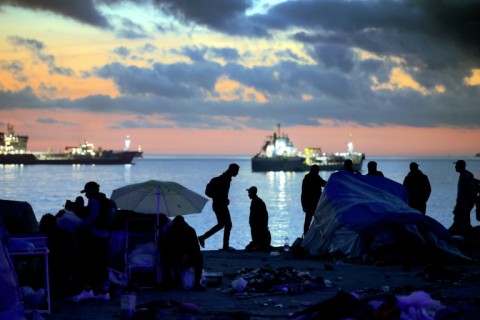
Most of the migrants returned in the following hours, but thousands remained in Ceuta for weeks in chaotic conditions.
Their continued presence in the streets and on beaches has fuelled local anger and eroded the popularity of Socialist Prime Minister Pedro Sanchez, a rare Western leader to regularly vaunt the benefits of immigration.
The government has directed more funding to Ceuta, setting up thousands of places in temporary shelters to accelerate returns.
But critics have slammed Sanchez's handling of the crisis, exacerbating pre-election polarisation between the Socialists and the main opposition conservative Popular Party, which runs the city.
'They can't be here'
With the remaining migrants from July's influx mostly in shelters or in the surrounding hills, they are a less common sight in the historic city centre.
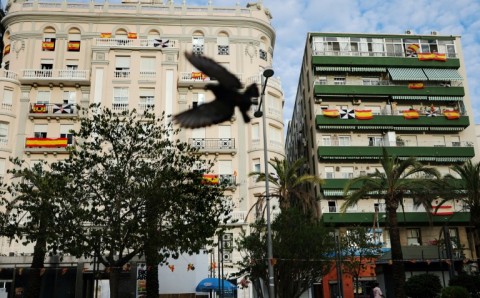
But a heavy police presence there underlines the exceptional situation, with red and yellow Spanish flags draped everywhere alongside the slogan: "Ceuta is not for sale, Ceuta must be defended."
The crisis has strained social cohesion in a city that prides itself on its diversity, with Muslims making up around 40 percent of the population.
"Of course it creates some social division," acknowledged Gema Miralles, a 54-year-old beautician.
"And what we all want -- Muslims, Hindus, Jews, Christians -- is for them to leave, to let us live, because they can't be here. They entered illegally," she said.
Eid is a public holiday in Ceuta, unlike in mainland Spain, while Easter Week processions leave from a church in the Muslim-majority neighbourhood of El Principe.
Ahmed Enfed-Dal, president of the El Principe residents' association, said he felt "let down" by people who "destroyed migrant shelters, stopping the Red Cross from giving them food".
After a climb up El Principe's colourful, winding streets, the nearby Moroccan border is visible and the Mediterranean Sea provides a dazzling backdrop.
Scores of migrants drowned during July's chaotic surge in their attempt to swim around a border barrier.
Royal visit
Enfed-Dal, 48, said he saw "a stream of people going up", his voice cracking as he recalled the dire conditions which the migrants endured.
According to him, El Principe's population of 12,000 people climbed to some 20,000 as residents created a makeshift centre to shelter women and girls for more than a month.
Dozens of migrants still roam the streets of the neighbourhood, while on a wall someone had painted the message: "El Principe is also Spain."
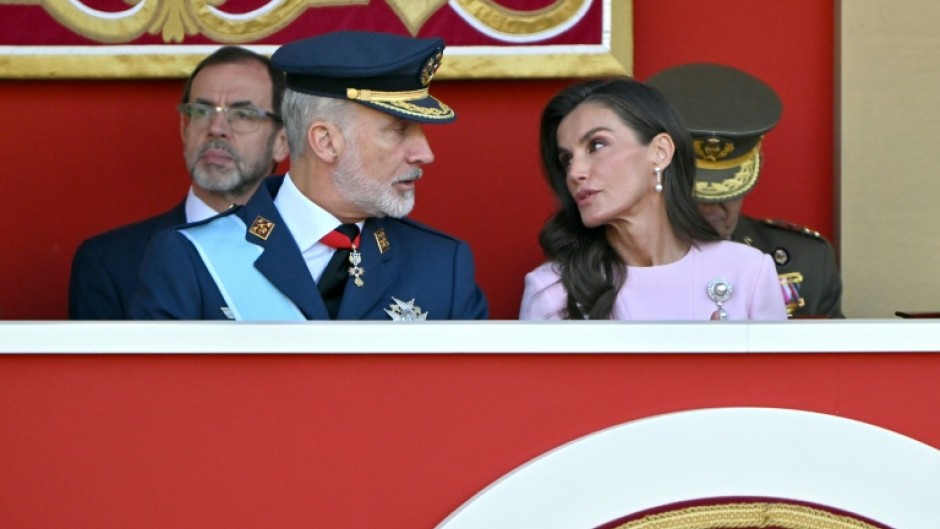
Tuesday's visit by King Felipe VI and Queen Letizia carries great symbolic weight and could test Spain's historically delicate relations with Morocco.
The last royal trip in 2007 sparked a diplomatic crisis with Rabat, which claims sovereignty over Ceuta and the other Spanish North African enclave of Melilla.
"He is our king, I wish he had come here to the neighbourhood, so we could feel like we're part of Ceuta too," local resident Ahmed told AFP.
- AFP