
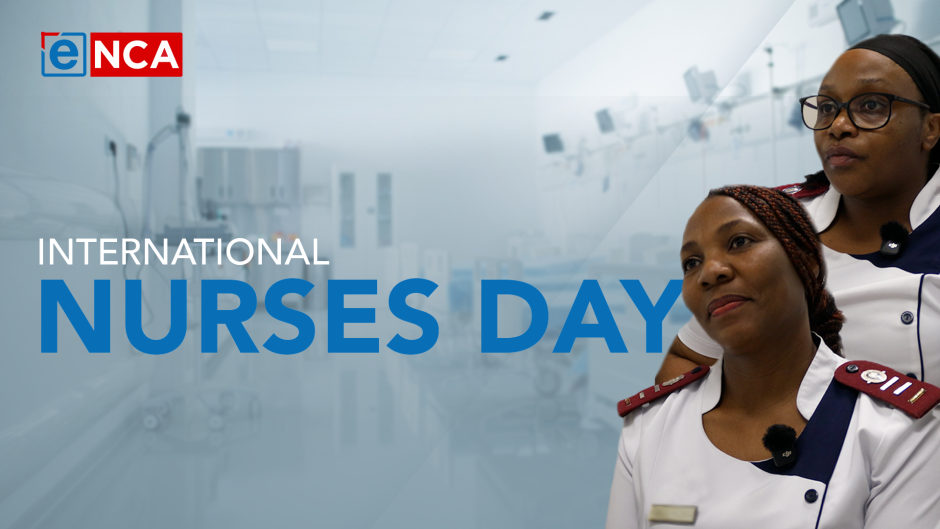
JOHANNESBURG - When their 4am alarm goes off, hitting snooze is hardly an option for two Joburg nurses.
For them, waking up means honouring a commitment to saving lives.
As 30-year-old Neo Mogale and 46-year-old Portia Maisva prepare for work, putting on their scrubs and name tags before heading to Netcare Olivedale Hospital, north of Johannesburg, they face the uncertainty of what each day may bring.
Their shifts begin long before they step through the hospital doors, past reception and various wards, and into the intensive care unit for a demanding 12-hour shift.
As the world marks International Nurses Day on 12 May, Mogale and Maisva’s story offers a glimpse into the resilience and compassion healthcare workers carry with them every single day.
Standard protocols on arrival
Mogale, a registered nurse working in the Cardiothoracic ICU, travels more than 30 minutes every morning.
Although her shift officially starts at 7am, she is expected to arrive earlier to check the disaster allocation roster, which is often colour-coded.
Each colour is linked to a nurse’s name and role in case of an emergency within the intensive care unit.
Once she establishes her role for the day, she signs in and immediately receives a handover report on her patients.
“It is in-depth,” she said, describing how the night shift updates the incoming team on admissions, comorbidities, allergies, medication, and events from overnight.
“Even if you know the patient, it’s just a recap,” she adds.
From there, nurses move on to prescription updates to better understand the medication patients are receiving.
“You want to understand the medication they’re on so you can be aware of any shortcomings, including side effects, or understand the desired outcome of that medication,” Mogale explained.
Mogale said every patient requires different levels of care.
“You try to put in the same amount of time for each patient, but it’s not always the case. Some patients need you more than others. It’s not to say you’re neglecting the other patient, but you’re balancing your work.
“And there are unexpected things that happen. Your patient could be fine and very jolly, and then suddenly their condition changes. You need to be flexible enough to adapt to all of that.”
No two shifts are the same
Some days involve routine care and ensuring the ward operates smoothly, while other days can quickly become chaotic when emergency patients arrive.
But Mogale said no two shifts are ever the same.
That is where teamwork and prioritising emergencies become crucial.
“You need to prioritise. What is more important for my patients at this moment? The less urgent things can be done afterwards. You deal with the urgent things first and then go from there,” she said.
Maisva, who is a Critical Care nurse also working in Cardiothoracic ICU at the clinic, knows the pressures of the ward all too well.
Having worked as a nurse for nearly 25 years, she has experienced the emotional and physical demands of the profession firsthand.
Like Mogale, she emphasises the importance of understanding the allocation roster and the handover report.
“Not that I don’t crack. Yes, you can crack as a person, but I try to stay strong for my younger colleagues because I work with many youngsters,” she said.
“As a professional, you try as much as possible to maintain professionalism. Even when things are not going right with the juniors, especially during resus or when it’s busy, you remind them of their role.
“That helps to calm them, and we need to be very specific with roles because if you’re not specific, everybody becomes confused.”
Although Mogale and Maisva have worked together since 2017, Maisva’s passion for nursing began long before she entered the profession.
Her older sister once underwent a craniotomy, a surgical procedure where part of the skull is temporarily removed to access the brain for treatment of tumours, aneurysms, blood clots, or swelling.
At the time, she did not fully understand the procedure.
But once her sister recovered, Maisva said she saw the power of healthcare workers firsthand.
“The fact that the nurses were able to take care of my sister and she’s alive today made me feel I needed to become a nurse and make a difference,” she said.
Saving lives and reflecting
Maisva said the hardest moments are when a patient is caught between life and death.
In those moments, her focus is on saving them.
“It’s not easy because, depending on how long the patient has been in the unit, you may have developed a bond with them. So, when they arrest, you’re grieving too.
“The hardest part is when you have to break the news to the family,” she said, describing it as a painful experience that requires emotional strength.
“You suppress your own grief and focus more on the family.
“Normally, when a patient dies, we do a death pause. We discuss things we could have done better or how we handled the situation."
Despite the challenges, Maisva said she still values the work she does deeply.
“I always want to help. I always want to make a difference, and I feel that when a person is at their most vulnerable, they need somebody to be there for them. That’s why I continue doing what I do,” she said.
Mogale shares a similar outlook.
She said every morning she wakes up with one question: “What can I learn, and how can I do better than yesterday?”