
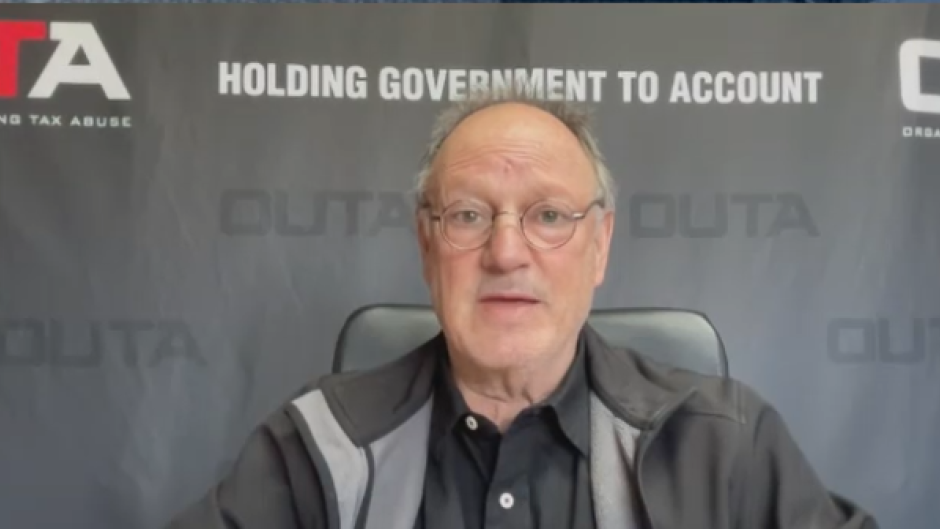
JOHANNESBURG - OUTA has warned that reducing the Road Accident Fund (RAF) levy will do little to fix the fund’s deepening financial crisis.
According to OUTA CEO Wayne Duvenage, RAF is underfunded but he argued that its problems are largely rooted in years of mismanagement, rising costs and maladministration spanning over a decade.
Duvenage comments come as the Department of Transport announced the consideration of a new funding model for the troubled fund, including a possible reduction in the RAF levy.
But Duvenage opposes the plan.
“When it comes to paying an annual fee to feed a levy such as this, as opposed to small incremental amounts as you fill up each time, it's much easier to collect it in the fuel price than trying to get people to pay a thousand or two thousand rand at the end of the year when they come to license their car, which is another thousand rand.
“So, we must find a solution to this problem, but the solution lies not necessarily in the revenue collection, it lies in the way the Road Accident Fund has been badly managed,” he said.
According to the RAF website, the main income it receives is a levy based on fuel sales known as the RAF Fuel Levy.
“The RAF fuel levy income is a charge levied on fuel throughout the country and the quantum of the RAF fuel levy per litre is determined by the National Treasury on an annual basis, whereas total fuel sales are influenced by a number of macro-economic factors," RAF said
There are two main variables that determine the income of RAF, this includes petrol and diesel sold per annum and the rate of the levy.
RAF explains how the levy can be viewed as a compulsory contribution to social security benefits which is used only for the specific purposes as provided for in legislation