
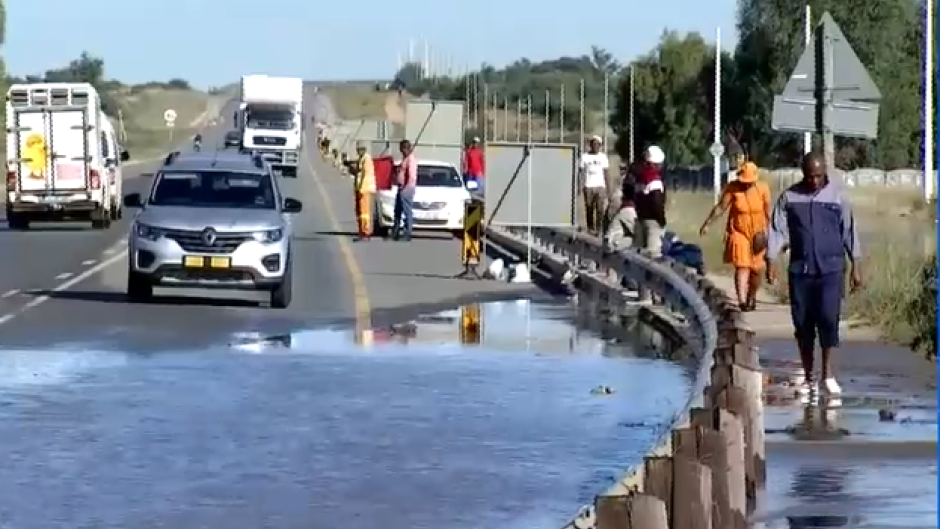
JOHANNESBURG – Despite government promises of decisive action on water security, South Africa’s water crisis remains unresolved, with shortages worsening in many areas, says Dr Ferrial Adam, Executive Director of WaterCAN.
Adam said while there have been pockets of improvement, systemic problems continue to undermine water provision across the country.
"Water boards are not all financially healthy, repair-and-maintenance turnaround remains too slow, and municipalities are failing to provide consistent water and sanitation services,” Adam said.
"The new regulations have still not been finalised in Parliament, and people do not yet see meaningful improvement at the tap."
Adam said water shortages are worsening or remaining unstable in many parts of the country because breakdowns and losses are outpacing repairs.
Non-revenue water -- water produced but not billed -- sits at about 47.4 percent nationally, with 40.8 perent lost through leaks and inefficiency.
"This translates into weaker reliability even where supply exists," she said.
While there has been some progress on large projects such as LHWP2, Adam said broader infrastructure delivery is hampered by corruption, opaque tender processes, and municipal financial fragility.
READ: Here’s what an expert says about drinking water when it is restored
"The growing water mafia is a major obstacle and needs to be confronted head-on before it gets out of control," she added.
Adam also said government’s National Water Resource Infrastructure Agency, approved and announced last year, has yet to improve coordination or investment meaningfully.
Municipalities are far from equipped to manage water sustainably. Blue Drop 2023 shows 277 water supply systems in critical condition, while Green Drop reports indicate 334 wastewater systems under regulatory surveillance. Almost every municipality has at least one wastewater treatment plant in a critical state.
"Systemic municipal capability gaps are widespread, especially outside the best-performing metros," Adam said.
READ: Water woes continue in Midrand as restoration could take days
The consequences of water insecurity are felt most acutely at ground level. Adam highlighted the impact on informal settlements, peri-urban communities, and low-income households, where weak infrastructure, high costs, and tanker failures leave residents vulnerable.
"Water affects everything we do," she said.
"In some schools, young girls do not attend classes during menstruation because there is no running water. In Johannesburg, civil society has described the situation as a human rights and economic emergency."
According to Adam, everyday operational failures -- broken pumps, leaks, poor maintenance, and financial instability -- are driving frequent water disruptions.
READ: CT residents urged to reduce water consumption as dam levels drop
"Nearly half of the water produced is effectively lost at a national level,” he said. “Until this core problem is fixed, reliability will remain fragile."
Adam said government’s current approach is largely focused on finance and planning, rather than delivering on-the-ground improvements.
She called for a whole-of-system turnaround, including:
• Protecting water sources and upgrading treatment
• Fixing reticulation networks
• Stabilising municipal finances and ring-fencing O&M budgets
• Enforcing corrective plans from Blue Drop and Green Drop with real consequences
• Open public dashboards to track outages, repairs, spending, and water quality
"Government cannot fix this alone," Adam said.
"It must work with business, civil society, and communities, treat water as a crisis, and act decisively."