
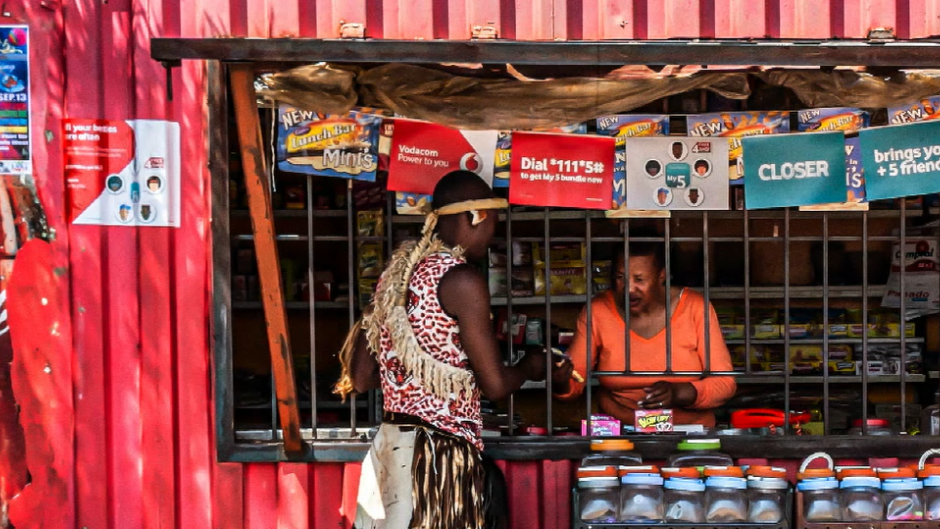
JOHANNESBURG - Spaza shops have always been part of everyday life in South African townships commonly known as ekasi.
Often, every block of the community had a tuck shop operating. It was where residents bought airtime, bread, and daily essentials.
If someone was baking at home, they could quickly rush out for vanilla essence or baking powder.
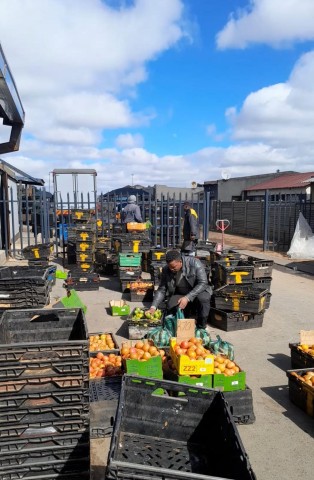
When Sunday arrived, and the fridge had no vegetables, everyone knew a nearby stall where fresh produce was sold at a reasonable price.
But that familiar rhythm is starting to change, as the sector faces growing pressure and rising tensions over who now controls the township market.
Recently, anti-immigrant protests have been flaring in different parts of the country, including Gauteng, KwaZulu-Natal and even the Eastern Cape, with protestors seeking that undocumented foreign nationals be deported.
READ | Foreign-owned business warned in Eastern Cape town
The growing number of foreign-owned businesses has further fueled concerns that their presence is squeezing the local economy and limiting opportunities for South Africans.
In Tembisa, these tensions are no different. They also took to the streets to protest against foreign-owned spaza shops.
The cost of survival for local business owners
Mary Mapalakanya, who owns a fruit and veg business, said she had been operating since 1991, a time when very few shops operated.
But fast forward to the present day, there are scores of shop owners, some of whom she claims are not even legal in the country.
She said what is frustrating is that local businesses are expected to comply with regulations, while others allegedly operate outside the law.
“What is killing us the most is that they do not pay for anything, not even electricity. If I were to dare not pay for my rates, the next day I would not have water. If I don’t pay for electricity, it gets cut off. Yet they work with us but do not play their part. Instead, after selling, that money goes back into their pockets,” she said.
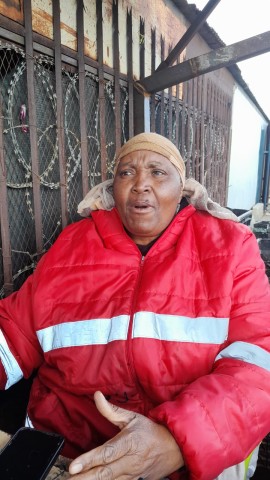
For Mapalakanya, this is difficult because every cent she makes goes towards keeping the business afloat, from transport costs to buying stock in Pretoria and paying workers.
She believes locals have lost their grip on the township economy and says government needs to intervene.
“We can't run after the government; they must work. You can't say the community has a role to play because it never ends well; they must intervene.”
Locals have been pushed out
A resident in the area, who asked not to be named, said the influx of foreign-owned businesses has pushed many local tuck shop owners out of business.
“We used to buy from people like Mary because we knew she stocked from the farm, but we do not know where the foreign national stock their products from. Sometimes it's on their shelves to the point of reaching expiration date, and they end up selling it, and children do not know what’s fresh or not,” he said.
‘We do not disturb anyone’
An Ethiopian national, Mulekun Mamo, operating a shop in the area, said the recent protests have left many foreign traders shaken, insisting that some of them are in the country legally.
“The government allowed us inside, gave us papers and said we can work and live, but when the people protest against us. They are wrong. If they have issues, they must ask the government.
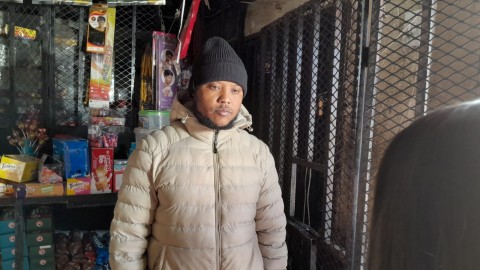
Mamo arrived in South Africa 15 years ago and has been operating his spaza shop for the past seven years.
He claimed the reason he left his home country for South Africa was that there is war.
“Back home, people are fighting each other. That is why we ran from there to here, because we know people are not fighting. Now they are fighting against us.”
He rejected claims that foreign-owned businesses are stealing opportunities from locals.
“We are not stealing jobs. We are trying to make a living. We do not disturb anyone’s business. We do not even sell the wrong things? We sell what people need,” he said.
He maintained that his business is registered.
“We have documents. Maybe there are those that don’t have, but we do,” he added.
Bylaw enforcement will allow for co-existing
South African Spaza Shop Association's Kgothatso Ramautso agreed with Tembisa residents, saying traditional, standalone family spaza shops have been pushed out.
With the local economy now operating the way it is, it has become "an unregulated wild west", plagued by compliance failures, illicit goods, and a complete detachment from the social well-being of the township.
“It began as an issue of economic competition, but it has mutated into deep-seated community frustration and anger. The frustration isn't just about who sells the bread; it’s about a feeling of economic dispossession,” he said.
He argued that there have to be stricter regulations in place, including licensing, compliance and enforcement of zoning laws.
This, he said, if followed, could allow coexistence among the two.
“There is a chance for co-existing only if bylaws are followed. But the Government must equally make sure that bylaws are considered and make sure that stores are audited,” he added.
President Cyril Ramaphosa, earlier in the month, warned against "opportunists" who he claimed had orchestrated anti-immigrant attacks on foreigners.
This, as he sought to reassure other African countries that have expressed concern about their nationals.
READ | Attacks on foreign nationals 'opportunistic' and 'criminal' - Ramaphosa
Ramaphosa said South Africa has "to deal decisively and within the law with the challenge of illegal immigration, which risks our social stability, governance, and national security.
Minister in the Presidency Khumbudzo Ntshavheni had also previously condemned what she called opportunistic attempts to hijack the genuine concerns of South Africans about high unemployment.
READ | Cabinet sounds alarm on fake images and videos about attacks on foreign nationals
She said there is ongoing work to address the problem of illegal immigration. This includes the strengthening of border management through the work of the Border Management Authority, speeding up deportations, dealing with criminality within the émigré communities, and protecting jobs and opportunities for South Africans.