
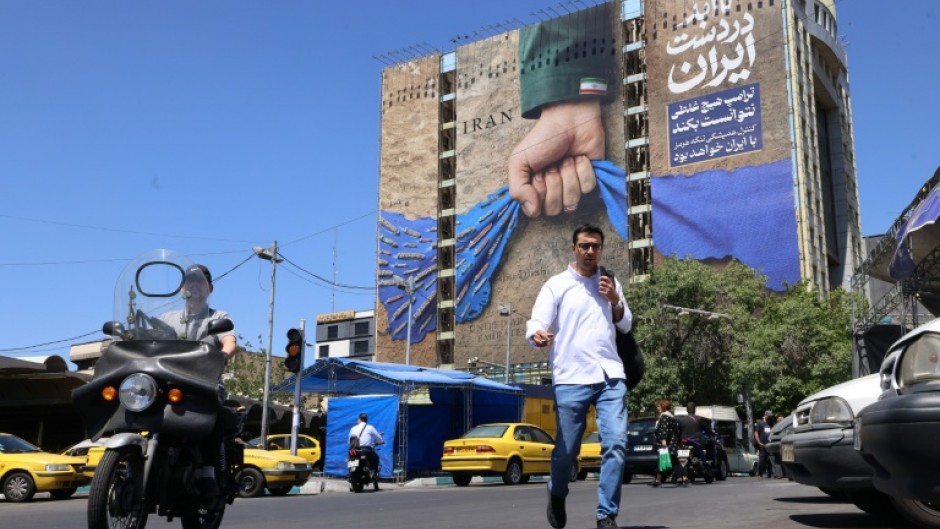
WASHINGTON - US forces attacked missile sites in southern Iran and boats trying to lay mines on Monday, US Central Command said, imperilling a fragile ceasefire and casting new doubt on a deal to end the Middle East war.
The strikes came as top Iranian negotiators arrived in Doha for the latest round of talks to end the months-long conflict, and as the Israeli military stepped up hostilities with Iran-backed Hezbollah in southern Lebanon.
Oil prices fluctuated in the wake of the US strikes, which may threaten any agreement to reopen the Strait of Hormuz, where an Iranian blockade has choked global fuel supplies.
"US forces conducted self-defence strikes in southern Iran today to protect our troops from threats posed by Iranian forces," Tim Hawkins, a US Central Command spokesman, said in a statement.
It gave no details of the attacks and said only that the targets included missile launch sites and boats trying to "emplace mines."
Iran's state-run broadcaster IRIB reported several loud explosions were heard in the vicinity of Bandar Abbas at around midnight local time (2030 GMT Monday).
It added the situation in the southern port city was normal and local authorities were investigating the cause of the blasts.
The strikes threatened a ceasefire that began April 8 as the United States and Iran struggle to reach an accord to end a war that has rattled the global economy with a severe disruption of energy flows.
Hopes of an accord took another blow when Israeli Prime Minister Benjamin Netanyahu vowed to "crush" Hezbollah in Lebanon. Iran has demanded that any peace accord apply to the fighting in Lebanon as well.
Trump also said in a social media post he expected Iran to hand over its enriched uranium to the United States to be destroyed, or have it destroyed in Iran with an international witness.
"The Enriched Uranium (Nuclear Dust!) will either be immediately turned over to the United States to be brought home and destroyed or, preferably, in conjunction and coordination with the Islamic Republic of Iran, destroyed in place or, at another acceptable location, with the Atomic Energy Commission, or its equivalent, being witness to this process and event," Trump wrote.
It was not clear whether he meant this would be part of a potential accord with Iran, and the commission he cited was abolished in 1974.
Earlier Monday, Trump said it should be mandatory for Saudi Arabia, the United Arab Emirates, Qatar, Pakistan, Egypt, Turkey, Bahrain and Jordan to sign up to the Abraham Accords, a set of agreements brokered in 2020 with nations historically hostile to Israel, as part of a peace deal with Iran.
Trump said he had spoken to the leaders of those countries on Saturday about efforts to end the war. Bahrain and the UAE have already signed the accords, along with Morocco and Sudan.
- AFP