
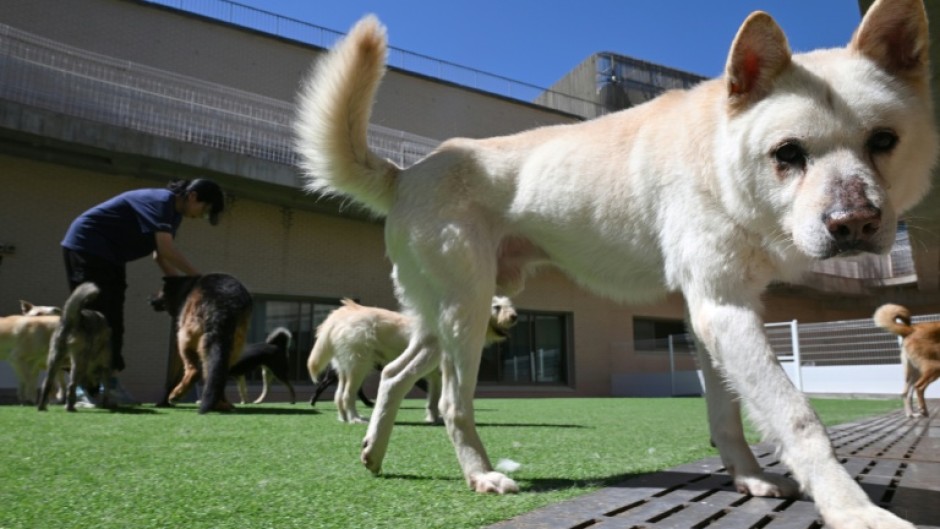
SEOUL - Electric prods rest against the wall near rusty cages containing dog skulls in an abandoned canine slaughterhouse in a South Korean town.
The deserted site in Pyeongtaek, south of Seoul, offers a glimpse into an industry rapidly disappearing as South Korea's landmark dog meat ban comes into force next year.
It also begs a question: what happened to the hundreds of thousands of dogs once bred for human consumption?
Historically regarded as a summer stamina booster, particularly among older and rural people, dog meat has steadily fallen out of favour as younger Koreans embrace dogs as pets and public attitudes shift.
In January 2024, the country passed a law banning the breeding, slaughter and sale of dogs for food. Once it takes effect next February, violators will risk prison sentences of up to three years.
As the ban looms, the industry is disappearing much faster than many expected.

Government figures show between 400,000 and 450,000 dogs were being raised for meat in 2024. Today, the agriculture ministry estimates just 20,000 remain on farms.
There are no statistics on dog meat consumption trends, but it is widely accepted to be popular among only a small minority of South Korea's 51 million people.
To help farmers transition, the government offered up to 600,000 won (about $390) for every dog they got rid of.
But where the animals went was not tracked.
"Our role is to verify that dogs are no longer present at farms or slaughter facilities before providing compensation," a ministry inspector told AFP on condition of anonymity.
"We are not involved in what was done with the dogs," he said.
- 'Already eaten' -
Data obtained by a lawmaker showed that by February, just 623 dogs had been adopted, and just under 500 were sent to shelters.
Most of the rest were likely killed, animal welfare groups and former farmers believe.
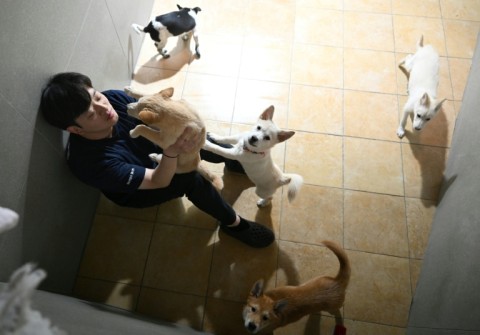
"If large numbers of rescued dogs had entered adoption programmes, animal groups like us would know about them," said Kim Young-hwan, a representative of animal rights group CARE.
"We haven't seen any adoption campaigns for dogs rescued from dog farms," he told AFP.
In over two decades, CARE says it has rescued and rehomed about 2,500 farmed dogs, most of them sent overseas.
Only about two dozen were adopted domestically, partly due to South Koreans' preference for small breeds better suited to apartment living.
Dogs raised for eating were often large breeds like Nureongi, also known as the Korean Yellow Spitz.
"In South Korea, a distinction has long been made between dogs raised for food and those kept as pets," Ju Yeong-bong, a former dog farmer, told AFP.
Asked about the fate of the thousands of unaccounted-for canines, he acknowledged they had likely "already been eaten."
That possibility is "infuriating," said CARE's Kim. But the reality is that the country's animal welfare groups lack the resources to rescue more dogs, he added.
- Legal contradiction -
According to the agriculture ministry, 1,265 dog farms, about 82 percent of the total, had applied to shut down as of May.
Ju, who also serves as a Christian pastor, started his dog farm in 1994 after finding he could not make a living from his ministry alone.
"I feel the dog meat ban is a betrayal," he told AFP.
"It was imposed for political reasons, without meaningful dialogue or adequate measures to protect our livelihoods."
Many other former dog farmers are trying to switch to other livestock businesses, but lengthy government licensing has made the transition difficult, Ju added.
For activists, the change in law will not only end the consumption of dogs, but also a "long-standing loophole" around their treatment, said Park Joo-yeon, a lawyer and head of animal rights group PNR.
Unlike cattle or pigs, dogs were never legally classified as livestock in South Korea.
This meant the industry operated for decades with no rules on humane husbandry and slaughter.
Dogs were commonly electrocuted, hanged, or beaten to death, animal rights activists said.
At the Pyeongtaek facility, AFP journalists saw abandoned tools allegedly used to electrocute dogs.
"They often remained conscious while their internal organs burned," Shin Joo-woon, a KARA campaigner, told AFP.
"Other dogs would witness the process."
KARA rescued 29 dogs from the Pyeongtaek farm last month and has filed a complaint against its owner for animal cruelty, which is outlawed.
By Jihye Shin
- Article by AFP