
JOHANNESBURG - A very small percentage of the country's municipalities (16%) achieved a clean audit. While 39% achieved unqualified audits, a significant majority of these (71 out of 99) still had issues with the quality of their financial statements, indicating underlying weaknesses in financial reporting and controls. More than half of the municipalities (117) received audit outcomes that were not clean or unqualified and, as a result, had to be assisted by the AG to provide proper statements.
The AG's findings paint a picture of a municipal landscape struggling with human capital and institutional capacity issues, with the City of Cape Town serving as a beacon of good practice. The AG has expressed concern over the audit outcomes of metropolitan municipalities due to their significant financial and social impact. Metros manage 57% (R350.88 billion) of the national expenditure budget, affecting 46% (8.1 million) of households. They are central to economic activity.
Auditor-General's local government report to parliament
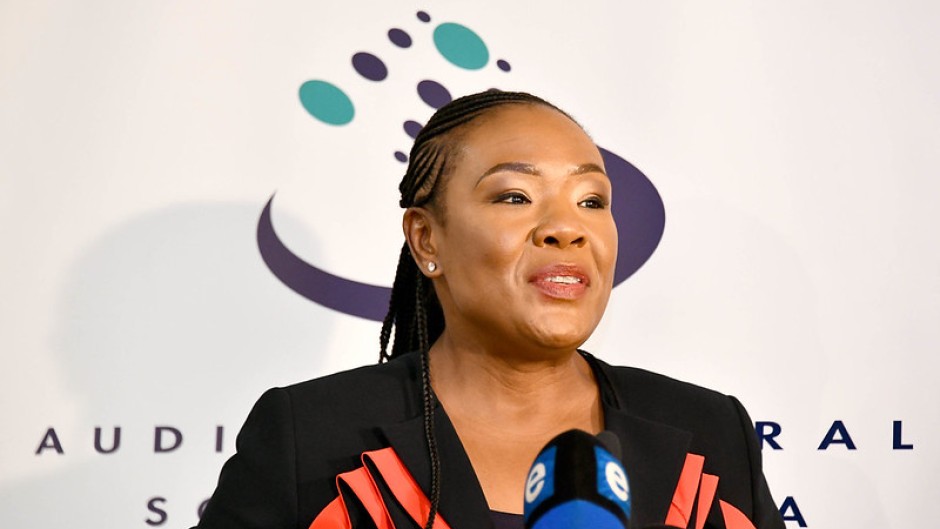
On May 28, 2025, Auditor-General Tsakani Maluleke presented a briefing to the Portfolio Committee on Cooperative Governance and Traditional Affairs (COGTA). The briefing focused on the audit outcomes for local government for the 2023-24 financial year, during which the AG provided a detailed overview of the current state of financial management within the country's municipalities.
The AG's mission is to strengthen South Africa's democracy by promoting oversight, accountability, and good governance within the public sector through effective auditing, thereby fostering public confidence.
The AG has questioned the competence of the financial officers and consultants employed by these municipalities, emphasising a lack of discipline and understanding of fundamental financial management and reporting principles among those responsible for these tasks.
While the number of municipalities receiving disclaimers of audit opinion decreased from 28 to 14, the AG believes this is still unacceptable. She says there is an urgent need for further improvement to eradicate such outcomes. Compounding these concerns, seven municipalities obtained adverse audit findings, signifying that their financial statements were considered entirely unreliable.
Further compounding the audit findings, 93 municipalities received qualified audit opinions, signifying inaccuracies within their financial statements. The Auditor-General noted that many municipalities are simply unable to publish credible financial statements. Maluleke says this critical inability raises serious questions about the competence of both administrative and political officeholders within these municipalities. The AG's statement points to systemic issues beyond mere oversight errors, suggesting a fundamental lack of skill and adherence to proper financial practices. This directly impacts transparency, accountability, and the ability of these municipalities to effectively manage public funds and serve their communities.
Political officeholders
In recognition of the fact that effective leadership significantly contributes to positive municipal outcomes, the Auditor-General is currently evaluating the performance of mayors and municipal speakers. Notably, out of 257 municipalities, only three were not audited: Mafube and Maluti a Phofong in the Free State, and Thaba Chweu in Mpumalanga.
These exceptions were due to their failure to submit financial statements.
A significant number of Free State municipalities are failing to submit their financial statements on time, impacting the quality of the submissions. Provincial leadership, particularly COGTA, is therefore urged to set clear policies for accepting late submissions.
Among all metropolitan municipalities, only the City of Cape Town achieved a clean audit. The Auditor-General is particularly concerned about the audit outcomes of these metro municipalities, noting their critical role in managing 57% of the national expenditure budget. This directly impacts around 8.1 million households and the nation's economic activity, as these metros are its very core.
Cape Town received a qualified audit, while Ekurhuleni, Johannesburg, and eThekwini obtained unqualified audits. However, Johannesburg did not provide a quality financial statement.
Among the metropolitan municipalities, 50% received qualified audits, including Tshwane, Buffalo City, Mangaung, and Nelson Mandela Bay, all experiencing governance stability challenges. Buffalo City has been particularly affected, with vacancies for key positions in electricity and sanitation management persisting for 80 and 24 months, respectively.
These metropolitan areas have consistently weakened their institutional arrangements. Given their resources and locations, they should not face difficulties attracting the necessary skills.
Furthermore, metropolitan municipalities are failing to budget adequately for proactive infrastructure maintenance. This is despite National Treasury's recommendation that 8% of the existing infrastructure budget be allocated specifically for this purpose. Such insufficient budgeting ultimately leads to poor service delivery, requiring urgent attention from the metros.
Explainer:
According to the Auditor General, the following is an explanation of each type of Audit outcome:
· CLEAN AUDIT OUTCOME: The financial statements are free from material misstatements (in other words, a financially unqualified audit opinion) and there are no material findings on reporting on performance objectives or non-compliance with legislation.
· FINANCIALLY UNQUALIFIED AUDIT OPINION: The financial statements contain no material misstatements. Unless we express a clean audit outcome, findings have been raised on either reporting on predetermined objectives or non-compliance with legislation, or both these aspects.
· QUALIFIED AUDIT OPINION: The financial statements contain material misstatements in specific amounts, or there is insufficient evidence for us to conclude that specific amounts included in the financial statements are not materially misstated.
· ADVERSE AUDIT OPINION: The financial statements contain material misstatements that are not confined to specific amounts or the misstatements represent a substantial portion of the financial statements.
· DISCLAIMER OF AUDIT OPINION: The auditee provided insufficient evidence in the form of documentation on which to base an audit opinion. The lack of sufficient evidence is not confined to specific amounts or represents a substantial portion of the information contained in the financial statements.
- by Nkateko Muloiwa
The information contained in the article posted represents the views and opinions of the author and does not necessarily represent the views or opinions of eNCA.com.