
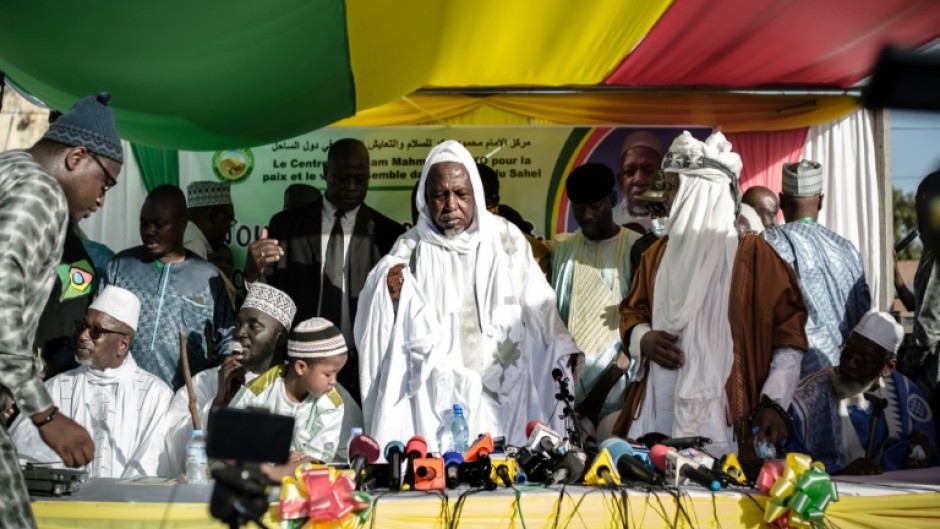
DAKAR - Can a prominent exiled imam critical of Mali's junta rally the population against the west African country's authoritarian rulers in the midst of jihadist expansion and economic crisis?
Mahmoud Dicko, who inspired protests that preceded the fall of former president Ibrahim Boubacar Keita in a 2020 coup, has been living in Algeria since 2023.
With his new movement, the Coalition of Forces for the Republic (CFR), Dicko is aiming to re-establish dialogue between various parties and overthrow the military.
An adherent of Wahhabism, a conservative and fundamentalist interpretation of Sunni Islam, he hopes to rally a population exhausted by over a decade of conflict.
At the end of December, Dicko called in a video for people to join his movement, saying: "Rise up, let's unite ... so that the current situation in our country ends".
"Everyone is suffering. We cannot live in a country where no one can speak anymore", declared the imam, who stands at the crossroads of religion and politics.
He delivered the message in both the Bambara and Fulani languages, a sign that he hopes to unite the different communities in Mali.
In recent months, jihadists affiliated with Al-Qaeda have waged a crippling fuel blockade and attacked industrial sites, suffocating the landlocked nation's economy.
The Malian army as well as Russian paramilitary allies are regularly accused of atrocities against civilians, while failing to stem jihadist attacks.
Political parties have meanwhile been dissolved and any opposition quashed.
- 'Situation cannot continue' -
"Dicko appears to be one of the last cards to play", a junta opponent in Bamako who has joined the movement told AFP on condition of anonymity.
"The current situation cannot continue", the person added.
Bakary Sambe of the Timbuktu Institute think-tank in Dakar told AFP that "Dicko is a figure who enjoys both religious respectability and popular support".
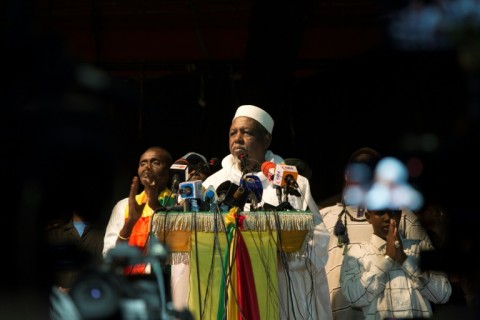
He could pave the way for dialogue with jihadists who have been extending their influence toward the country's south and west for several months.
"He was among those who advocated early on for inclusive inter-Malian dialogue, which implied open dialogue, including with armed terrorist groups", Sambe said.
The imam, known for his strict views, declared in his December message that he is "not with those who are not with Allah", raising questions about his willingness to maintain a secular state.
His close associates say he does not want to enter politics but will work to support someone who shares his religious views.
An initial supporter of the junta, Dicko was quickly sidelined and became a nuisance for the military, advocating a return to civilian rule.
Who is a part of the new CFR movement remains unclear since the opposition cannot speak out without fear of reprisal.
"We're talking about politicians from various backgrounds", Sambe said.
A close associate of the imam told AFP that the movement deemed an end to the military junta "necessary".
It is difficult to gauge whether the population is rallying behind the CFR. No popular mobilisation or rally has followed its creation.
- 'We don't take him seriously' -
Some in the junta dismiss Dicko's influence.
"The imam is trying to get back into the game", a ministerial advisor in Bamako told AFP. "He's less and less the one who can mobilise people, he simply doesn't want to be forgotten. We don't take him seriously".
For Sambe it seems "unrealistic" that Dicko and his supporters could "overcome the military in the immediate future".
Although the imam was long expected to return to Mali, he has not done so.
Rumours of his arrival in Bamako last February led the authorities to deploy a significant security presence in the capital.
Even his country of choice for exile -- Algeria, a nation with which Mali has strained diplomatic relations -- is a source of irritation for the junta.
- by Eléonore Sens