
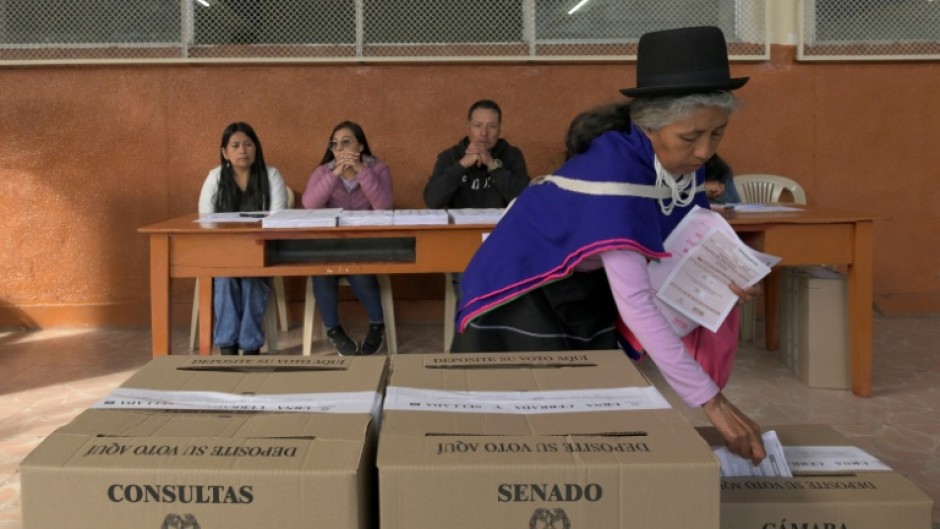
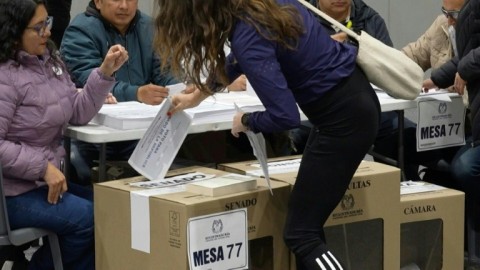
BOGOTA - Colombians voted on Sunday in legislative elections that will shape the final months of left-wing President Gustavo Petro's term and test whether the once-powerful right wing is poised for a political comeback.
About 40 million voters are electing nearly 300 lawmakers, deciding the makeup of Congress and providing a key temperature check weeks before a May presidential election.
Voting stations closed at 4pm and counting has begun, election authorities said, with results expected in several hours.
The new Congress will determine if Petro can push ahead with last-minute efforts to rewrite the constitution, a move critics say would weaken checks on presidential power.
Colombia's decades of brutal internecine fighting and the presence of still-powerful cocaine mafias have cast a long shadow over the campaign.
More than 60 political figures and community leaders were killed in 2025, including a presidential candidate who was assassinated in broad daylight in the capital, Bogota.
Rebels also detonated a pipe bomb in a major city, and a third of the country was deemed unsafe for campaigning.
The most recent Congress approved some of Petro's reforms, but as its term neared an end it rejected others, like overhauling the health care system or changing the tax code to bring in more revenue.
Petro hit back at frequent rallies in which he denounced the legislature, which has lost respect among many Colombians in recent years because of corruption scandals.
Colombia is also trying to emerge from 50 years of fighting spawned by a volatile mix of leftist rebels, paramilitaries and drug lords. Much of the violence has been fueled by the cocaine trade.
"For anything to change in this country there would need to be a miracle," said Marta Sandoval, a 39-year-old chef.
Damaris Pavon, a 37-year-old political scientist, praised Congress for standing up to Petro.
"Thanks to the Congress we have, for better or worse, they did not approve several reforms which were terrible for the country," Pavon said.
- Former guerrilla -
Against this febrile backdrop lies a battle for the political soul of the country.
Petro, a former guerrilla, became Colombia's first-ever leftist leader in 2022.
He was catapulted to the presidency by a broad progressive coalition that has since been riven by infighting and has struggled to govern.
Prone to social media outbursts, grandiloquent speeches and public spats, Petro has burned through more than 60 ministers in four years.
He is constitutionally barred from running again, but his allies hope to bolster their numbers in the legislature and continue reforms after he leaves office in August.
Petro has also proposed creating a constituent assembly that would rewrite the constitution.
He hopes that the new basic law would remake the judiciary, which his allies see as tilted to the right, and give the president more power to rule by decree.
- Familiar face -
But conservative voters hope for a political revival after years in the doldrums, a trend seen in other Latin American countries.
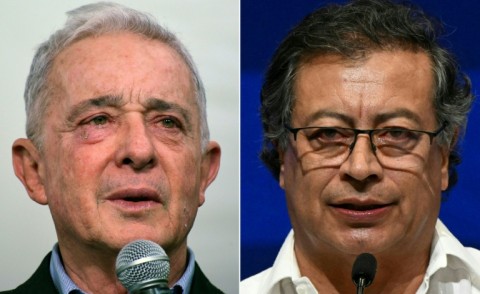
Powerful former president Alvaro Uribe is running for a Senate seat, hoping to rally those who backed his hardline security policies during his 2002–2010 presidency.
Despite a 2016 peace accord, dissident armed groups are expanding and rearming under Petro's stalled "total peace" negotiations.
"Scraping for votes has not been easy," Sandra Ramirez, a senator and former Revolutionary Armed Forces of Colombia (FARC) guerrilla, told AFP.
Campaigns have leaned on TikTok personalities, singers and AI-generated content to cut through a crowded field.
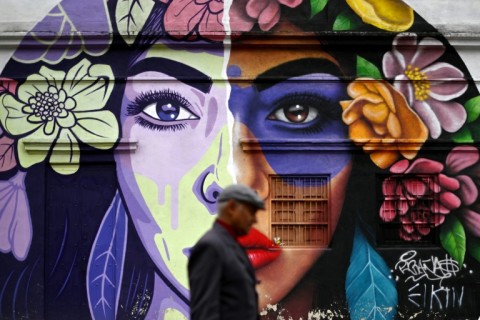
Two activists have even put forward an AI candidate known as "Gaitana" for one of the seats reserved for Indigenous communities.
Represented by a blue‑skinned woman wearing feather ornaments, Gaitana describes herself as an environmentalist and animal rights defender.
- by David Salazar