
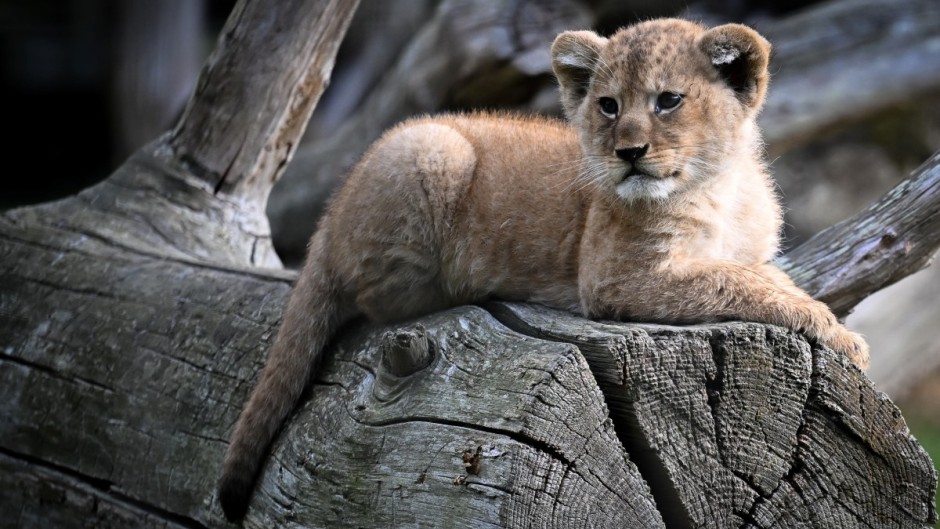
File: A lion cub. AFP/Lou Benoist
JOHANNESBURG - The recent recovery of stolen lion cubs has once again shone a spotlight on the growing illegal wildlife trade.
While details around the specific case remain under investigation, experts say the incident reflects a much broader and deeply entrenched problem.
According to Carina Bruwer from the Endangered Wildlife Trust, illegal wildlife trade is "rampant" in South Africa.
"We are a country extremely rich in biodiversity, with many species that are sought after, both dead and alive, in local and international markets.
"Wild animals occur in remote areas, which makes detecting illegal wildlife crime difficult.
"Coupled with often dire socio-economic outlooks, which sometimes cause people to engage in illegal activities, we have high rates of biodiversity crime," she explained.
Demands for exotic pets
In cases involving lion cubs, the demand is largely linked to the exotic pet trade.
"When someone cannot, or does not, wish to obtain a permit to sell, own or buy lions, they choose to go the illegal route," she said.
Cubs are often attractive to buyers because of their size and perceived manageability, but this comes with long-term consequences.
Industry representative Hannes Wessels says the reality is that many buyers underestimate what they are taking on.
“Lion cubs are used for petting or as a pet, the problem is they grow and then become a problem for humans,” he said.
While legal export of lions does occur under strict regulations, available data suggests that much of the illegal trade in live animals happens domestically.
However, this does not mean South Africa is isolated from global trafficking networks.
"We do know that there is illegal trade in body parts, particularly lion bones, that are primarily destined for the international markets," Bruwer said.
Not all wildlife crime is highly organised
Experts say there are generally two types of offenders: Opportunistic individuals and more structured operators.
"Criminal networks are likely to sell multiple individuals at a time and regularly engage in harvesting and trade, including of other species," Bruwer said.
"There are multiple drivers, but in the end, it all comes down to supply and demand. Wildlife markets exist because there is demand for the product, whether that be a rhino horn, a plant or a live lion cub.
"Prices are often inflated for commodities that aren’t legally available, such as rhino horn, or that are incredibly rare, like certain plants.
"Many wildlife markets, especially the illegal pet trade, are ‘luxury’ markets, where buyers are wealthy individuals willing to pay a premium to own an exotic animal. These high values often attract organised crime networks, whose primary aim is to make a profit," Bruwer said.
Wessels said illegal trade harms the industry.
South Africa does allow regulated wildlife trade under strict legal frameworks, including the National Environmental Management Biodiversity Act.
This means anyone wanting to capture, sell, transport or own a lion must have the necessary permits.
"Legal trade is authorised by law, illegal trade is sanctioned by law,” Bruwer explained.
A threat to conservation
Beyond the immediate criminality, the illegal trade in wildlife has serious consequences for conservation.
"Illegal wildlife trading is leading to the decline of various species populations, often when the species are already under threat from things like persecution due to human-wildlife conflict, climate change, and human encroachment into their habitats," Bruwer said.
It also diverts resources.
"Many species simply can’t sustain the level at which illegal harvesting occurs. This means that conservatisms have to spend more and more time on security and protection efforts, rather than the scientific endeavours they signed up for.
"It is also heartbreaking to watch a species that you are working to protect, be targeted by greedy individuals for nothing other than human enjoyment, with no consideration for the well-being of wildlife," she said.
What the public can do
Experts also stress the importance of responsible consumer behaviour.
"It is each consumer’s responsibility to verify the legality of any wildlife-related transactions. Whether this is buying an African Grey Parrot from a pet shop, fishing for a species that is only an allowable catch during certain seasons, or buying a cycad at a nursery, it is the consumer’s responsibility to do due diligence," Bruwer said.
"Consumers must ensure that not only do they have the necessary permits to own the species, but that the person that they are buying from is legally authorised to sell it to them."
Authorities are also urging the public to remain vigilant.
“Anyone who becomes aware of a crime being committed or suspects illegal activity must report it to the police,” Hawks spokesperson Zweli Mohobeleli Mohobeleli said.
In this case, authorities have not ruled out the involvement of additional suspects.
“We cannot rule out the possibility of other suspects being involved,” he said, adding that the suspects were actively looking for buyers.