
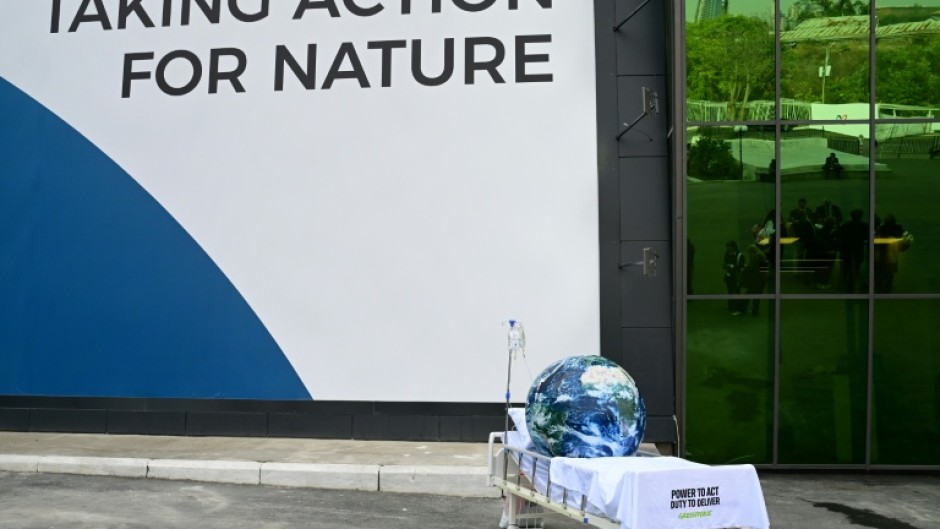
YEREVAN - The UN biodiversity summit enters a final day on Friday with nations still far from reaching a deal to revive a faltering pledge to stop destroying nature.
Representatives from most of the world's nations are participating in the COP17 summit but major disagreements remain despite nearly two weeks of hard-fought negotiations in Armenia.
Countries have still not agreed on how to tackle harmful subsidies, better finance the protection of Earth's land and oceans, and boost corporate contributions to a near-empty UN conservation fund.
A much-anticipated stocktake of global progress toward the world's nature pledges also remains unresolved despite initial optimism it would be adopted before Friday.
Governments have been pushed to bridge differences but progress has been slow and major breakthroughs scarce since the negotiations began on October 19.
"We need to see concrete priorities coming out of the negotiations. But unfortunately, this is not the case yet," Irene Wabiwa from Greenpeace International told reporters on Thursday.
On the eve of the summit's close in Yerevan, UN biodiversity chief Astrid Schomaker said countries "must be bold and innovative to find common ground".
"We must now find the stamina to push through to conclude our discussions on all the critical topics before us," said Schomaker, the executive secretary of the UN Convention on Biological Diversity.
- Nature pummelled -
The summit has been reviewing progress since nearly 200 nations pledged in 2022 to halt and reverse biodiversity loss in a historic moment dubbed the 'Paris agreement for nature'.
Under this accord, nations set 23 global targets for 2030 including protecting 30 percent of land and oceans, tackling pollution and invasive species, and restoring degraded ecosystems.
But ahead of the biennial nature talks, a UN assessment warned the pace of action was insufficient to meet almost all these targets.
One of the summit's major outcomes is the "global review": a set of concrete recommendations for turning lagging pledges into action and speeding up progress to the 2030 deadline.
But this remains in limbo after days of exhaustive deliberations.
"We cannot let this opportunity come and go when our planet's precious biodiversity is still being pummelled from all angles," said Catherine Weller from Fauna & Flora.
The other big sticking point is finding new sources of cash to fund conservation efforts around the globe -- a hot-button issue with public budgets under strain.
The European Union has been leading a charge for wealthy emerging economies like China to join in funding biodiversity protection but these talks have drifted into stalemate.
Efforts to refine the lacklustre Cali Fund -- a UN mechanism for sharing profits from corporations that use genetic data from plants and other organisms -- have also proved difficult.
The fund set out to raise one billion dollars a year for conservation in developing countries when it launched in early 2025. So far, it has attracted around $10,000.
At the last biodiversity summit in Colombia in 2024, talks ran overtime as nations haggled over conservation finance and ended without a deal. Negotiations resumed in Rome in early 2025 where an agreement was reached.
The COP17 summit is also expected to decide on Friday whether Panama or Ecuador will host the next biodiversity summit in 2028.
- AFP