
South Africa’s electricity pricing system is no longer working for the majority of its people.
What is presented as a technical exercise in tariff adjustment has become a mechanism that deepens inequality, entrenches energy poverty, and shifts the burden of systemic failure onto households who are least able to carry it.
Municipalities across the country are now applying to the National Energy Regulator of South Africa (Nersa) to increase the tariff.
This follows on from the price hike that Nersa awarded to Eskom in 2025.
eThekwini Municipality has applied for an average increase of 10.5%. That will bring the price of electricity to over R4.16 per kWh.
In addition to these ‘energy charges’, the City also wants to introduce fixed charges for ‘wire fees.’ Yet the underlying cost assumptions and supporting studies are not publicly available.
This lack of transparency is not incidental; it reflects a broader structural problem in how electricity pricing is governed in South Africa.
Electricity pricing decisions are often framed as financial or regulatory necessities. But electricity is not just another traded good.
It is a basic service that underpins all modern life. It enables cooking, lighting, communication, education, and economic participation.
When electricity tariffs rise beyond affordability, the consequences are immediate and severe. Across South Africa, households are not simply using less electricity; they are being pushed out of the system altogether.
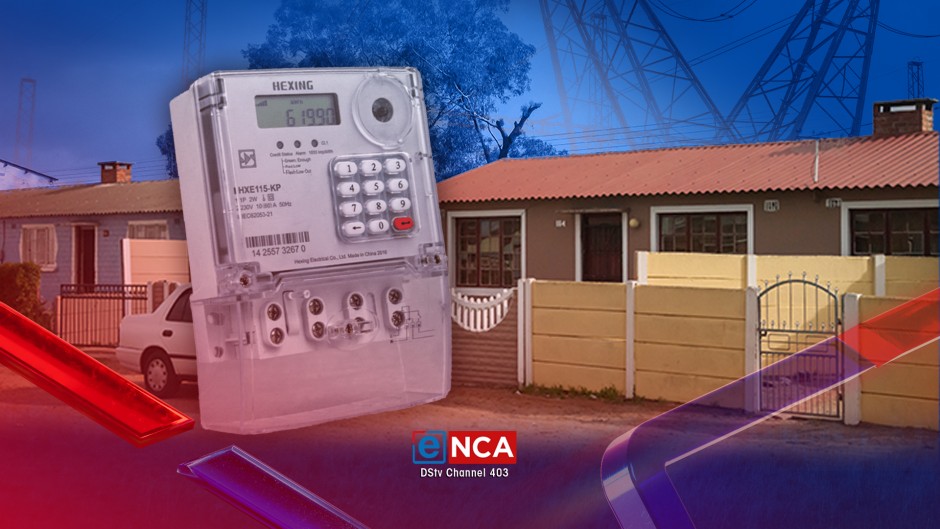
The evidence is visible in everyday coping strategies, such as households reducing consumption below safe and adequate levels; increasing their use of paraffin, wood and coal; and ‘self-disconnecting’ when they cannot feed prepaid meters.
These are not marginal issues. They are indicators of a deepening affordability crisis that is largely invisible in formal regulatory processes.
At the heart of the current system is the idea of cost-reflective pricing – the notion that tariffs should reflect the cost of supplying electricity.
On paper, this seems reasonable. In practice, it is deeply flawed.
First, Eskom itself is unable to supply electricity at a cost that is socially sustainable.
Passing these costs through to municipalities and ultimately to households simply transfers the crisis downstream.
It also creates a ‘utility death spiral’: the higher the price, the less electricity is consumed, and Eskom and the municipalities then demand yet higher prices to compensate for lost revenues.
Second, the move toward ‘cost-to-serve’ models and fixed charges benefits high-consumption users while penalising low-income households.
Recent tariff restructuring also eliminates inclined block tariffs, which work like progressive taxation: a low tariff is paid for the first block (up to 350 kWh), with higher tariffs for higher consumption.
The results are clear: low-consumption households face significant increases while high-consumption households see decreases.
Fixed charges penalise households that save energy.
This is not a neutral system. It actively redistributes from poor to rich, rewarding those who consume more while punishing those who consume less.
Third, cost-reflective pricing ignores environmental and health costs. The damage caused by coal-based electricity from air pollution to health and climate impacts is externalised.
Simply put, the real costs are quietly dumped on communities while the price tag pretends that everything is fine.
Communities bear these costs with sky-high levels of respiratory diseases on the Highveld and the Waterberg.
These costs are not reflected in tariffs or regulatory decisions.
A less acknowledged but critical issue is the role of electricity in municipal finance. For many municipalities, electricity sales generate surpluses that subsidise other services.
While some cross-subsidisation is normal, the current model creates a fundamental contradiction: electricity must remain affordable as a basic service, while also functioning as a revenue-generating instrument.
In eThekwini, this tension is particularly pronounced.
When tariffs increase to sustain municipal budgets rather than the actual cost of supplying actual ‘units’ to people, consumers effectively pay for broader fiscal shortfalls.
This shifts the burden of governance failures onto households, and especially poorer ones.
The widespread use of prepaid electricity has further transformed how energy poverty manifests.
Unlike the usual disconnections, prepaid systems make disconnection automatic and individualised.
When credit runs out, the power goes off instantly.
This form of ‘self-disconnection’ rarely appears in official statistics, but it is widespread. Community organisations across Durban report households cycling between short periods of access and extended periods without electricity.
This creates an unstable, fragmented form of access that undermines dignity, health, and safety. Therefore, tariff increases that ignore this reality risk deepening a crisis that is already severe but largely hidden.
Nersa is mandated to ensure that tariffs are fair, reasonable, and in the public interest.
Yet it increasingly finds itself caught between conflicting policy imperatives: cost recovery on the one hand, and affordability on the other.
In practice, its decisions are constrained by its own ‘methodology’, which is founded on cost recovery.
Since 2009, it has approved a succession of large increases without addressing the underlying structural issues: the rising costs of coal and the massive costs of the big new coal-fired power stations meant to supply cheap power to big industrial consumers.
Eskom is now in the process of negotiating subsidised tariffs for those big corporate consumers, which Nersa is likely to approve. The result is a system that is losing technical coherence and is socially untenable.
The problem is not just the level of tariffs; it is the structure of the pricing system itself.
A piecemeal approach, adjusting percentages year by year, will not resolve the underlying contradictions.
What is needed is a comprehensive, participatory review of how electricity is priced, funded, and governed in South Africa. Such a review should address:
· Transparency: Full disclosure of cost assumptions, municipal mark-ups, and revenue allocation
· Equity: Tariff structures that protect low-income households and reward energy efficiency
· Public purpose: Clear limits on the use of electricity as a municipal revenue tool
· Affordability: Recognition of cumulative impacts, not just annual increases
· Energy transition: Pricing that supports renewable energy, conservation, and social ownership
South Africa is in the midst of an energy transition.
But without addressing pricing, this transition risks reproducing or even deepening existing inequalities. Tariff structures should not:
· Penalise households that conserve energy;
· discourage small-scale renewable adoption; or
· entrench energy poverty.
Instead, they should actively support a just transition that includes poor households, promotes access to electricity, and enables participation in a cleaner energy future.
The bottom line is that electricity pricing in South Africa has drifted away from its public purpose. It no longer adequately balances financial sustainability with social justice.
It no longer reflects the lived realities of households. And it no longer commands public trust.
The eThekwini tariff application is not an isolated issue; it is a symptom of a broader systemic failure.
If regulators continue to treat tariff setting as a narrow technical exercise, the crisis will deepen.
But if this moment is used to confront the structural flaws in the system, it could mark the beginning of a more equitable and sustainable approach.
Electricity is too important to be governed by flawed assumptions and opaque processes. A full review of the pricing structure is not just justified, it is urgent.
By Siphesihle Mvundla