
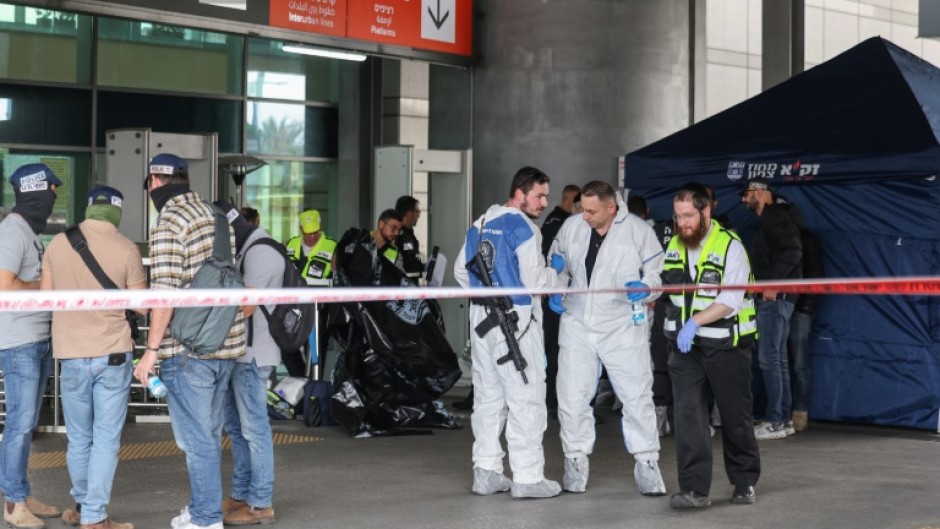
A stabbing in Israel's city of Haifa on Monday left one person and the Israeli Arab attacker dead, authorities said, in the first fatal attack since the Gaza ceasefire began in January.
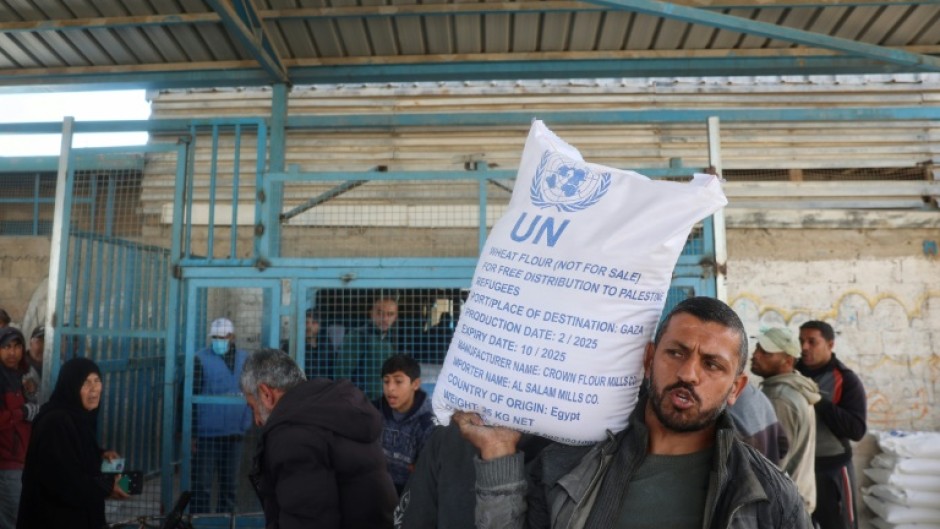
The stabbing came one day after Israel blocked aid to the Gaza Strip during an impasse over extending the truce in the Palestinian territory.
The six-week first phase of the ceasefire ended at the weekend. It had enabled the entry of vital food, shelter and medical assistance to Gaza. Israel's decision prompted the United Nations to call for an immediate restoration of the aid.
Monday's attack happened at a bus and train station in Haifa, a large coastal city in northern Israel home to a mixed Jewish and Arab population.
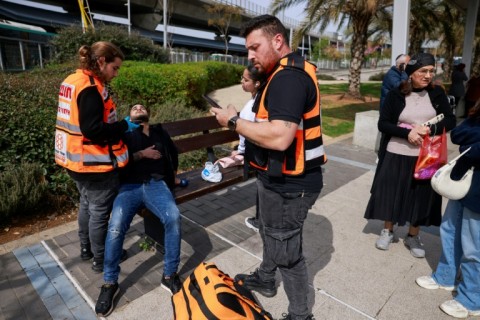
"A terrorist exited a bus, stabbed multiple civilians, and was subsequently neutralised by a security guard and a civilian at the scene," the police said.
Israel's Magen David Adom emergency service said they pronounced dead a man aged around 70, and treated four other wounded people.
Police identified the assailant as a member of Israel's Druze Arab minority.
After the Gaza war began on October 7, 2023, repeated attacks -- often involving knives -- killed or wounded people in Israel. Authorities often blamed "terrorists", a term they use for incidents linked to the Israeli-Palestinian conflict.
- Violence largely subsided -
Until Monday, the Gaza truce had coincided with a halt to such attacks within Israel, as violence largely subsided in Gaza after more than 15 months of war between Israel and Hamas Palestinian militants.
Hamas's attack that sparked the Gaza war resulted in the deaths of more than 1,200 people in Israel, mostly civilians, while Israel's military retaliation in Gaza has killed more than 48,300 people, also mostly civilians, data from both sides show.
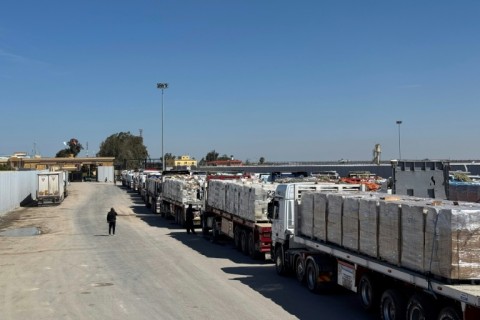
Truce mediators Egypt and Qatar accused Israel of blatantly violating the ceasefire deal by halting aid, a move which according to AFP images left trucks loaded with goods lined up on the Egyptian side of the Rafah crossing to Gaza.
The truce also saw the exchange of prisoners and hostages between Israel and Hamas.
Of the 251 captives taken during Hamas's attack, 58 remain in Gaza including 34 the Israeli military has confirmed are dead.
Early on Sunday Israel had announced a truce extension until mid-April that it said US Middle East envoy Steve Witkoff had proposed.
But Hamas has repeatedly rejected an extension, instead favouring a transition to the truce deal's second phase that could bring a permanent end to the war.
The Islamist group said the "decision to suspend humanitarian aid is cheap blackmail, a war crime and a blatant coup against the (ceasefire) agreement".
- 'Consequences' -
Israeli Prime Minister Benjamin Netanyahu's office on Sunday announced that "all entry of goods and supplies into the Gaza Strip will be suspended" and Hamas would face "consequences" if it did not accept the temporary truce extension.
On Monday, Germany's foreign ministry said: "Granting or denial of humanitarian access is not a legitimate means of pressure in negotiations." Berlin called on Israel to "immediately" stop blocking the aid.
Saudi Arabia and Jordan also denounced Israel's aid decision.
The European Union condemned what it called Hamas's refusal to accept the extension of the first phase, and added that Israel's aid block "risked humanitarian consequences".
Brussels called for "a rapid resumption of negotiations on the second phase of the ceasefire".
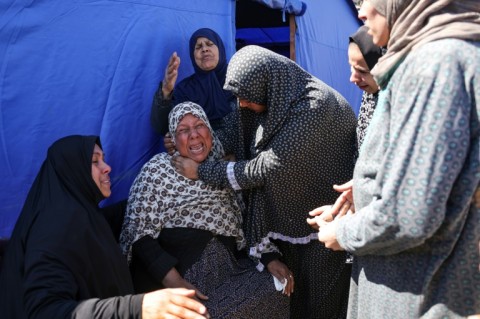
Gazans expressed concern over prices that they said immediately surged.
The war in Gaza destroyed or damaged most buildings, displaced almost the entire population and triggered widespread hunger, according to the UN.
Under the first phase of the truce, Gaza militants handed over 25 living hostages and eight bodies in exchange for about 1,800 Palestinian prisoners held in Israel.
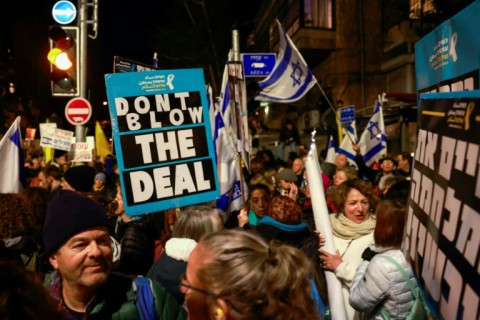
In Jerusalem late Sunday, AFP images showed protesters outside Netanyahu's residence calling on their government to make a deal that would bring home the remaining Israeli hostages.
Netanyahu's critics in Israel have regularly blamed him for delays throughout the months of truce negotiations.
Finance Minister Bezalel Smotrich, the leader of the far-right faction in Netanyahu's governing coalition, has threatened to quit if the war is not resumed.
The prime minister is also on trial for corruption charges, which he denies, and on Monday appeared in court to testify in the case, video images from the court showed.
On Sunday Israel's military said it had conducted an air strike targeting suspects in northern Gaza, as the health ministry in Hamas-run Gaza reported at least four people killed and six wounded in Israeli attacks.
The military on Monday said it had struck a "suspicious motorised vessel" off Khan Yunis in southern Gaza, and separately opened fire on two suspects who it said posed a threat.
By Menahem Kahana