
There is something deeply unsettling about being a woman in South Africa right now.
We are repeatedly told that our safety matters. We are told that government is listening. We are told that more resources will be allocated, that the police will do more, that cases will be prioritised and that the law will be strengthened.
But for how long are women expected to keep hearing the same promises while the fear remains?
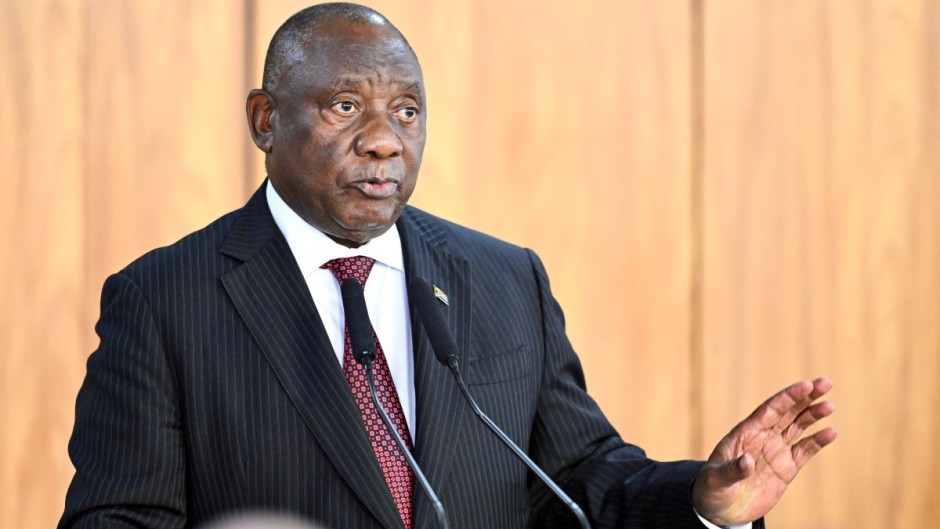
On Tuesday, President Cyril Ramaphosa addressed the nation about the government’s response to gender-based violence and femicide, following the discovery of the bodies of 11 women in Ekurhuleni since July. His address came in the same period that suspended Deputy National Police Commissioner Lieutenant-General Shadrack Sibiya appeared in the Randburg Magistrates’ Court facing five charges, including rape, sexual grooming of a minor and trafficking in persons. The allegations involve a 16-year-old girl and an 18-year-old woman. Sibiya has denied the allegations and has told the court that his sexual encounter with the 18-year-old was consensual.
How are women supposed to trust the people and institutions tasked with protecting them when a senior police official is himself before a court on serious sexual-offence charges?
This is not about declaring Sibiya guilty before the court has reached a decision. He is entitled to due process. But the allegations alone raise an uncomfortable question about trust in institutions that are supposed to protect women and children.
The police are one of the first places survivors are expected to turn to. We are told to report abuse, report threats, report missing people and trust that the criminal justice system will respond.
But trust is not created through speeches. It is created when a woman reports abuse and is taken seriously. It is created when evidence is processed on time. It is created when case dockets do no not disappear. It is created when a protection order actually protects someone.
President Ramaphosa himself acknowledged that what has been done has not been enough. In his address, he pointed out that seven years ago, in September 2019, he stood before the nation to speak about the same crisis.
That is long enough for a child to grow into a teenager. Long enough for a teenager to become a young woman. Long enough for families to bury daughters, sisters, mothers and friends while another generation grows up hearing that they must simply be careful.
And that is perhaps where the problem lies.
Women are being told to be careful.
Don't walk alone.
Don't walk at night.
Don't trust strangers.
Watch your drink.
Share your location.
Check your surroundings.
Get home before dark.
But how much more can women change their lives to accommodate the violence of men?
At some point, the question has to shift from “What can women do to stay safe?” to “What are institutions and society doing to stop men from harming women?”
The President announced several measures in his address. Government says more resources will be allocated through the Medium-Term Budget Policy Statement. Sexual Offences Courts are being expanded, forensic and DNA processing is being strengthened, and the law has been tightened to make it more difficult for perpetrators of gender-based violence and domestic abuse to obtain bail.
He also directed the police and Justice Department to conduct a national case-recovery operation focusing on unresolved murders, attempted murders, rape and serious sexual offences involving women and children. Within 60 days, government must identify unresolved cases, cases awaiting forensic evidence, cases where suspects have been identified but not arrested, and cases where investigations or prosecutions have been unreasonably delayed.
There will also be women's safety audits to identify broken streetlights, overgrown public spaces, abandoned buildings, unsafe transport routes and poorly secured parks. Government says the results will be published so communities can see what has been identified, what has been fixed and what remains outstanding.
These are important commitments.
But South African women have heard commitments before.
In 2019, government spoke about strengthening the criminal justice system, addressing case backlogs and delays in DNA testing, improving rape kits and increasing resources to fight gender-based violence.
So this time, the question should not only be: What is government promising?
It should be: How will we know that it has happened?
If there is going to be a 60-day audit, South Africans must be able to see the results. If there are unresolved rape and murder cases, communities deserve to know whether those cases are moving. If there is a forensic backlog, we need to know whether it is actually being reduced. If municipalities identify dangerous public spaces, we need to see whether those spaces are being fixed.
Because a promise without implementation eventually becomes another speech.
The President said that visible policing in Ekurhuleni has been significantly increased. But even he acknowledged that the country cannot simply “police our way out” or “arrest our way out” of gender-based violence. Prevention has to happen before a woman is murdered.
Women should not have to become prisoners of precaution simply because the country has failed to make them safe.
The President said no woman should have to calculate where she can walk, what time she can travel, what she can wear, whom she can trust or whether saying no could put her life in danger.
That should not be a presidential speech.
It should be the reality of being a woman in South Africa.
Seven years after government first stood before the nation to confront this crisis, we should not still be asking women to wait for change.
We should be able to see it.
Because South African women do not need another reason to be angry.
They need a reason to feel safe.
By Dikeledi Ramabula