
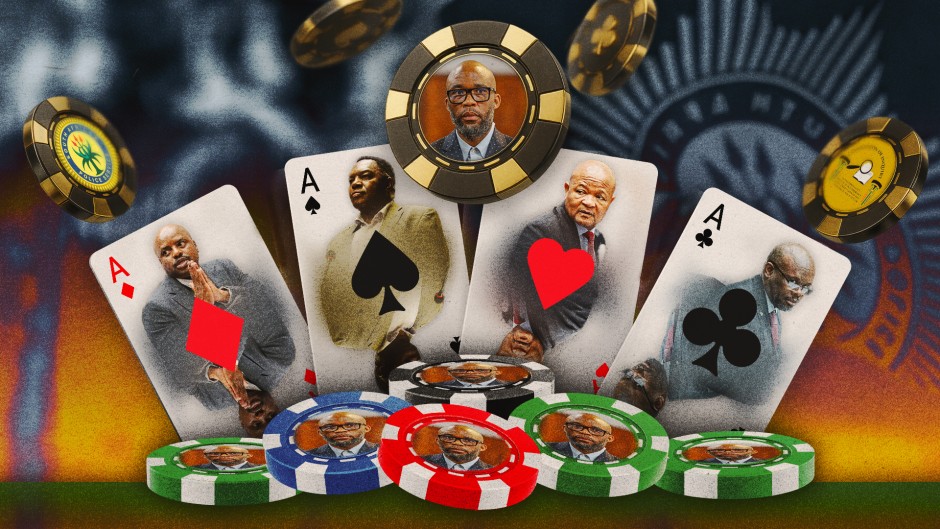
JOHANNESBURG - From one explosive press briefing to a national inquiry.
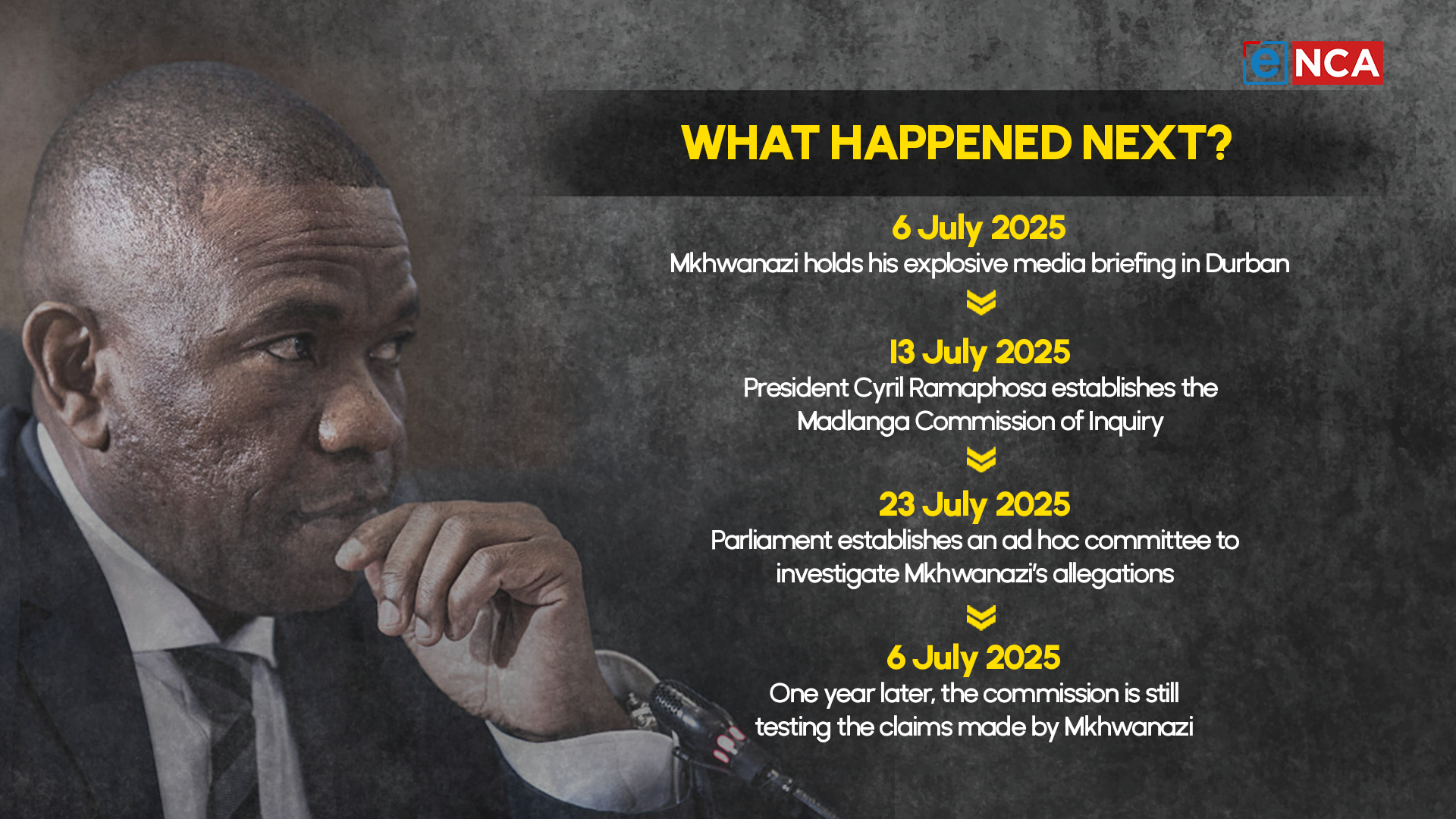
Exactly a year ago, on 6 July 2025, Lieutenant-General Nhlanhla Mkhwanazi addressed the media in a bombshell press briefing that sent shockwaves through South Africa’s criminal justice system.
Dressed in SAPS combat camouflage and flanked by members of the SAPS Special Task Force (STF), Mkhwanazi made allegations that would ultimately lead to one of the country’s most closely watched commissions of inquiry.
The briefing, which lasted more than an hour, saw Mkhwanazi allege that senior figures within the criminal justice system had deliberately obstructed investigations into politically sensitive killings.
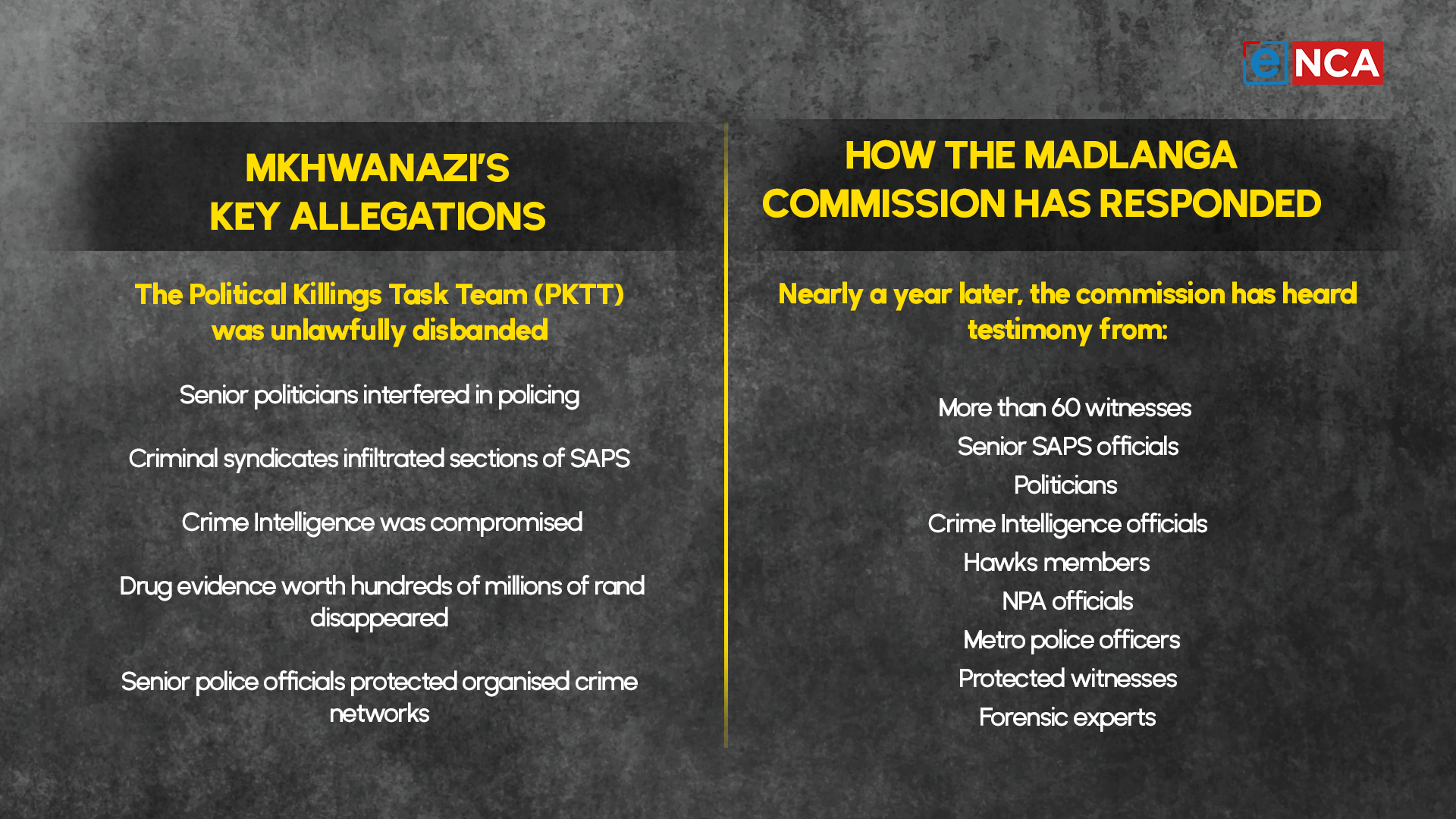
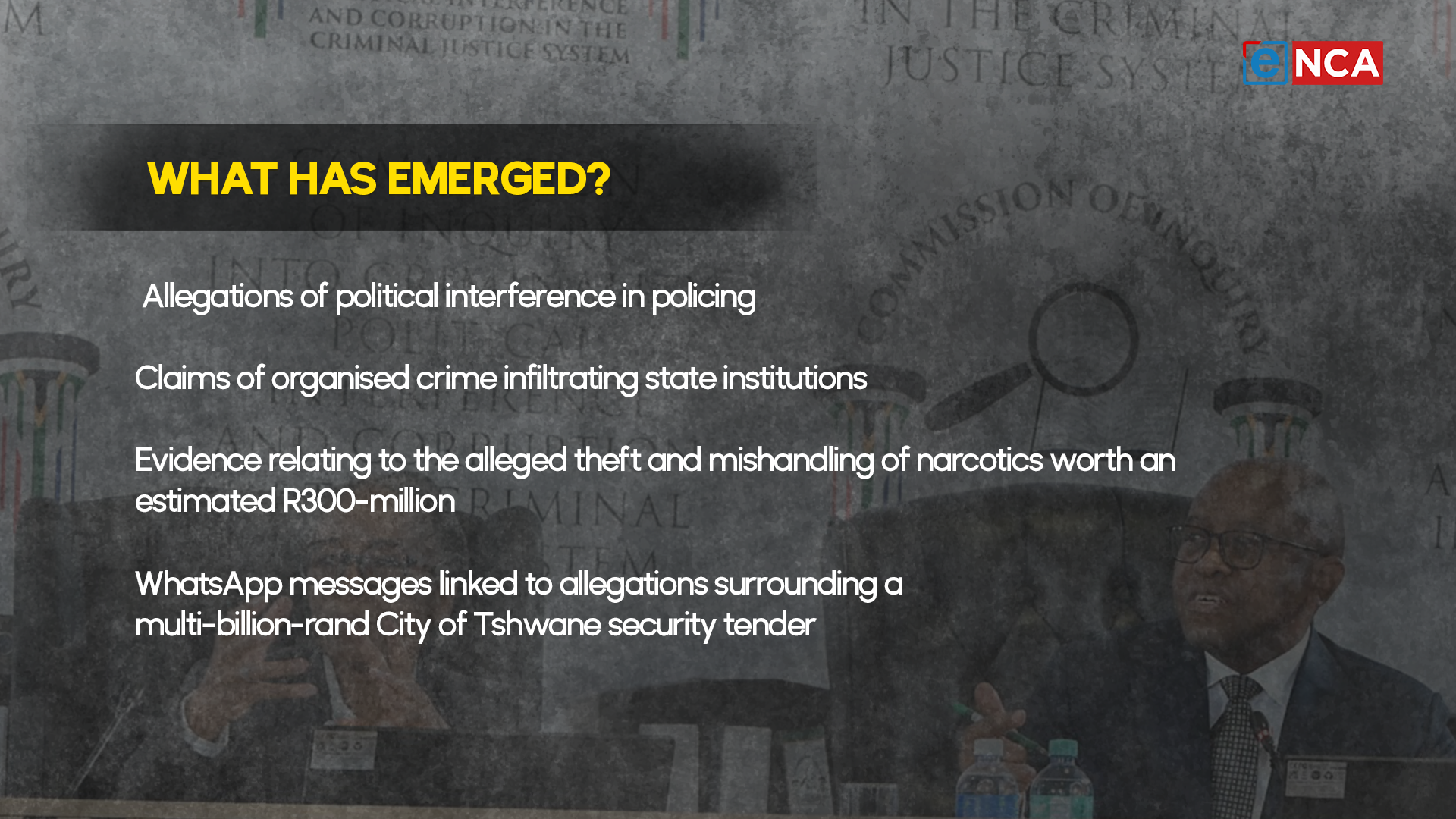
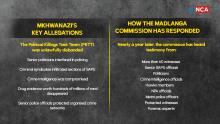
He accused Police Minister Senzo Mchunu, Deputy National Police Commissioner Shadrack Sibiya and others of dismantling the Political Killings Task Team (PKTT).
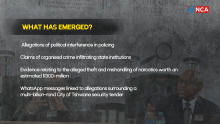
Mkhwanazi alleged that 121 case dockets had been removed from the PKTT in KwaZulu-Natal and left to gather dust in Pretoria, effectively stalling investigations.
He also alleged that politicians, members of the judiciary and businesspeople were linked to a criminal syndicate.
READ | 121 dockets to be returned to the Political Killings Task Team
Mkhwanazi further alleged that evidence recovered from the cellphone of accused underworld figure Vusimuzi “Cat” Matlala linked Mchunu to unauthorised communications through an associate, Brown Mogotsi.
He also alleged that Matlala, who was arrested in May 2025 on attempted murder charges, had been awarded a controversial R228-million SAPS healthcare contract.
Within days of the briefing, President Cyril Ramaphosa announced the establishment of the Madlanga Commission of Inquiry into Criminality, Political Interference and Corruption in the Criminal Justice System.
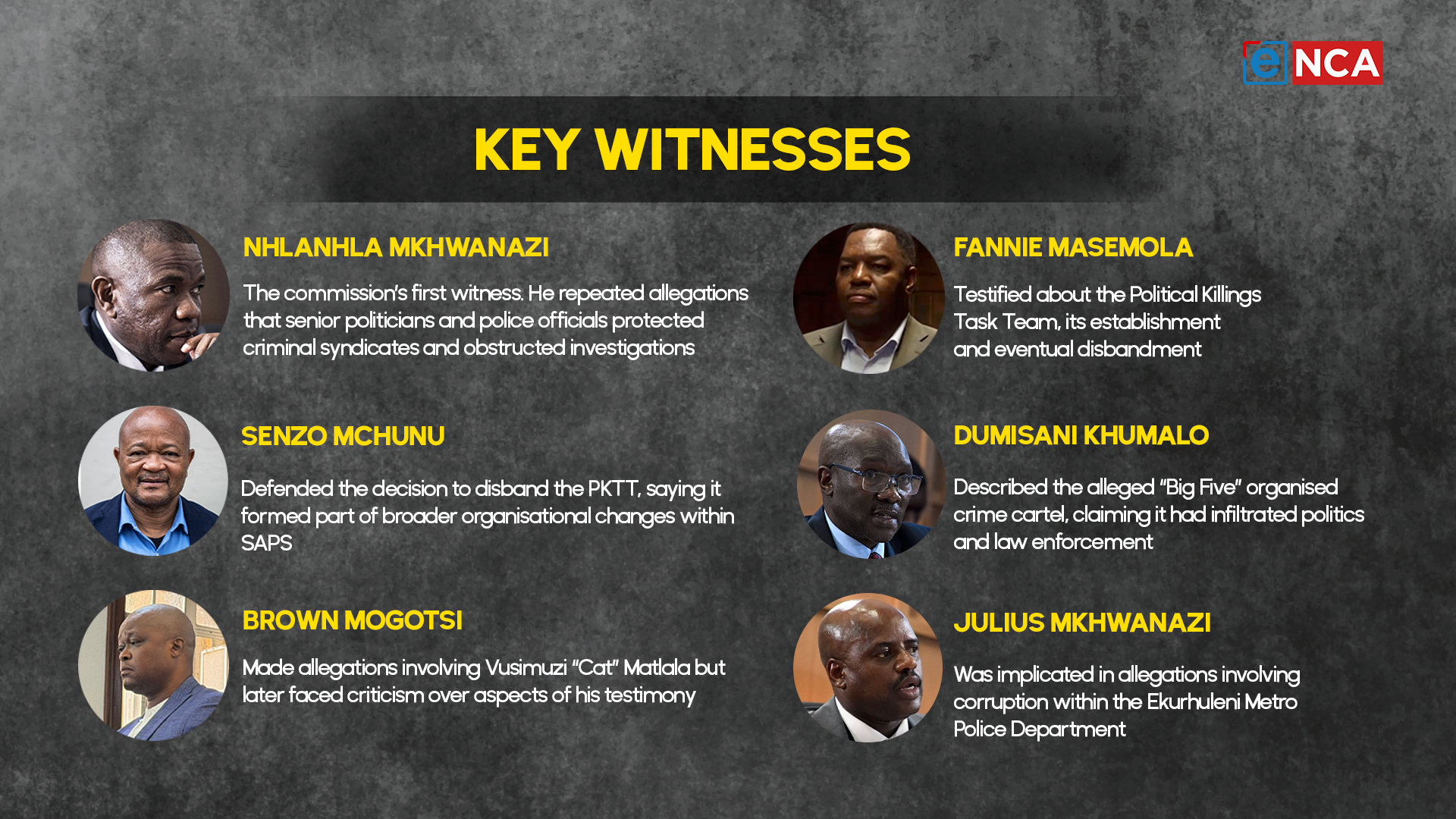
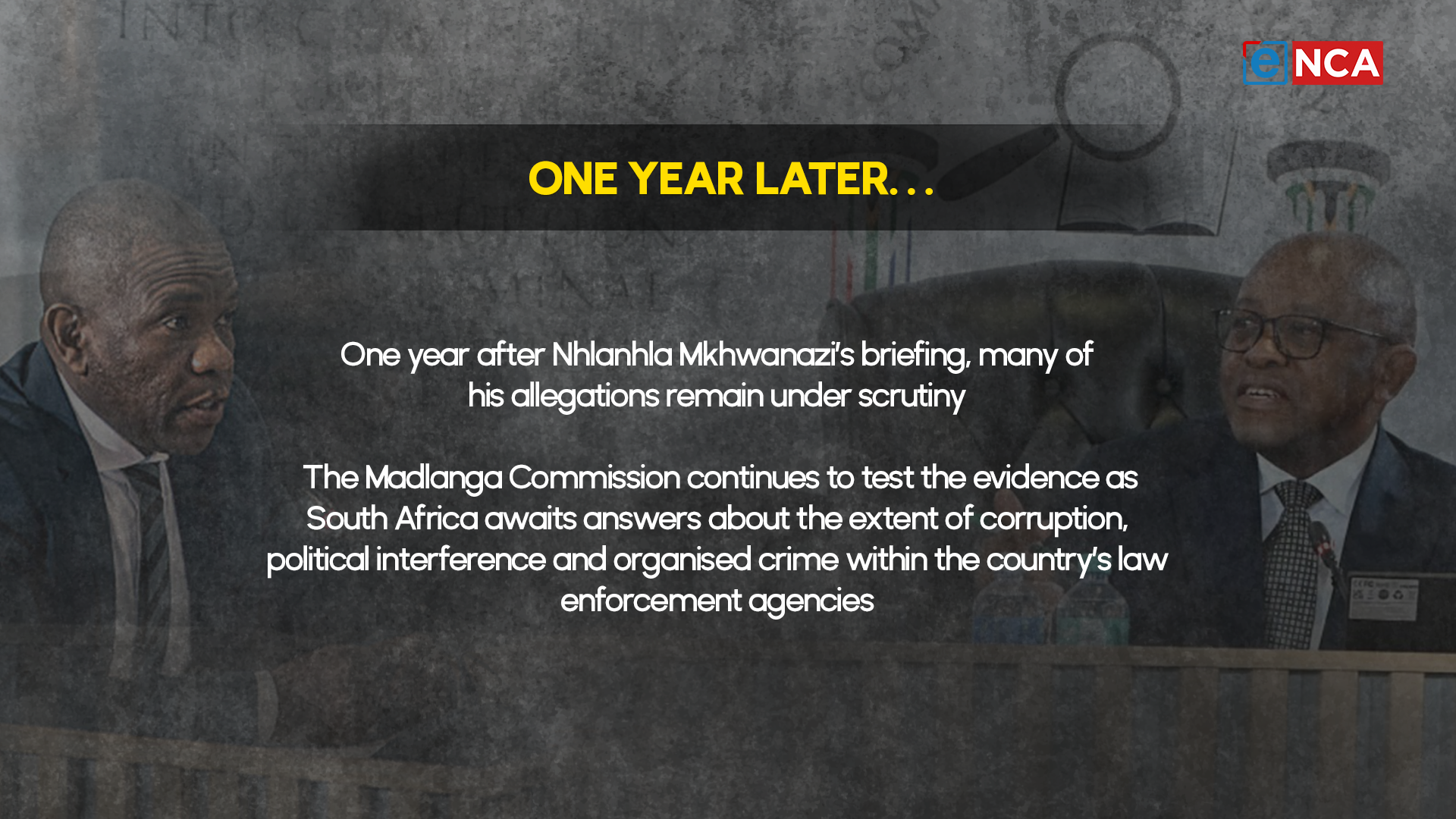
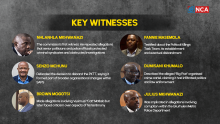
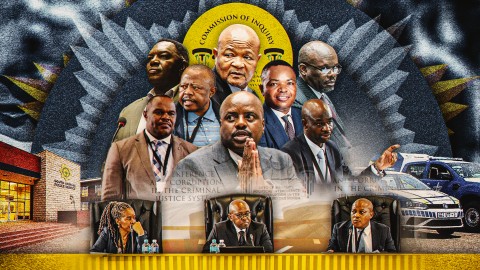
The commission, chaired by retired Constitutional Court Justice Mbuyiseli Madlanga and assisted by advocates Sesi Baloyi and Sandile Khumalo, continues to investigate the allegations arising from Mkhwanazi’s briefing.
Parliament also established an ad hoc committee to scrutinise the allegations and broader concerns about policing oversight.
A year later, the commission is still hearing evidence. As more witnesses take the stand, the focus has shifted from whether Mkhwanazi’s allegations warranted investigation to what further evidence may still emerge.

Vusimuzi 'Cat' Matlala
The many lives of ‘Cat’: How Matlala’s paw prints show up in Madlanga Commission evidence
Long before his name dominated headlines, Vusimuzi “Cat” Matlala had already established himself as a businessman.
Today, his name is at the centre of one of the biggest questions before the Madlanga Commission: How did a businessman build relationships with senior officials within the criminal justice system, and how far did those alleged connections extend?
Witness after witness has appeared before the commission, presenting allegations of organised crime, compromised law enforcement operations and corruption within municipalities.
As the hearings have unfolded, one name has surfaced repeatedly: Vusimuzi “Cat” Matlala.

How power collided with crime in Gauteng metros
As the Madlanga Commission examined allegations within law enforcement, testimony soon extended to local government.
The City of Ekurhuleni and the City of Tshwane featured prominently in evidence before the commission, with witnesses alleging corruption, political interference and organised criminal activity.
Governance expert Professor Sam Koma told eNCA that the commission’s first year has reinforced longstanding concerns about corruption in local government.
According to Koma, the evidence presented so far suggests corruption and fraud are deeply entrenched in parts of the municipal sector and that weak oversight has allowed some of these practices to continue for years.
From Mashaba to Masemola: Law enforcement faces growing accountability test
Law enforcement agencies are facing unprecedented scrutiny as more senior officials come under investigation.
For crime expert Dorothy Mmushi, the growing number of disciplinary and criminal proceedings comes as little surprise.
She says there has been a noticeable increase in accountability measures involving senior officials across the South African Police Service (SAPS), the Ekurhuleni Metro Police Department (EMPD) and the Tshwane Metro Police Department (TMPD).
The list of officials facing allegations now stretches to some of the country’s most senior law enforcement leaders.
While many see the Madlanga Commission as an opportunity to expose alleged corruption and misconduct, questions remain over whether its work will lead to lasting institutional reform.
Mmushi believes the commission marks an important step towards strengthening accountability within South Africa’s criminal justice system.