
Recent Economic Data (2024-2025):
Combined GDP of 55 member states - $3.0 trillion USD (representing approximately 1.5 billion people)
Regional Growth Forecast 2024 - 3.7% (projected to rise to 4.3% in 2025)
Top African economies by GDP (2024) - South Africa ($400.0+ billion), Egypt ($380.04 billion), Algeria ($260.13 billion), Nigeria ($199.72 billion)
History:
The African Union's origins trace back to the First Congress of Independent African States held in Accra, Ghana, from April 15-22, 1958.
The Organisation of African Unity (OAU) was established on May 25, 1963, followed by the African Economic Community in 1991.
The modern AU was formally launched on July 9, 2002, in Durban, South Africa, by its first chairperson, former South African President Thabo Mbeki.
The AU represents the institutional evolution from decolonisation movements to continental integration, transforming from the OAU's focus on liberation to the AU's emphasis on development, democracy, and global representation.
Current Leadership Structure:
The AU Commission Chairperson serves as the chief executive officer and legal representative of the African Union.
Mahmoud Ali Youssouf of Djibouti has been AU Commission Chairperson since March 13, 2025, elected for the 2025-2028 term.
Youssouf is a seasoned diplomat who served as Djibouti's Foreign Affairs Minister from 2005-2025, with priorities including strengthening the AU's Peace and Security Council, operationalising the African Standby Force, ensuring stable financing, boosting intra-African trade, and enhancing Africa's international representation.
The AU Assembly Chairperson rotates annually among Africa's five regions and represents the continent at international forums.
João Lourenço, President of Angola, currently serves as AU Assembly Chairperson (2025). Previous chairpersons have included Presidents from all regions, with the position rotating systematically between Southern, Central, West, East, and North Africa.
G20 Membership and Global Role:
The African Union achieved full G20 membership in 2023, making its debut as a member at the November 2024 Rio de Janeiro Summit. This historic milestone elevated the AU from "invited international organisation" status to full membership alongside 19 countries and the European Union.
The G20 represents 85% of the global economy, 75% of world trade, and 67% of the global population.
The AU established six key priorities for G20 engagement:
- Accelerating implementation of AU Agenda 2063
- Advocating for international financial architecture reform and debt restructuring
- Increasing agricultural outputs toward food security
- Advancing green energy transition
- Enhancing trade and investment, supporting the African Continental Free Trade Area
- Improving Africa's credit ratings to boost investment and health manufacturing
South Africa will hold the G20 Presidency in 2025, hosting the 20th G20 Summit in November 2025, marking the first time the summit will be held on African soil.
This provides unprecedented opportunities for the AU to advocate for African interests and demonstrate the benefits of regional integration.
Continental Integration Projects:
The African Continental Free Trade Area (AfCFTA) represents one of the AU's flagship projects under Agenda 2063.
Established in 2018 and operational since 1 January 12021, AfCFTA creates the world's largest free trade area by member states, encompassing 1.3 billion people across 55 countries.
The agreement aims to eliminate tariffs on 90% of goods over 5-13 years, depending on development levels, with objectives including boosting intra-African trade by 52% by 2022 and potentially lifting 30 million Africans out of extreme poverty.
Key components include the Pan-African Payment and Settlement System (PAPSS) launched in January 2022, allowing transactions in local currencies, and the African Trade Observatory to address trade barriers.
The AfCFTA secretariat operates from Accra, Ghana, overseeing implementation across eight Regional Economic Communities.
Fun Facts:
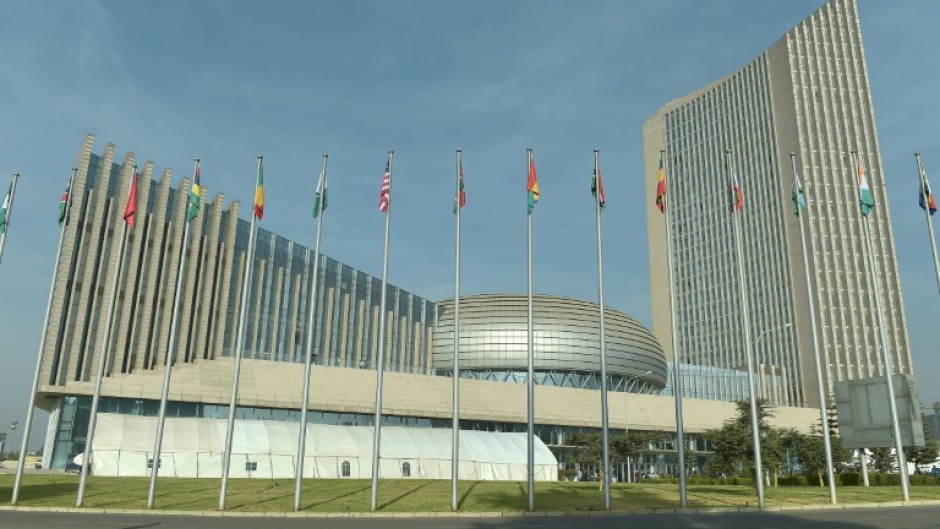
- The AU HQ tower is 99.9 meters tall as a quirky nod to founding day 9/9/99, not quite reaching the 100-meter mark on purpose.
- The Ethiopian calendar means AU staff live in 2017, not 2025, and their years have 13 months.
- AU meetings can run on "Ethiopian time"—with 6AM called 1 o’clock—so leaders can get confused about whether to show up in the morning or the afternoon.
- Past summits have featured public leader quarrels, last-minute drama, and reports that 93% of AU resolutions don’t get implemented—admitted by the AU’s own chair.
- The old OAU was nicknamed the "Dictators' Club." Today, critics call the AU the "Indecisive Debate Club" because member states often ignore its decisions.
By Nkateko Muloiwa