
MEXICO CITY - The work never ends in Mexico City's missing persons unit, which is trying a new approach to the country's massive disappearance crisis.
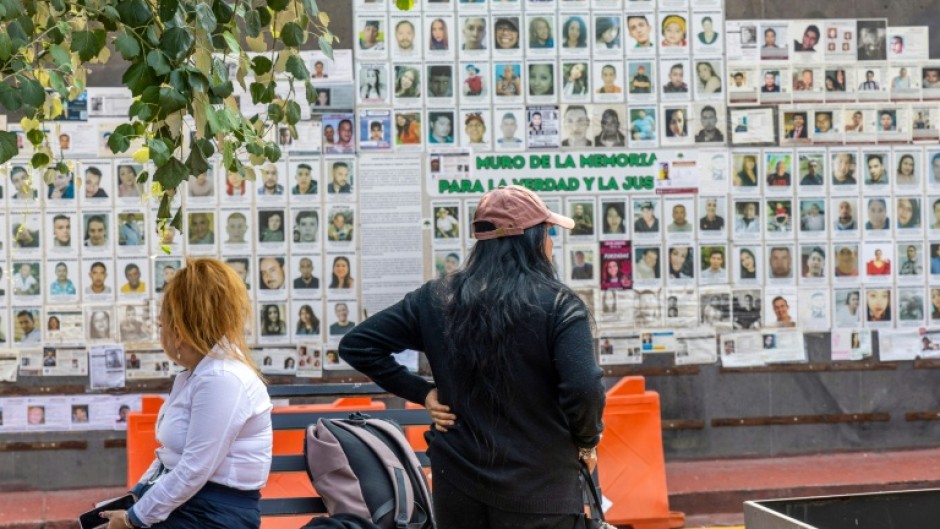
Over 130,000 people are missing across Mexico as ordinary people bear the brunt of seemingly limitless drug violence.
Distraught families looking for their loved ones have long denounced slow-to-start searches, sluggish bureaucracy, apathy and even abuse by the authorities, all of which add to their woes.
AFP visited the year-old Comprehensive Care Center for the Search for Persons in the capital, which is looking to right that wrong.
The centre streamlines the search process while prioritising humane treatment of those who file complaints.
Pedro Perez initially had a negative view of the authorities when his 14-year-old daughter Linda was taken by her mother, who lost custody when charged with domestic violence.
But he was surprised by the center's efficiency and care.
"I thought I was going to have to go back and forth several times, but no, everything is being settled today," Perez told AFP.
- 'Something unprecedented' -
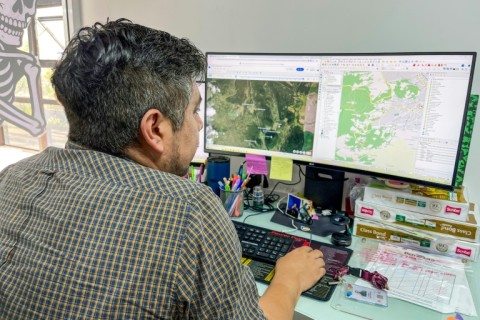
Mexico City's CAIPB is attempting to centralise the search for missing persons in one place. AFP | GERARDO MAGALLON
Open 24 hours a day, the site houses a control room with eight gigantic screens displaying images from the megacity's one million official security cameras, which can store up to a month's worth of footage.
Agents from the missing person commission, specialised prosecutors and police officers work together on reports as soon as they are filed.
The process was less straightforward in the past. Authorities had to identify the prosecutor's office responsible for the site of the disappearance -- if that information could be determined -- before assigning the case to an overworked, burnt-out agent.
Anxious family members while the hours away in the waiting room's armchairs or in sofa beds provided in rest rooms, while children have space to play.
The unit also employs social workers and psychologists to support families during the distressing process.
"It's something unprecedented that goes beyond pre-established standards and protocols in Mexico," said Search Commissioner Luis Gomez.
"It's a single point of access for the search, which cuts down on time and makes things faster and simpler for the families," he said, adding that "cases receive attention immediately."
The team locates half of the people it is tasked with finding within a day, according to Gomez. That marks a 68 percent increase in resolved cases since 2024.
Edith breathed a sigh of relief when the centre located her 16-year-old niece within 72 hours.
"They helped me get my niece back," she said, declining to give her surname and adding that "they treated me really well."
- Model to follow -

Pedro Perez, searching for his daughter, hailed CAIBP's 'humane' treatment of his difficult situation. AFP | Gerardo Magallon
Authorities in other parts of Mexico are looking to replicate the model given its unusually high success rates.
Most disappearance cases are concentrated in the states of Tamaulipas and Jalisco, where powerful drug cartels operate, as well as in the most populous State of Mexico bordering the capital.
Mexico City alone accounts for around 5,000 cases.
The capital works alongside other states and is ready to immediately launch a joint search if a victim may have disappeared elsewhere in the country, therefore taking the burden of coordination off loved ones.
President Claudia Sheinbaum has called for the digitalisation of search records, as well as the expansion of Mexico's DNA database.
Critics have accused her government of not doing enough to search for the missing -- a task many families have set about doing themselves.
Perez waited worriedly for the missing person bulletin an employee was hurriedly preparing for his daughter.
"They've been very humane, very empathetic," he said of the staff in the centre.
- AFP