
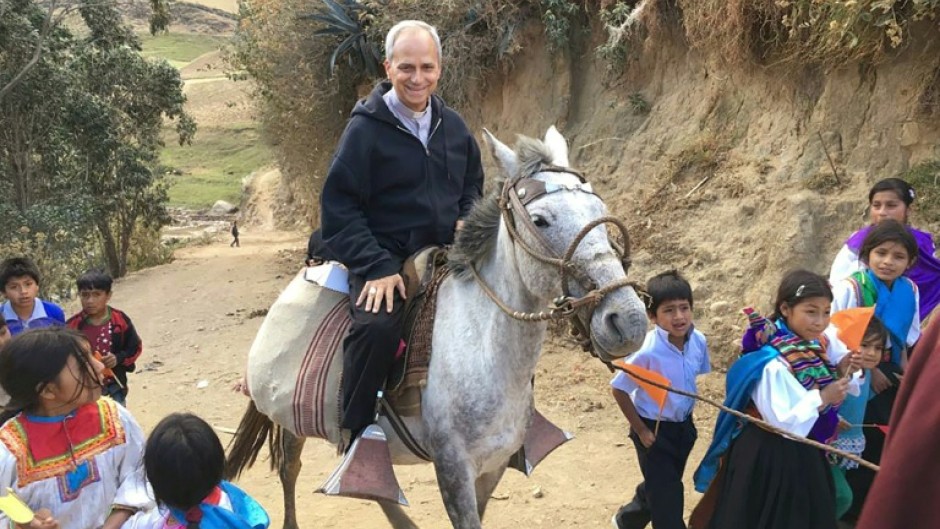
LIMA - Living in Peru for nearly two decades profoundly shaped Robert Prevost's path to the papacy.
As a missionary, parish priest and later as bishop in northern Peru he ministered to the poor, denounced the excesses of power and lobbied for action on climate change.
"I love Peru very much, the Peruvian people, that is part of who I am," the US-born pontiff told his biographer Elise Ann Allen last year.
Prevost took Peruvian citizenship in 2015. As Pope Leo XIV, he returns to the country next week as part of a three-nation South American tour.
- Father Roberto -
Born in Chicago in 1955, Prevost was sent to Peru as a missionary in 1985 by the Augustinian order, tasked with transforming the small town of Chulucanas in the poverty-stricken Piura region into a Catholic diocese.
"His approach to poverty would have been different without knowing Peru and getting his hands dirty, because it's not the same in the United States," theologian Veronique Lecaros, author of a book about the pope's time in Peru, told AFP.
In Chulucanas, residents welcomed him warmly and Hispanicized his name, calling him Father Roberto.
Two months after arriving, he contracted typhoid fever and was hospitalised for the first time in his life, as he recounted to Allen.
In 1986, he returned to the United States, where he took charge of vocations and missions for the Augustinians.
- No 'typical gringo' -
He came back to Peru in 1988 to settle in the northwestern city of Trujillo, for what would be his longest stay in the country, until 1999.
As head of an Augustinian seminary, he was simultaneously superior, teacher, parish priest and ecclesiastical judge.
Peru in the 1990s was convulsed by violence, as the state waged war against brutal Maoist Shining Path insurgents.
The Shining Path murdered three foreign priests -- two Poles and an Italian -- in August 1991 in the northern region of Ancash.
The Augustinian order suggested foreign friars leave Peru and offered Prevost a bodyguard, which he declined.
"I don't look like the typical gringo. I'm a little bit darker" in complexion, he is quoted as saying in Allen's biography.
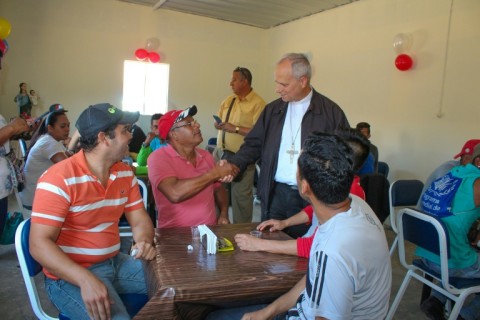
"I think it's very important to stay at the sides of the people we're serving and to be with them. And that's what we did," he added.
In 1999, he returned to the United States as head of the Augustinians in Chicago.
But his enduring love affair with Peru, particularly its arid north, persisted.
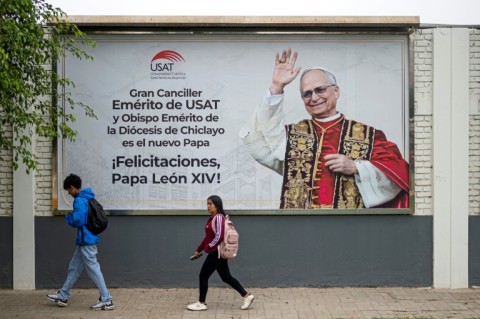
After a 15-year hiatus, he was back in 2014, this time as a bishop appointed by Pope Francis to administer the diocese of Chiclayo.
In one of his first acts as bishop he participated in a beatification mass for the three priests murdered in 1991.
Prevost was a passionate ambassador of Francis's encyclical "Laudato Si,'" which focuses on caring for the planet as "our common home."
He also sought to heal the wounds of Peru's past, urging former president Alberto Fujimori, who was tried and imprisoned for gross human rights violations by the security forces, to "personally apologise" to the victims.
As his mission was drawing to a close, Prevost also defended the right to protest during deadly anti-government demonstrations and travelled to a region hit by flooding to advocate for the victims, standing ankle-deep in water.
In April 2023, he moved to Rome as head of the Dicastery for Bishops, the Vatican body responsible for pre-selecting bishops.
Two years later, in his first speech as pope from the balcony of St Peter's Basilica, he gave a special mention to Peru and his "beloved diocese of Chiclayo."
- AFP