
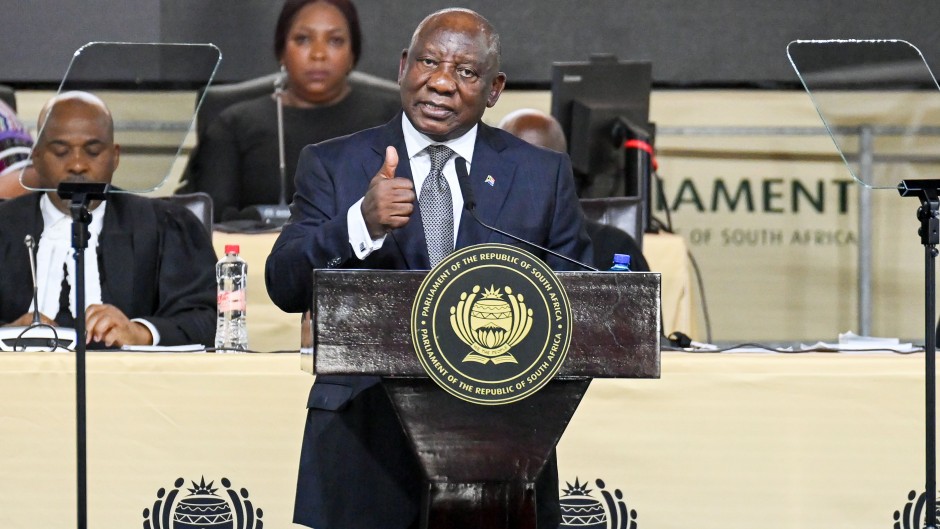
The Phala Phala judgment, eventually handed down by the Constitutional Court of South Africa on Friday, 8 May 2026, was certainly worth the more than 500 days or 18 months of torturous waiting.
The judgment touches on all the important constitutional buttons of democracy, executive accountability, constitutional supremacy, equality before the law, and the rule of law.
There will be countless commentary made in respect of all these important angles. In this article, I deal with the issue from the point of view of what it means for democracy itself, writes advocate Dali Mpofu SC.
Many people will claim credit for the groundbreaking court victory symbolised by the judgment. There is a saying that failure is an orphan, but success has many fathers (and mothers). There are indeed many people who are entitled to take credit for how we got here.
The road has not been without casualties and deserving heroes and heroines.
To mention a few who will feel vindicated there will be the original whistleblower Arthur Fraser, Busisiwe Mkhwebane of the forgotten 31 questions fame who was rewarded with immediate suspension within a matter of hours, Julius Malema and the EFF, Vuyo Zungula and the ATM and last but not least Nkosazana Dlamini-Zuma and her 5 ANC Members of Parliament who, for principle or expediency, stood on the right side of history at the risk of personal victimisation.
On the debit side, there is also no shortage of villains and scoundrels who fought against the tide of history till the bitter end.
Top of that list is the President himself, his aides, VIP and political protectors, various public accountability institutions such as the current Public Protector, South African Revenue Services, the South African Reserve Bank, the South African Police Service, and the National Prosecuting Authority.
Not to mention the disgraced ANC MPs of the 6th Parliament.
Who can forget their derisive laughter and triumphant applause when the outcome of their rigged vote was announced by the Speaker of Parliament?
The South African media and Big Business also did not cover themselves in glory, dismally failing to demand accountability and burying their collective heads in the sand.
For me, however, this victory belongs to the people of South Africa. They deserve to take home the gold medal.
When the Office of the Chief Justice Mandisa Maya announced the Phala Phala judgment would be delivered on Friday, 8 May 2026, the irony of choosing that date was probably lost to her.
8 May is the date on which the current South African Constitution was adopted in a ceremony presided over by President Nelson Mandela and arguably “mid-wived” by Cyril Ramaphosa.
That Constitution was not a piece of paper but the accumulation of the blood, sweat, and tears of millions of our people who took part, some paying the supreme price, in a very protracted, if unfinished, struggle for total liberation.
Its content is deliberately steeped in the Freedom Charter, another product of the people themselves. In the first and most famous of its 10 clauses, it proclaims boldly that: “The People Shall Govern”.
Correctly, there are raging debates about the gains that have been made by the people of South Africa in the post – 1994 constitutional era. But nobody can question that one of the undeniable gains is the advent of the popular vote or majority rule as a hallmark of our democracy.
What was struck down by the Constitutional Court on Friday was not so much the shameful outcome of the vote among 400 members of Parliament or the blatant manipulation of the court system by the institution of a bogus and subsequently withdrawn application to review the Ngcobo Independent Panel Report.
It was rather the disgraceful abuse of the parliamentary majority given to the African National Congress in the 2019 elections by the people of South Africa.
The majority vote was given to that organisation in the genuine but mistaken hope that it would be used for the protection of the people against inter alia, executive excess, corruption, and blatant criminality. The ANC instead used it to shield all these evils.
For this reason, I argue, the people of South Africa did the unthinkable on election day, 29 May 2024.
They took away the parliamentary majority from the ANC. Again, there will be no shortage of mothers and fathers, rightly or wrongly, claiming sole responsibility for that victory.
Political parties like the uMkhonto weSizwe Party, the Economic Freedom Fighters, and even the Democratic Alliance certainly had a hand in the humiliating defeat of the ANC, to varying degrees.
Once again, though, true credit must go to the individual men and women who came out to put a single cross at a time on millions of ballot papers and even those who boycotted the elections out of principle or simple dejection with the political system itself.
Together, they produced the 2024 turning point. The people had spoken. Loudly.
The opportunistic horse trading which resulted in the contraption falsely mis-named “the Government of National Unity” signalled again that nobody had bothered to ask the simple question: In voting as they did, what were the people of South Africa saying?
Surely, the people were saying many things.
But what they were not saying is that the plight of their lives be mortgaged to the highest bidder for Cabinet positions.
Yet that is exactly what happened while the people watched in collective silence. Patient. In full knowledge, however, of the immutable truth, that if nothing else, The People Shall Govern.
Indeed, when the EFF and the ATM initiated these court proceedings, they did so in their representative capacities and on behalf of the people who had voted for them on 29 May 2024.
They had the vocal and silent support of other political parties, but more importantly, millions of voters.
Their lawyers articulated the various positions of their clients as the mouthpieces of the people.
Justices of the Constitutional Court, albeit belatedly, handed down the judgment in a public sitting directed at the real employers of all judges, the people themselves.
By taking back their abused parliamentary majority and temporarily retaining it for themselves whilst not handing it over to any particular organisation, the people of South Africa have made it impossible for the outcomes of the Phala Phala case to be spat on like before.
In a moment of fleeting honesty, the ANC’ Secretary-General Fikile Mbalula confirmed in public in January 2024, that President Cyril Ramaphosa had in fact tendered his resignation in November 2022 over the Phala Phala scandal, but, due largely to self-serving agendas so close to the ANC National Conference which was to take place a few weeks after the resignation, “we told him that you are not going anywhere”.
This, to this scribe at least, was another brazen middle finger being arrogantly dished out to the ever-patient people of South Africa.
They gave their response by returning the favour and gesture on 29 May 2024, some 4 months later.
Thanks to the voters' rejection, today the ANC holds only 40 % of the balance of power in the National Assembly.
This reality has huge implications not only for the President and his ANC but for the Democratic Alliance, Freedom Front Plus, Inkatha Freedom Party, and the coterie of “GNU” parties who chose to participate in the pre-paid cover-up of arguably the biggest political and criminal scandal ever to grace our political landscape since the dawn of democracy. When the students coined the slogan: “2024 is our 1994”, few of us listened carefully.
Not to be left out of the scramble for personal credit, I obviously rejoice at the fact that this judgment would not have been possible without the decisive court victories scored in the three seminal “Zuma must fall” cases appropriately known as “EFF1”, “EFF2”, and “UDM”, which ironically paved the way for the Phala Phala judgment.
But nobody in their right mind can deny that the true victors are the ordinary people of South Africa, not any individuals or organisations.
Will the President resign? Will he face the Impeachment Committee? Will he be recalled? All this doesn’t really matter. What is undeniable, though, is that the people will always have the last laugh.
Advocate Dali Mpofu SC is a Constitutional lawyer and Secretary General of the Pan African Bar Association of South Africa (PABASA), writing in his personal capacity.