
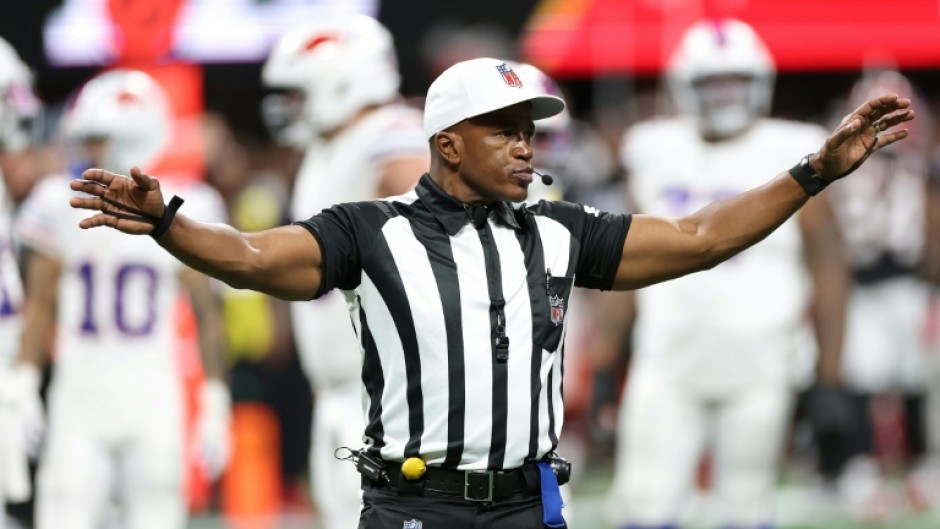
DETROIT - What do a tax fraud investigator, a physical therapist and a health insurance salesman have in common? They are all refereeing this weekend's Super Bowl.
It is a little-known quirk of the NFL that the multi-billion-dollar-grossing sports behemoth employs part-time officials to oversee even its biggest games.
This Sunday's NFL flagship spectacle will be officiated by Shawn Smith, who from Monday to Friday works as a manager at the Detroit branch of a medical insurance firm.
"They've always been part time," explained Ben Austro, founder of Football Zebras, a website that tracks NFL officials and their decisions.
"You'll see lawyers, teachers, educator... entrepreneurs who have the ability to take a little bit of time off work."
The league has even employed pilots, air traffic controllers, and a rocket scientist.
But, Austro says, NFL officials are the elite of the elite -- painstakingly scouted from college football by a vast network of talent-spotters, trained and vetted, and expected to spend 40-50 hours a week preparing for their football duties during the season.
"It's not, 'oh, we show up in the city the night before, have a great steak dinner and then just roll out onto the field for three hours,'" he said.
- 'Tough job' -
Inevitably, NFL officials come in for criticism at times -- and their part-time status can be an easy line of attack.
"The refs are the worst... These guys are lawyers. They want to be on TV too," said Puka Nacua, star receiver of the Los Angeles Rams, in December.
"You don't think he's texting his friends in the group chat like, 'Yo, you just saw me on Sunday Night Football?'"
Nacua's diatribe, made on an internet livestream, earned him a $25,000 fine.
Other players have called for referees' contracts to be upgraded with a more positive tone.
"I do think that it would probably help to have all of them full-time," said quarterback Aaron Rodgers, in 2023.
"They've got a tough job to do, to make calls in real time, and they're as scrutinized as the quarterbacks and kickers are," he told the Pat McAfee Show.
Yet not everyone believes that change is needed.
The referees' union does not disclose financial terms of contract negotiations, but top NFL officials are believed to earn over $200,000 per year.
Austro believes that requiring referees to work full-time could shrink the pool of elite officials.
Knowing that a refereeing career can end swiftly with injury or demotion, many would not wish to give up their more reliable day jobs, he said.
As the NFL's off-season is vastly longer than its 18-week regular season, officials benefit from a "dark period" to recharge from January until May, in which they cannot be contacted by the league.
- 'Control' -
Once the regular season ends, officials who have excelled are rewarded with coveted games in the playoffs.
The process is merit-based but secretive, with NFL's head of officiating Ramon George believed to have the final say on who gets the Super Bowl.
This year's choice, Smith, has spent eight years as referee -- the top-ranking position of the on-field officials -- and was previously in the more junior role of umpire.
"He's got good control of the game. It instills confidence," said Austro.
Smith himself declined an interview request, telling AFP that NFL officials are "not authorized to do interviews during the season."
But he will doubtless hope to continue a post-season in which refereeing decisions have largely been uncontroversial -- with one major exception.
The Buffalo Bills have continued to complain that Josh Allen's overtime pass against the Denver Broncos should not have been declared an interception, a decision that led to their elimination from the playoffs.
"It was absolutely an interception... it seemed pretty obvious to us," said Austro.
"The number of times that they get these things correct is just astonishing to me."
- by Andrew Marszal