
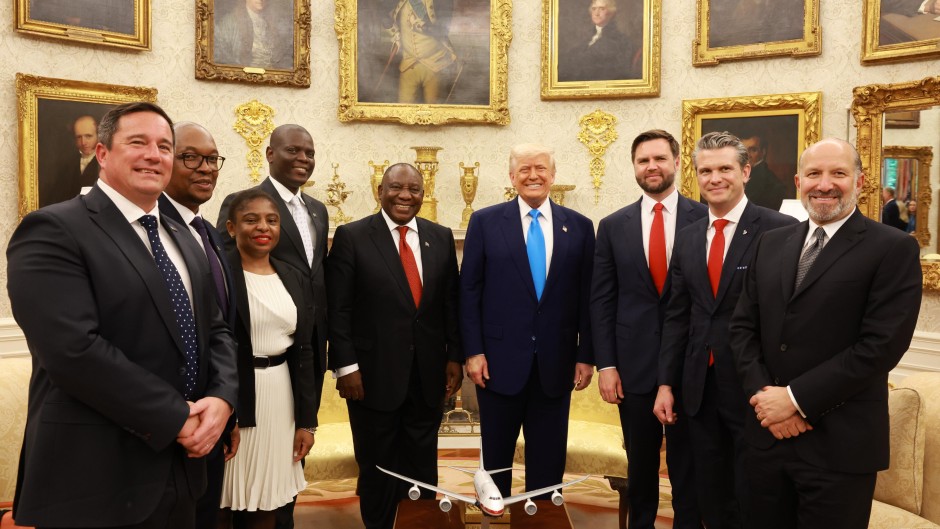
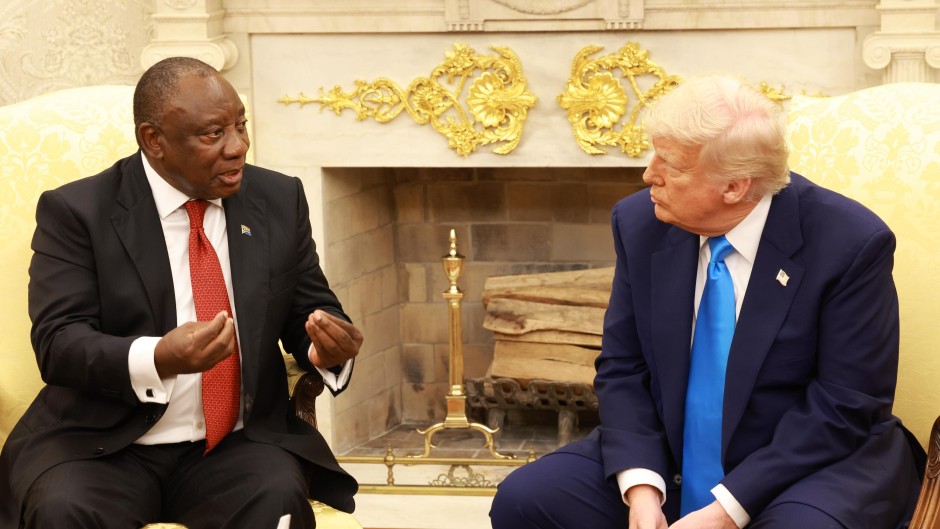
The meeting between President Cyril Ramaphosa and US President Donald Trump in the Oval Office last week has triggered much debate and many heated opinions.
President Trump showed his typical disdain for the truth as he pushed his agenda while forgoing any attempt at meaningful discussion.
With the meeting moving out of the public eye and into private discussions over lunch, South Africans wondered what the diplomatic mission could achieve.
We now seem to have some insight into this, after Communications and Digital Technologies Minister, Solly Malatsi, recently gazetted proposals doing away with BEE requirements in the Telecom industry.
This is clearly a by-product of the drawn-out negotiations between Musk and the South African government to facilitate Musk launching Starlink, his low-orbit satellite internet network, in South Africa. However, Minister Solly Malatsi has recently denied this.
Let’s also not forget the plea by Johann Rupert for the US to help the South African Police Service (SAPS) combat what the delegation was unified in calling ‘rampant and uncontrollable crime’ in South Africa.
However, it seems we’re far too ready to accept this chain of events as inevitable or justified. Aakash Bramdeo, at eNCA, writes: “No one will invest in a country where they can’t hire the best talent for the job. [...] If the South African government is to change the fortunes of this country, it needs to ditch broad-based black economic empowerment. People need to be hired based on merit and not skin colour. Land expropriation without compensation needs to be reconsidered.”
This is challenging to accept, to say the least.
The notion that affirmative action in South Africa denies organisations the ability to hire the best talent for the job challenges South Africa’s complex history.
Perhaps the writer has been misunderstood, but it seems he’s calling into question whether the Broad-Based Black Economic Empowerment equity requirements facilitate transformation and social and economic redress.
The writer must be aware of the genesis of such measures by our government, as they have been inscribed in the “Preamble” and the “Founding Principles” of the country.
These measures were implemented to help the majority black population overcome decades of deprivation that had left them impoverished and destined to remain in the gutter for generations to come.
Let us rather give credit where credit is due.
These measures facilitated the creation of a black elite (popularly known as tenderpreneurs) but also enabled the infamous Zuma state capture years that President Ramaphosa constantly remind us of during each of his State of the Nation Addresses.
So, let’s question its efficacy and evaluate its results.
This is one of the responsibilities of the country’s media and news manufacturers, as guaranteed by Section 16 of our Constitution.
However, we must be careful not to subject ourselves to narratives that do not serve the people of this country.
The right of free speech comes with the responsibility to ensure we don’t exercise this right by constructing destructive narratives to the nation.
For example, News24’s editor-in-chief, Adriaan Basson, writes: “If the US trip and Elon Musk’s over-dramatic criticism of BEE forced our government of national unity’s hand in rethinking BEE requirements in the industry, it is a win.”
Again, we have a narrative issue here. While one may not be opposed to the government rethinking the BEE requirements in their original format, it poses dangers to accept that foreign countries and businessmen (who are civilians) should be able to exert such influence over our governing policies.
Certain guidelines may have to be negotiated and adjusted to adhere to the requirements of globalisation.
This is especially true for a nation as young and economically challenged as ours.
However, where does this end?
My concern is that when writers, who are counted among the core opinion leaders of the nation, weave narratives about the state visit that discredit BEE initiatives, these cannot remain unchallenged.
The nation cannot be drawn into a narrative discrediting BEE, a cornerstone of our Constitution.
Decades of apartheid require redress, and the government has committed to this through the BEE framework.
We cannot now permit civilians and foreign countries (however powerful) to dictate how we conduct our internal policies.
By Smangaliso Mkhuma