
ANKARA - On July 15, 2016, officer cadet Alper Kalin was about to leave his base in Ankara for a friend's wedding when he was told to stay behind for an anti-terrorism exercise.
A few hours later, the efforts of a rogue military faction to overthrow the government of President Recep Tayyip Erdogan would fail, and 34-year-old Kalin would find himself facing life behind bars.
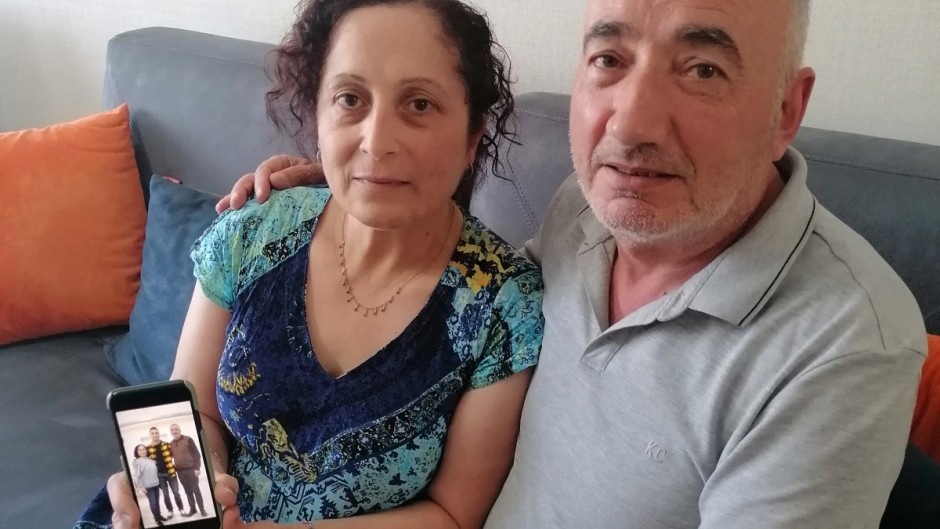
Ten years on, inside a flat in Ankara, his parents look through an album of photos of their last holiday together with their son, who is now 34.
For Kalin, a trainee air force pilot who had been selected for F-16 training at Akinci base near Ankara, the past decade has been spent inside a cell measuring 12 square metres in a prison 1,000 kilometres (600 miles) away.
Officials say he was deeply involved in the plot to oust Erdogan hatched at Akinci, where the plotters gave orders to bomb parliament and the presidential palace that night.
"There were 60 F-16 pilot candidates and they divided them into four groups. Because they didn't have the capacity to train all 60 at once, they staggered them," his brother Ilker Kalin, 35, told AFP.
By a twist of ill fate, his brother was in the first group of 14 sent to Akinci after basic training -- the only ones of the 60 to be snarled up in the chaos of the coup.
Telling the cadets they were to take part in an anti-terror exercise, their superiors collected all their phones, leaving them completely clueless about events that would unfold overnight, claiming some 250 lives and leaving another 2,000 wounded.
- Cut off -
Cut off from outside communication, they were the last to hear about the attempted coup -- with Kalin's parents desperately trying to reach him as they anxiously watched the drama playing out on TV.
He finally came home around 7:00 am, his face "ashen, terrified", recalls his mother Kerban Kalin, 55.
Eleven days after the coup, Kalin was called back to Akinci to testify.
His father, Ali -- who had only retired from a career in the military -- was not worried, thinking his son would only stay back on base for one night.
At this point in the story, his wife breaks down in tears: her son was handcuffed on arrival and has never returned home.
After a four-year trial, Alper Kalin and 12 others on his training programme were sentenced on November 26, 2020, to life for attempting to "overthrow the constitutional order".
Statements by their commanding officers that the youngsters knew nothing did not help.
"The air force was the most actively involved. That was very unfortunate for us because Akinci base was depicted as the mastermind of the coup," said Ilker Kalin.
"They punished everybody who was at the base at that moment, no matter their rank nor what knowledge they had."
- 1,000 pushups a day -
Nearly 500 people were involved in the Akinci trial, of which 484 were handed life sentences, among them 114 trainee officers.
"Hundreds of cadets went into the streets on orders of their commanders. They had absolutely no idea why," Paris-based political scientist Ahmet Insel told AFP.
At the end of 2023, Turkey's highest appeals court upheld a sentence of aggravated life imprisonment: that is, solitary confinement with two visits a month from parents and siblings.
Each convict was sent as far from home as possible. Kalin ended up in the southeastern Kurdish-majority city of Diyarbakir, some 1,000 kilometres away from Ankara by road.
"He's not allowed to have more than five T-shirts, or to wear blue or green" -- the colours of the police and the army, his brother explained.
"But he does up to 1,000 push-ups a day and reads a lot."
There are many political prisoners at that jail, which has one of Turkey's best-stocked libraries.
With Turkey poised to mark 10 years since the coup, which has allowed Erdogan to dramatically tighten his grip on power, the family has no expectations.
"We want this government to change. For it to correct the injustices that have torn us apart. They decided my child's fate, solving this problem is their responsibility," said his mother, a housewife turned fierce defender of civil rights.
"We’re not just talking about my child here. There are hundreds and thousands of people."
- by Anne Chaon (AFP)