
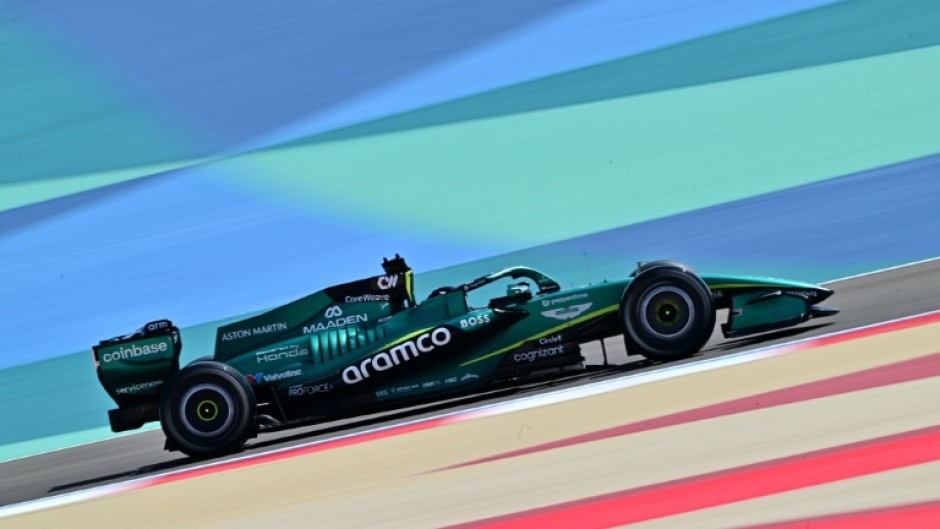
PARIS - The 2026 Formula One season has been flagged up as revolutionary because of the sweeping changes to chassis and power unit regulations, designed to create more overtaking opportunities and improve the sport's eco-sustainability.
Four-time world champion Max Verstappen has already said the new cars are "not fun to drive" while Lando Norris, the man who took his crown last season, stirred the pot by saying they were fun before reversing at speed by remarking they were "certainly not the purest form of racing".
But what does that mean? How different will 2026 be to 2025 when McLaren ran away with the constructors' title with Red Bull, Mercedes and Ferrari choking on their fumes?
AFP Sport looks at the main changes:
- The cars -
The cars will look noticeably different to the 2025 models, notably the Adrian Newey-designed 'pelican-nose' Aston Martin. Overall, they are 30kg lighter and 20cm shorter and 10cm more narrow. The wheelbase has been shortened which should make them more nippy through corners.
- Tyres -
Pirelli's 18-inch wheel size, introduced in 2022, will remain. But the width of the front tyres will be reduced by 25mm and the rears by 30mm, which will cut drag.
- Wings -
Changes aplenty here but the big one is the introduction of active aero which allows cars to adjust the angle of both front and rear wing elements depending on where they are on track. This, again, should cut drag and boost top speed.
- The sons of DRS -
The drag reduction system (DRS) is no more. In its place come two aero-mode systems which will both help the driver find speed.
- 'Z-mode' opens elements on the front and rear wings to increase downforce and speed through corners.
- 'X-mode' reduces drag to maximise straight-line speed.
There is also a manual 'Overtake' mode, which the drivers access through the boost button when they are one second behind the car ahead, allowing them to unlock extra energy.
There is a risk to this strategy, though, as it could leave them vulnerable to being re-overtaken on the next straight as they try to recover the electrical energy.
- Power units -
The power units, of which the engine is the predominant factor, are set to deliver an almost 300 percent increase in electric power. There will also be an even split between internal combustion engine and electric power, giving cars three times more electric braking power.
The FIA is moving to close down a loophole which Audi, Honda and Ferrari believe Mercedes have found to use thermal expansion and materials technology to exceed the mandated compression ratio -- something that could gain them as much of 0.3 seconds per lap.
If they start the season with the advantage, however, it will not just benefit Mercedes as they also supply Alpine, Williams... and McLaren.
- Fuel -
No matter who runs away with the title no one is likely to be choking on fumes, as fuel in every car will be 100 percent sustainable, meaning no new fossil carbon will be burned.
Fuel will instead be derived from carbon that came from non-food sources, general waste or from carbon captured from the atmosphere.