
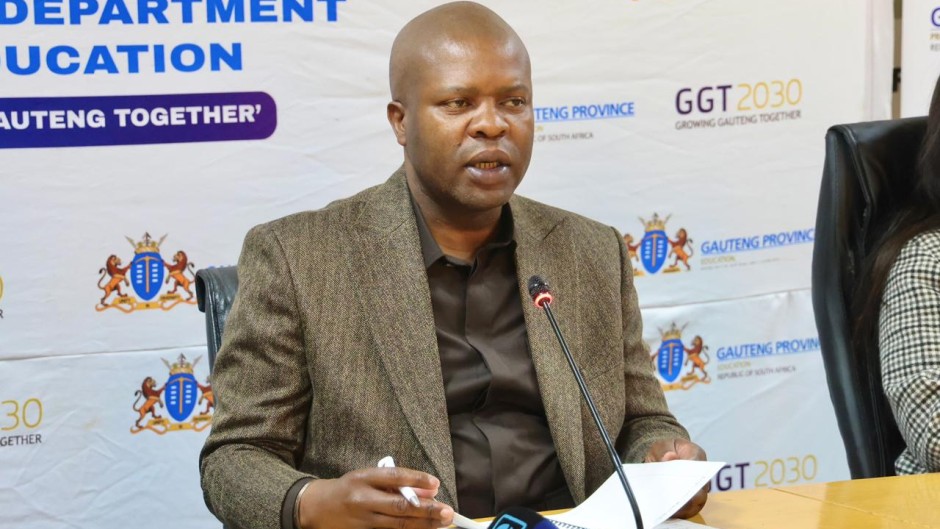
JOHANNESBURG - Gauteng Education MEC Lebogang Maile said the department is strengthening its fight against corruption in schools.
He said this is through closer cooperation with law enforcement and oversight bodies.
Maile was speaking at a briefing earlier.
“The Department will intensify cooperation with the South African Police Service, the Directorate for Priority Crime Investigations, the Gauteng Provincial Treasury, as well as the Department of Labour Relations and Risk and Compliance Units.
“As stated, government departments must investigate corruption by following a strict multi-agency transparent framework mandated by national legislation.
“We will collaborate with and refer cases to external anti-corruption bodies that are legislatively mandated to investigate and prosecute corruption, fraud and unlawful activities.
“The Gauteng Department of Education is committed to rooting out corruption within the provincial education ecosystem. Corruption is not simply a financial problem; it is also an ethical failure that reflects moral degeneration and decline in societal values,” he said.
Maile also revealed that corruption, financial mismanagement, and governance failures plague Gauteng’s public schools.
He said a comprehensive internal assessment across provincial districts.
Investigators identified 41 serious cases involving school principals, SGB members, finance officers, and other staff.
“Of the 41 cases recorded, 22 occurred in 2023, accounting for 54% of the total. In 2025, 13 cases were recorded, accounting for 32%. By June 2026, six new cases had already emerged, accounting for 14%.
“This indicates that while the number of recorded cases is fluctuating, the problem remains active. Corruption has not disappeared. It remains embedded in parts of the system.
“This persistence tells us that this is not a temporary problem but a structural one. The geographical spread of the recorded cases necessitates mention. The Johannesburg East District accounts for 24% of all recorded cases.
“The Ekurhuleni South District follows at 15%. Johannesburg Central District accounts for 10%. Tshwane South District accounts for 7%. Combined, these four districts account for over 56% of all recorded cases. This indicates that the problem is not random but spread across multiple districts across the province."