
JOHANNESBURG - The South African Constitution guarantees that every citizen of the country has the right to access adequate housing.
But the reality on the ground tells a different story.
For many of South Africans, the promise of a safe and decent home remains just that — a promise.
As a result, many have become aggressive in accessing this basic human right. Cape Town shows just how bad the crisis has become.
Informal settlements keep growing, evictions are increasing, and more than 600,000 people are still on the housing waiting list.
In Tshwane, the problem is at a tipping point.
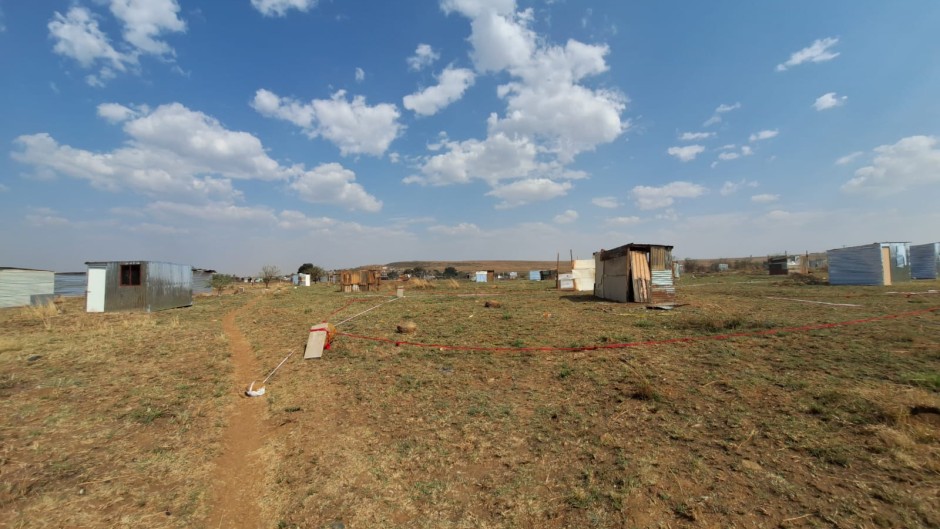
Hundreds of shacks have mushroomed along the R511 in Erasmia.
The residents claim the dwellers have built their homes on private property. There are also claims that plots are being sold unlawfully.
Tshwane Human Settlement MMC Aaron Maluleka says as a city they face limitations in intervening because this is private property.
But he says through strengthened partnerships they could get a handle of the matter.
Ward councillor Naeen Patel says while the city has met with them, they are now crying to the Tshwane Metropolitan Department (TMPD) to enforce bylaws.
“Some action needs to be instituted to the illegal squatting because this area is an environmental hazard. We live on the bank of the river, there are streams running underground. We want Gauteng Premier commitment to remove 400 squatter camps to also place his priority on this area.”
In Ennerdale, south of Johannesburg a land invasion is unfolding in real time.
Since the weekend, more than 50 shacks have sprung up on land earmarked in 2014 for RDP housing.
But, after fourteen years of delays, nothing has materialised.
Some residents say the invasions threaten property values, worsens already strained service delivery and add to illegal water and electricity connections in those area.
Johannesburg Human Settlements MMC Mlungisi Mabaso, who was conducting a verification operation in the area, says such land invasions witnessed in the city call for urgent attention.
“It is not sustainable for the future and also it also impedes on the work that we doing in terms of developing the city of Johannesburg. People need houses and we need to build them but we need the space to build so we can accommodate our people,” he says.
Mabasa acknowledges that the issue of housing has been a long standing crisis, that has worsened over the years, because of inaction.
Earlier this week Gauteng Premier Panyaza Lesufi slammed the increase of informal settlement structures within the province itself.
He argues that as people flock to the province to seek better opportunities, government is failing to keep up with the demand for housing.
This ends with an increase of informal settlements.
While Lesufi vows to demolish these settlements there are still concerns that the crisis is not ‘fixable’.
This is according to Wits University Prof Maria Huchzermeyer.
Huchzermeyer argues that there is an existing backdrop to the crises , which is wealth inequality.
She says unless that is tackled, then the country cannot get ahead of the housing crisis.