
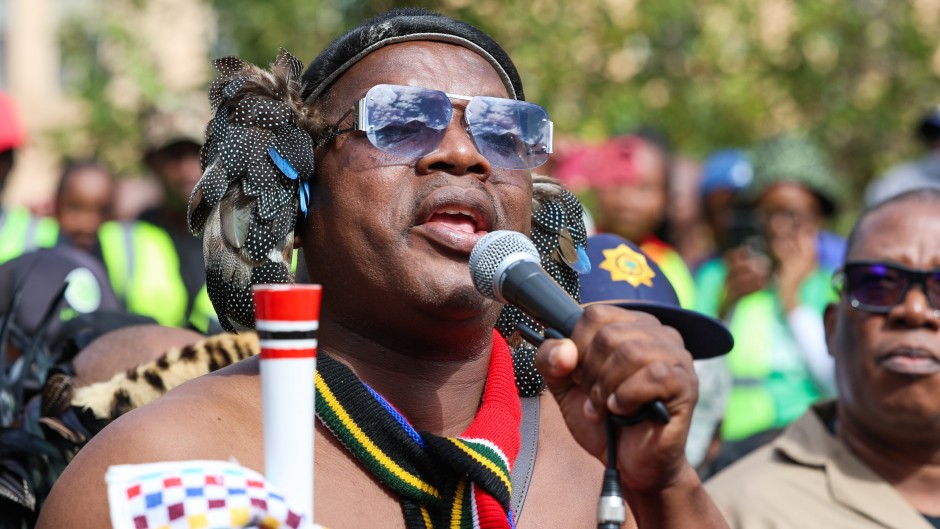
JOHANNESBURG - Several groups, including the South African Human Rights Commission, have welcomed the order granted by the High Court in Johannesburg sitting as the Equality Court in the matter against Ngizwe Mchunu.
The court ruled that Mchunu's comments directed towards members of the LGBTQIA+ community constituted hate speech, harassment, and unfair discrimination.
The court further found that Mchunu’s march to the Kwa Mai Mai Traditional Market on 5 October 2025 amounted to harassment and unfair discrimination against the LGBTQIA+ community.
The Equality Court has issued a series of significant remedies to address the harm caused by Mchunu and to prevent further violations. These include:
- A permanent prohibition on Mchunu from publishing or disseminating content that discriminates against LGBTQIA+ persons;
- A permanent prohibition on organising or participating in demonstrations that promote discrimination against LGBTQIA+ communities;
- An order requiring Mchunu to issue an unconditional public apology, to be published and pinned on his Facebook page for a period of three months;
- A directive to pay R250,000 to support the work of civil society organisations promoting equality, social cohesion, and the prevention of hate crimes;
- A requirement for Mchunu to undergo 20 hours of human rights sensitisation training under the auspices of the Commission or an approved institution; and
- An order that Mchunu pay the complainants’ legal costs.
"The Commission welcomes this outcome as a strong affirmation that hate speech and discriminatory conduct, particularly against vulnerable and historically marginalised communities, will not be tolerated in South Africa’s constitutional democracy," the SAHRC said in a statement.
"The judgment underscores the centrality of dignity, equality, and freedom from discrimination as foundational constitutional values.
"The Commission is particularly encouraged by the court’s use of both corrective and restorative remedies, including public apology and human rights education. This approach contributes not only to accountability but also to transformation and social cohesion."