
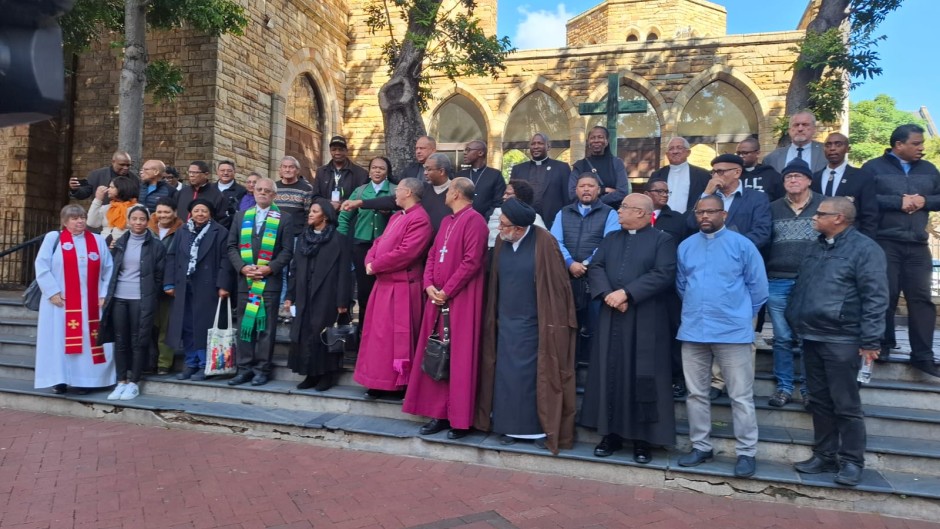
CAPE TOWN - The South African Council of Churches is calling for an end to violence and social injustice
The council hosted a Freedom Day service at St George’s Cathedral in Cape Town, where church leaders signed an Anti-Corruption Covenant.
Church leader, Llewellyn McMaster, said there needs to be action.
“To those in power, we are watching, we are organizing, and today's gathering is not the end. This action, when it is dangerous, disrupts, and transforms. And so today we reclaim that dangerous faith.
“Let this be the day to say, no comparing children. So let us pray, yes, but let us also act. Let us speak, but also organize. Let us believe, but also build. And let this be the say of us, when the moment came. They don't stay silent. They know it's true. As the CC and the experts here have a strategy to confront the escalating, no more children, no more police. Forward to a just world."
“We will remember who we are. Because the truth is uncomfortable. Our people are not just struggling; they are bleeding.
“Children learn to duck before they learn to dream. Blood and tears flow in never-ending streams in our streets. Too often, those in power respond with statements instead of presence.
Reverend Mzwandile Molo is the General Secretary of the South African Council of Churches. He said the courts should not be a place to seek truth but lead with ethics.
“Corruption destroys the moral fabric of society and conscious individuals.
Corruption leads to human suffering. It kills; it eats the soul of the nation and deepens poverty. It breeds accountability.
“It destroys the capacity of the state to deliver essential services to the people.
It is our belief that God is the God of justice and transformations. Skollies also wear suits; they speak well and know the freedom songs," he said.
Reverend Molo said their commitment was to:
- fight corruption within society
- create safe spaces for whistleblowers
- encourage the private sector to reject corruption
- celebrate those who stop and expose corruption
For Reverend Allan Boesak, South Africans are not truly free.
“The call that brought us together today is a call to stand up and fight. That means we realise now that, despite freedom, we are not free. We have a fake freedom. We are a conflicted people. We see it's not a moment of rejoicing, but of reflection.
“We now know a negotiated settlement does not guarantee freedom. We now know that a black face is not a guarantee for freedom; our expectations of something good, dignified, and something that looks and feels like justice are legitimate. Our struggle is not in vain, and that is why we are here.