
JOHANNESBURG - Gas supplies from Mozambique's Pande and Tamane fields are nearing decline.
The 'gas cliff' is expected to arrive by 2028, but Sasol says they have a solution. CEO Simon Baloyi says they have found a way to extend the gas cliff to 2030 instead.
The solution, according to Baloyi, is Liquified Natural Gas (LNG). Sasol, along with Eskom, under the guidance of the Electricity Department.
"We should have LNG by 2030," says Baloyi. If no, Sasol is looking to extend its methane-rich produced in Secunda.
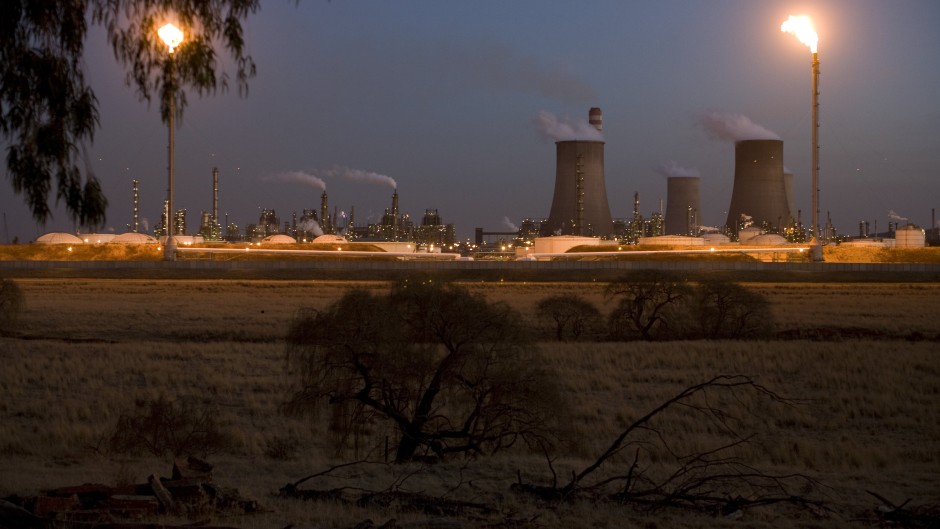
Secunda is crucial for the country's energy security. Especially because, from there they can make petrol and diesel from coal. Other chemicals produced from the coal includes ammonia for fertilisers, agriculture and mining explosives and jet fuel.
This is a temporary welcomed relief as South Africa were growing concerned with potential fuel shortages in the wake of the war in the Middle East. The Department of Mineral and Petroleum Resources
Director-General Jacob Mbele, explained that companies operating in the country source their products from different parts of the world at different intervals. This secures the country's oil supply.
Through Secunda, South Africa strategically allows itself to have other avenues for fuel production.
"Sasol is working hard to avert this gas cliff," says Baloyi.
He says they are waiting on the National Energy Regulator of South Africa (NERSA) to approve its pricing.
Over 700,000 people benefit from direct and indirect jobs that hinge on the gas market, therefore, according to Baloyi, it is crucial that solutions be sought.
In northern-Mozambique, there is up to 100,000 Trillion Cubic Feet (TCF) of gas. However, due to the distance, Baloyi says they will not be building a pipeline spanning over 2,000km.
Companies like Total and Exxon are currently working to monitise the gas from there.
READ: SA food inflation slows in February, but fuel threat looms
"The gas will still come as LNG," says Baloyi. With those companies working from there already, Baloyi says it is more viable to build relationships with them.
"Whoever will be bringing the cheapest gas, we'll be working with them," he says.
While Matola in Mozambique no longer has any gas; the town, Inhassoro and Richard's Bay will be crucial in bringing the LNG to South Africa via its neighbouring country.
"We shouldn't anticipate any gas shortage between now and 2030," Baloyi says.
Baloyi says they are focusing more on a 'gas to power' plan. He says 'gas to power' is the anchor for LNG in the country.
The Electricity Ministry, via the IPP officer, has a Request for Proposal (RPF) to allow for the building of an inlet of gas. This should anchor LNG and save jobs.