
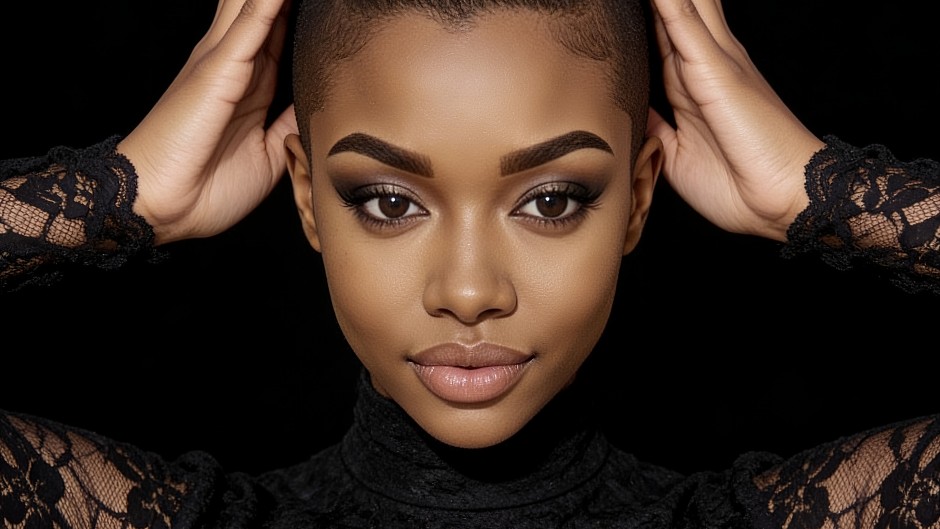
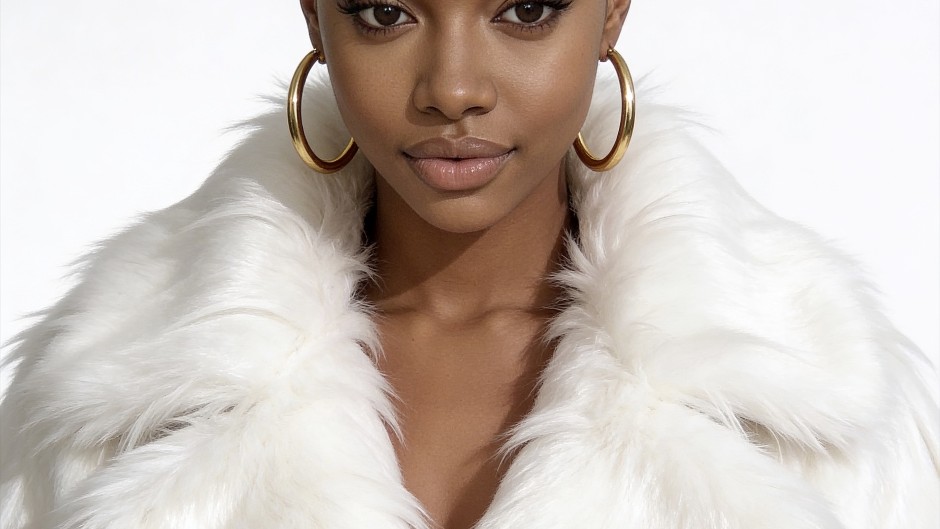
JOHANNESBURG - Digital artist Olga will release her debut EP, Ngaphakathi, on Friday, 17 April.
The seven-track EP blends soul and Amapiano, exploring themes of love, vulnerability and self-discovery.
Olga, who has been active since December 2025, has captivated many.
Her beauty, style, voice and a supposed link to a broadcaster have all sparked interest.
That interest has since turned into curiosity, as some of her Instagram videos appear almost surreal.
Is she real? Is she Artificial Intelligence (AI)? Or is her team simply highly creative?
Olga is, in fact, AI -- created by William Lehong, who is known to many as a broadcaster.
Fewer people know him as a producer, singer and songwriter.
While Lehong feels most at home in front of a camera or behind a microphone, Olga allows him to expand his creative reach.
Lehong says the impact of AI in the creative industry was inevitable.
"We are changing the value chain," he said.
"We as humans need to see how we can align," he adds. This was always the future, says Lehong.
The future once imagined in science fiction is now becoming reality -- from personal devices to entertainment and academia, where life-like digital humans can be created to mimic real life.
Afrikaans music producer Jakkals Vibes is also experimenting with AI, writing and producing music that is then performed by real-life artists.
He performed with Ruhan du Toit at Afrikaans is Groot in November.
Our likeness and voices are already public. This is thanks to social media and instances where our voices are recorded, many times, unknowingly, with our consent.
READ: Universal says struck first licensing deal for AI music
Advancements in AI tools make it easier to generate a person with specific looks, mannerisms and a particular voice.
Danish lawmakers have already moved to address this, giving people the right to copyright their faces amid the rise of deepfakes.
This allows individuals to take legal action against those who create and share AI-generated imitations without consent.
Meanwhile, more than 200 American musicians -- including Pearl Jam, Katy Perry and Jon Bon Jovi -- have signed a letter calling for tighter controls on AI, describing it as an assault on human creativity.
"Our Parliament is not that attuned that they can do something similar," said lawyer Wesley Hayes.
He explains that if South African artists believe AI-generated content resembles them, the burden of proof will rest on them in court.
READ: Top music body says AI firms guilty of 'wilful' copyright theft
According to Hayes, it will then be left to the courts to develop the law through legal precedent.
"It will raise a lot of legal questions that is up to the courts to answer," he says. Key to the questions to be answered is ownership.
"The AI obviously belongs to someone; it will therefore be a legal person like a company.
"Another question that will be raised is whether owners of the AI have the responsibility to tell people that the "person" or creative element presented publicly is AI.
"No one says you have to, it is up to you," said Hayes.
Lehong writes and sings all of Olga’s music, later modifying her voice to sound more feminine and suited to local audiences.
Her sound has been carefully curated to feel familiar, drawing listeners in.
"What makes this release particularly interesting is that Olga represents a new form of artistic expression," says Lehong.
According to him, the project opens up a broader conversation about how artists are evolving and what creativity looks like in a rapidly changing digital landscape.
There are also big plans ahead. Following the EP release, fans may eventually see Olga “perform” live.
These shows would be designed as intimate “experiences”, making her more accessible to fans.
With advances in technology, audiences have already seen artists like Tupac Shakur and Whitney Houston return to the stage as holograms.
Lehong says similar possibilities are being explored for Olga.