
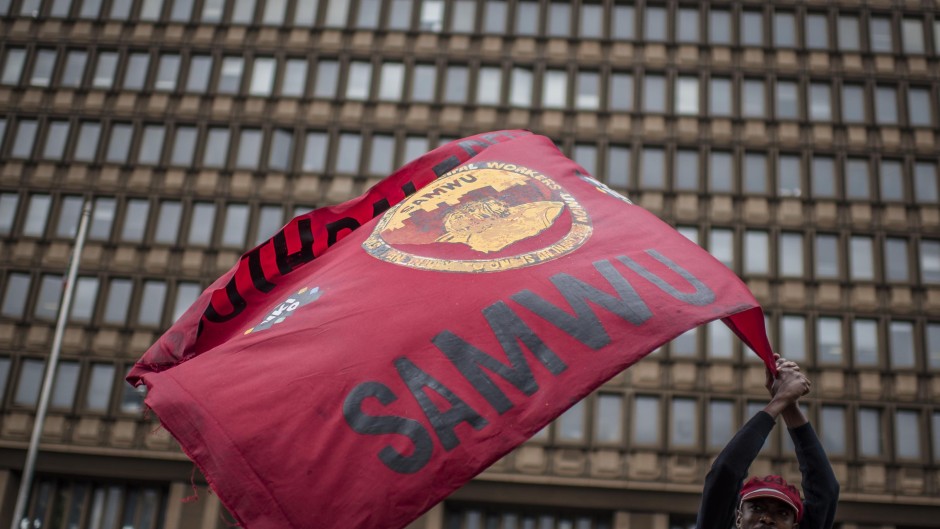
JOHANNESBURG – The City of Joburg’s wage deal with municipal workers’ union SAMWU hangs in the balance.
This after Finance Minister Enoch Godongwana raised concerns over the legality and affordability of the R10.3-billion wage agreement.
SAMWU says Godongwana cannot halt the union’s wage agreement with the City of Joburg.
The union’s regional chairperson, Lebohang Ndawo, said such a move would undermine the Labour Relations Act.
“It can be challenged in court, not by the minister unilaterally making that decision,” Ndawo said.
“He would be undermining the labour relations Act and be a law unto himself. We have a system in South Africa on how to challenge any lawful agreement.”
Ndawo said the union viewed Godongwana’s response as an extension of the Democratic Alliance’s court action.
DA Joburg mayoral candidate Helen Zille previously said the politically facilitated agreement was approved without a feasibility study or disclosure of which service delivery projects would be cut to fund the deal.
“We do still support a financially sound municipality that can render services to the people.”
Earlier this year, the municipality struck a wage agreement with SAMWU that will increase employee salaries across the board over the next two years, at a cost of R10.3-billion.
However, a letter from National Treasury addressed to Joburg Mayor Dada Morero questioned whether the agreement is financially feasible for the cash-strapped municipality.
In the letter, National Treasury described the imminent R10-billion salary increases as “illegal” and “unsustainable”.
Ndawo said Treasury was being selective in how it addressed issues affecting Johannesburg workers.
“There has been a lot of mismanagement and corruption in the city and it is baffling why they act this way now," he said.
"We believe there should have been a session where it is explained how agreement will be financed before taking a side that they will align with those saying workers of Joburg must not be paid properly.”
READ MORE | DA wants COJ R10bn wage deal scrapped
He said there were other interventions National Treasury could have considered.
“This issue dates back as far as 1995. It was only in 2016 when city managers’ salaries were moved to grade 10, but when it is now time to correct wages for those below them, then the issues start.
“The R10.3-billion is as a result of a delay by the municipality and the non-involvement of Cogta. This is not an adjustment; it is a debt that must be paid to the workers,” Ndawo added.