
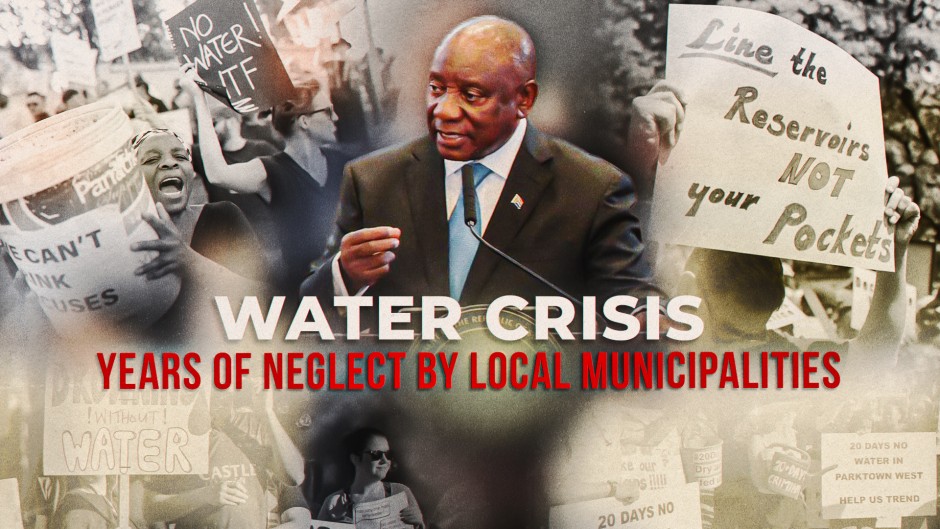
JOHANNESBURG - When President Cyril Ramaphosa took to the podium for his State of the Nation Address, he spoke of reforms, interventions and a R54-billion fund for metros to fix their water and sanitation services.
He said this money would ensure that revenues from water usage are put straight back into fixing pipes, reservoirs and pumping stations.
But beyond the polished speech and parliamentary applause, the people’s reality is bleak.
Residents are forced to carry buckets, some walking slowly up steep roads to join snaking queues at water tankers.
That is not even the hardest part. The first warning is pressure slowly decreasing from the tap. That alone triggers panic.
READ | Will the new water committee fix SA’s crisis? Joburg residents weighs in
Bucket, pots, bottles, basins and even kettles – anything that can store water is placed under the tap.
Because once it goes dry and repairs begin, no one knows when supply will be restored.
It’s not just about refilling buckets or the daily admin of water storage.
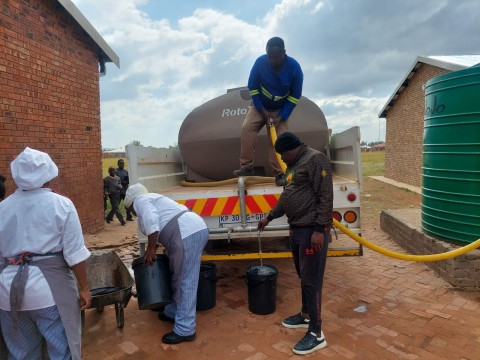
File: Water tankers supplying water to residents. eNCA
Children need to bath for school. Parents need to prepare for work. Meals must be cooked, clothes washed, toilets flushed and dishes cleaned.
Millions of households forced into survival mode.
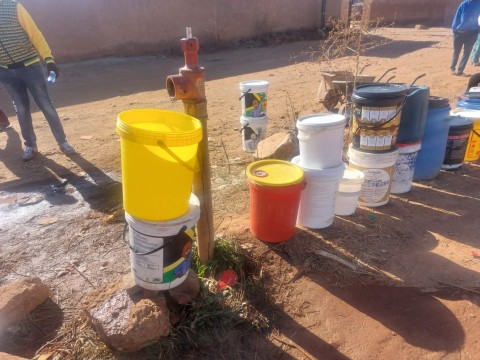
Last September, the water crisis in Coronationville reached a breaking point and anger spilled onto the streets.
READ | WATCH | Tear gas, rubber bullets fly at Coronationville water protest
Five months later, residents say the uncertainty has become a way of life.
In Midrand, frustrations are also at flashpoint.
Businesses and schools in the area have been forced to close early, disrupting economic operations as well as teaching and learning.
READ | 'It’s not fair': Midrand residents frustrated as taps run dry
Now the “big guns” are in Gauteng.
Water and Sanitation Minister Pemmy Majodina as well as Deputy Minister David Mahlobo, together with Cogta Minister Velenkosini Hlabisa, are in the province to troubleshoot after weeks of dry taps.
Mahlobo admits they did not anticipate the severity of the situation.
He attributed the crisis partly to municipal leadership failing to act quickly as reservoir levels dropped to critical lows while high temperatures and heatwaves worsened consumption patterns.
“Still, that is not an excuse,” Mahlobo said.
He assured that government is working with municipalities to improve response times, which he acknowledged have been unsatisfactory.
But the crisis stretches beyond Gauteng.
During his address, Ramaphosa admitted that water outages are a symptom of a local government system plagued by neglect, poor planning and inadequate maintenance of water systems.
READ | Ramaphosa pledges R156bn for water infrastructure amid worsening shortages
He said criminal charges have been laid against 56 municipalities for failing to meet their water obligations.
Future action will target municipal managers who violate the National Water Act.
|
But experts agree that fixing the crisis won’t be easy.
Environmental scientist Ayesha Laher echoes this sentiment, saying the problem needs innovative solutions, not ones that have been tried and failed.