
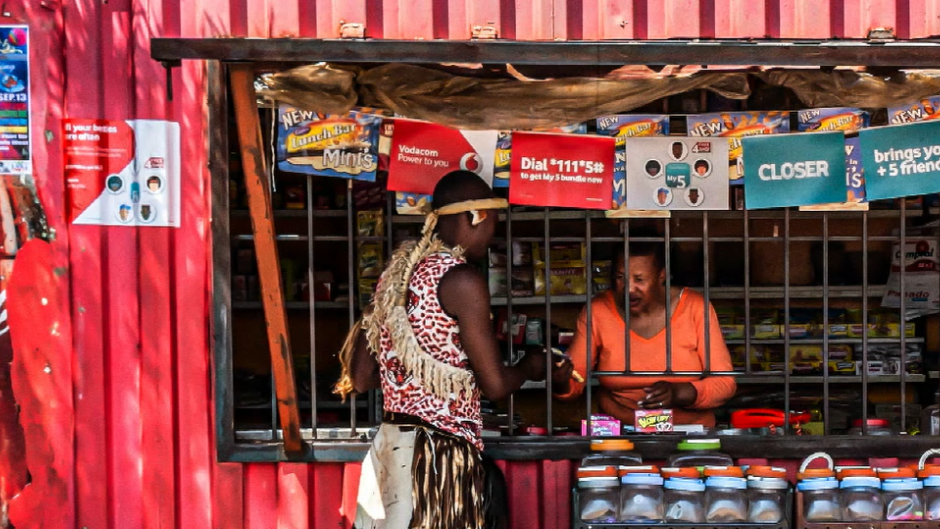
JOHANNESBURG - Concerns are mounting over township business ownership, regulation, and enforcement in the spaza shop sector.
This frustration has led communities to raise concerns over alleged foreign-owned shops and non-compliance.
Some have even turned to the streets to shut down shops, and they have called for stronger enforcement.
In May 2026, the Department of Small Businesses (DSBD) revealed that approximately 82,000 spaza shops were registered nationally before the registration deadline closed on 28 February 2025.
But of those registered 44 696 were verified, and approximately 15 000 obtained approved trading permits or licenses.
READ | Scramble to beat spaza shops registration deadline
The department had attributed licensing delays to systemic issues within the licensing environment.
These included municipal backlogs, shortages of environmental health practitioners, complex zoning requirements, high compliance costs, and verification issues.
But spokesperson for Black Business Unity Mike Molloyi has criticised the government for failing to fulfil its mandate of supporting small and informal businesses.
He said current existing organisations that have a huge database of informal sectors that the government promised to give them support, yet claims they have not.
“We said we need an entity that's going to focus on the development of small and micro, which is your informal sector. That department is failing its own mandate, because if you're not creating jobs, you're not strengthening the informal sector, making sure that jobs are created,”Molloyi said.
He stressed the importance of the local economy and its role in elevating poverty but also fighting unemployment.
“Any developing country needs to protect the informal sector, because it's where a lot of people operate as a survivor. So, the state doesn't show that it's really interested," added.
The current R500 million spaza support fund was also on Molloyi's list of criticisms.
He argued that the government has created unnecessary red tape that prevents struggling entrepreneurs from accessing the support programme.
READ | Spaza shop battle | Inside the fight for the township economy
The fund in question was announced by President Cyril Ramaphosa in November 2024, and officially launched in April 2025 by Minister of Trade, Industry and Competition, Parks Tau and the Minister of Small Business Development, Stella Ndabeni-Abrahams.
But over a year later, only R179.6 million has been disbursed across all nine provinces.
“I think they're playing a game. When kids died, they introduced R500 million just to keep us happy. It's like dangling a carrot in front of a horse. That is their methodology,”Molloyi said.
On Thursday, Ndabeni-Abrahams visited KuGompo City in the Eastern Cape as part of a delegation that hosted a Small Business Clinic.
READ | Foreign owned shops in Buffalo City under fire
When eNCA questioned how her department was closing the gap in helping South Africans reclaim the spaza shops economy, Ndabeni-Abrahams simply responded, "I cannot close the gap".
"Businesses are operated by the owners and supported by the customers. All we can do is to support an existing business. More support talks to training and funding where necessary, including funding towards compliance."
When quizzed about the support fund, the minister said much of the focus was not only on spaza shops, but also on other businesses that need funding.