
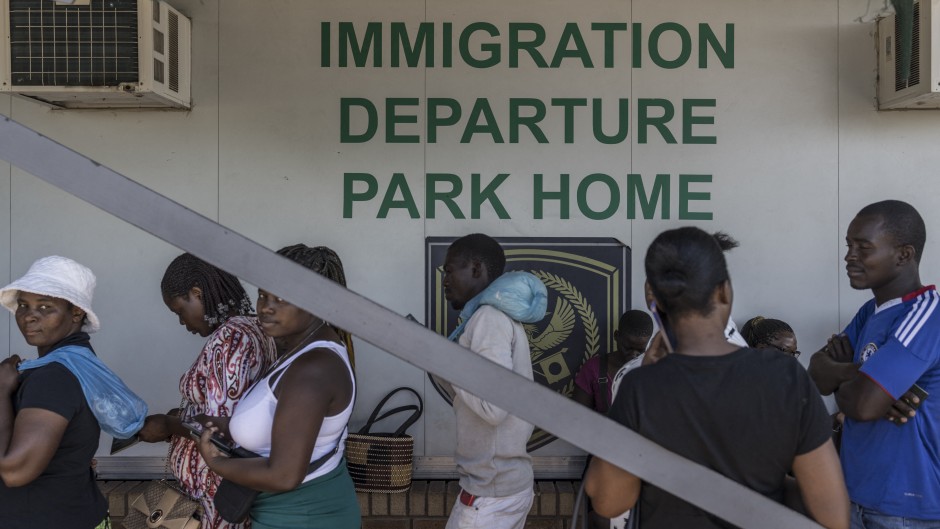
JOHANNESBURG - South Africa finds itself at the centre of a heated immigration debate, with citizens deeply divided over how the country should respond to migration.
On one side, some groups are calling for mass deportations, arguing that immigration is placing additional pressure on already stretched public resources.
On the other side, there are those advocating for a more open and inclusive approach that recognises the contributions migrants make to society.
Busani Ngcaweni from the University of Johannesburg says the real challenge is finding a balanced policy that protects the rule of law while responding to growing pressure on public services, including schools that are struggling to accommodate migrant children.
READ | Illegal migration requires collaboration - Presidency
Speaking on the sidelines of the Kgalema Motlanthe Foundation’s Winter Seminar, Ngcaweni said South Africa is currently caught between two extremes.
"There’s an extreme that says abahambe, and there’s an extreme that says abahlale. In between, there has to be a sensibility of how we use public policy to respond to the concerns that are there, while also ensuring that those concerns are addressed within the framework of the law."
He argues that the challenge lies not only in migration itself, but in whether government policies are keeping pace with the realities facing communities.
ALSO READ | Hundreds arrested amid anti-migration protests
He pointed to education as one example, highlighting the difficulties faced by migrant children entering South African schools.
"From an education point of view, we have a whole host of children of immigrants who lose out on the foundation phase because the policy is not responding by providing the necessary facilities," he said.
He added that communities are also feeling pressure as demand for services grows faster than infrastructure can be expanded.
"The extent to which we are building and adding classrooms into the system is lower than migration," Ngcaweni said.