
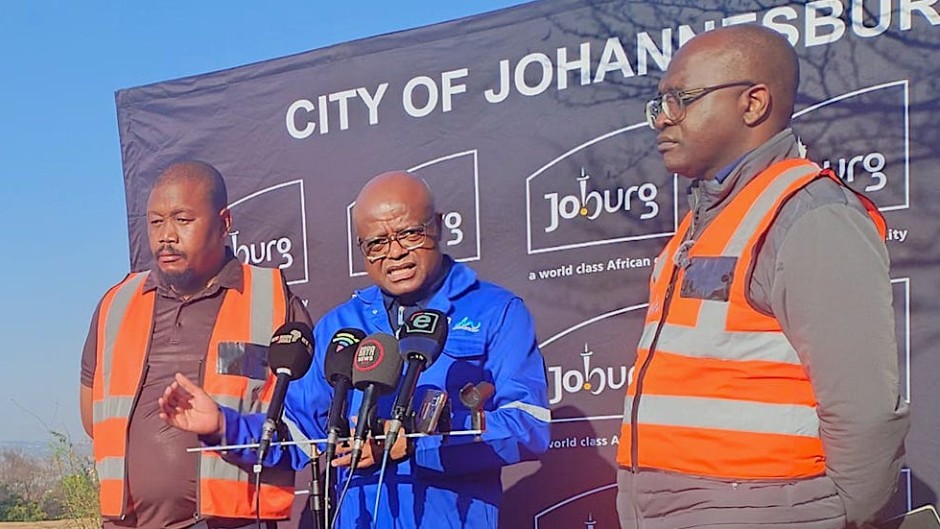
JOHANNESBURG - City of Johannesburg mayor Dada Morero has dismissed claims that the recent improvement in service delivery is linked to public pressure or the upcoming elections.
This follows months of protests across the City of Johannesburg.
Morero says delays in payments, as well as completed projects not being handed over to the City on time, have placed both the municipality and residents in difficult positions.
READ: Lesufi's 2026 SOPA draws criticism over delivery and progress updates
This is despite assurances made after the G20 Summit that service delivery would improve and be sustained.
The City has recorded approximately 20 water outages since 31 December.
On Wednesday, the Brixton and Coronationville reservoirs were finally brought online, improving supply to surrounding areas.
The reservoir has a storage capacity of 26 megalitres.
"This means that we now have the capacity to keep high-lying areas supplied constantly," says Morero.
According to the mayor, high-lying areas have experienced the most significant water challenges.
He has urged residents to remain patient during maintenance periods, warning that supply interruptions may still occur.
READ: Joburg water crisis | Municipal planning failures exposed
"It took longer than expected, and there were delays as a result of payments not being made on time," he adds.
The project was initially scheduled for completion in November, but delays in handing over the site contributed to the setback.
Rapid growth in the Brixton area has prompted the City to invest over R800-million to boost capacity, including upgrading ageing infrastructure.
Morero says the City has introduced a turnaround plan for the current quarter, alongside a 10-year capital investment strategy aimed at addressing infrastructure backlogs.
This includes upgrades to sewer systems, bridges and other critical infrastructure.
"There's so much that Johannesburg still needs to do with very little money," says Morero. "Sometimes, having to do it with residents not paying for the services."
Morero says the City is trying to strike a balance between infrastructure maintenance and ongoing development, with a focus on pipe replacement while accommodating growth.
CBD violence and abandoned buildings
Three Ethiopian shop owners were shot in the Johannesburg CBD last week. Authorities suspect the killings may be linked to ongoing turf wars.
A meeting held on Wednesday between councillors, business owners and community members was poorly attended, with many reportedly staying away out of fear.
Morero insists the City has not “lost the war against crime” in the CBD and says efforts are underway to find solutions, including enforcing bylaws and engaging with business owners.
He also raised concerns about abandoned buildings, which he says are being exploited by criminal syndicates, in some cases involving government officials and law enforcement.
"We are cracking down on those we have been able to control from time to time," he says.
READ: Explainer | What PIE Amendment Bill could mean for slumlords, evictions
"Last year, in partnership with one developer, we were able to reclaim some of the properties," he adds.
Morero says both privately owned and government buildings have been reclaimed, but called for amendments to the Eviction Act to better deal with illegal occupation.
Currently, the City is required to provide alternative accommodation before evictions can take place -- a process Morero says is costly for the municipality.