
President Andry Rajoelina's appointment of an army general as new prime minister was met with little enthusiasm in Madagascar Tuesday and dismissed by the youth-led movement behind two weeks of protests as a diversion.
Rajoelina named Major General Ruphin Fortunat Dimbisoa Zafisambo as head of government late Monday in a bid to quell anti-government unrest that has claimed 22 lives, according to a toll from the United Nations that is disputed by local authorities.
The day after the announcement, around 200 people gathered for a fresh demonstration in the capital, some telling AFP they did not see the change as a sign that Rajoelina was genuinely ready to tackle their demands.
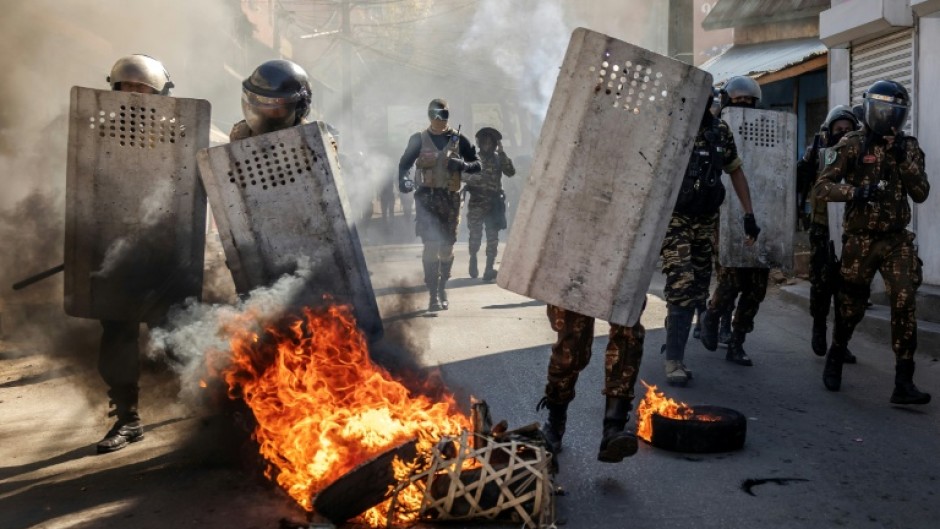
"The president wants to convey that this is military power and civilians must stay in line," said Princia Rakotontraibe, a medical intern, who joined the demonstration to protest the firing by police of tear gas near a maternity ward on Saturday.
The protests were ignited on September 25 by anger over persistent power and water shortages and grew into a broader anti-government movement that at one point demanded Rajoelina's resignation. In response, he sacked his entire government last week.
The Gen Z Mada group leading the movement of about 20 groups issued Rajoelina with a written list of demands at the weekend that included a public apology for the violence against protesters but didn't mention previous calls for him to step down.
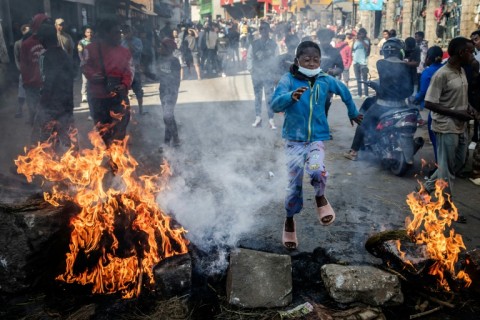
It gave the government until Wednesday night to act, threatening to otherwise call a national general strike.
Rajoelina has called a public meeting at the presidential palace the same afternoon. "It will be possible to directly ask questions and freely express your concerns to the president," the announcement said.
Other Gen Z demands are an overhaul of the Constitutional Court and the dissolution of the Senate or at least the removal of its president, Richard Ravalomanana, a former police general.
It rejected in a statement Monday "all attempts at political diversion, notably the appointment of a new prime minister".
-No difference
The shift away from demanding that the president quit was in response to concerns about destabilising the country, some protesters said.
With his resignation or a coup, "instability and chaos are the most likely outcomes", political scientist Ketakandriana Rafitoson told AFP.
The protesters' demands "provide a clear direction for the political aftermath of the crisis", she said. "They are no longer limited to challenging the established order."
"Changing the president halfway won't make a difference," said Rakotontraibe, the 26-year-old medical intern, before a volley of tear gas dispersed the protesters.
Madagascar has already been through similar situations in 1972, 2002 and in 2009 -- when Rajoelina was appointed interim president by the military following a popular uprising, he said.
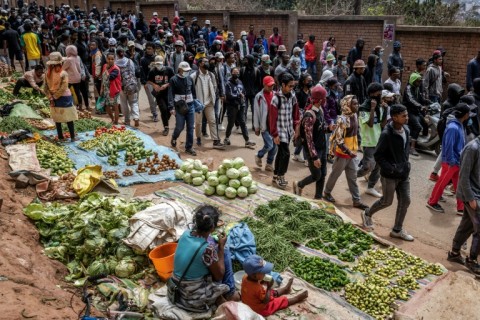
The impoverished Indian Ocean island -- where nearly three-quarters of the population of 32 million lived below the poverty line in 2022, according to the World Bank -- has a long history of military rule.
The public perception of the military is less hostile than towards the police, according to analysts.
"It is primarily the gendarmerie and police that have played a central role in managing the protests. This has been widely criticised," said Rafitoson.
But protester Daudet Santatriniaina, 41, was still not convinced by the choice of new prime minister. "It's the same as always," he said. "I do not trust the military."
By Clément Varanges