
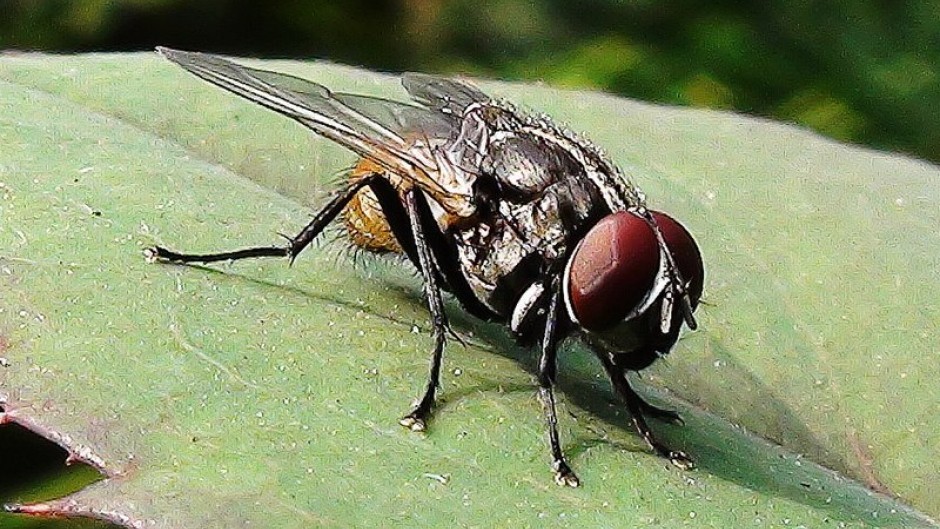
JOHANNESBURG - New research shows that flies may be fuelling Africa’s worst cholera outbreak in 25 years.
Scientists say they can carry the bacteria from contaminated environments directly onto human food, accelerating the spread beyond just unsafe water.
With over 300,000 cases reported across 25 countries last year, experts warn this could speed up cholera outbreaks.
Researchers have found that cholera does not spread only through unsafe water or person to person but can also spread through flies.
Professor Romain Glele Kakaï from the University of Witwatersrand’s School of Public Health said scientists examined how often flies pick up bacteria from contaminated water, how readily they transmit bacteria to food, and how long flies survive in the environment.
"The role of house flies is very determinant in the dynamics of cholera. What the study showed is that when we incorporate the house flies' population dynamic in cholera, what we notice is it can spread more quickly than expected when the flies are involved.”
“The model suggests that cholera transmission can be highly explosive: even a small initial contamination may lead to a large outbreak when environmental vectors such as flies are active. Once contaminated, flies can mechanically transmit the bacteria to many individuals in a short time, producing outbreak dynamics that resemble sparks igniting dry grass,” said Kakaï.
READ: At least 40 dead in Sudan's worst cholera outbreak in years: MSF
Kakaï said since house flies move quickly, this make a cholera unpredictable.
“What we found is that if interventions are implemented at the very beginning of an epidemic, this helps to control the epidemic. When the epidemic is already established, control is very hard to do.”
He said interventions targeting house flies should focus on waste areas where house flies can multiply.