
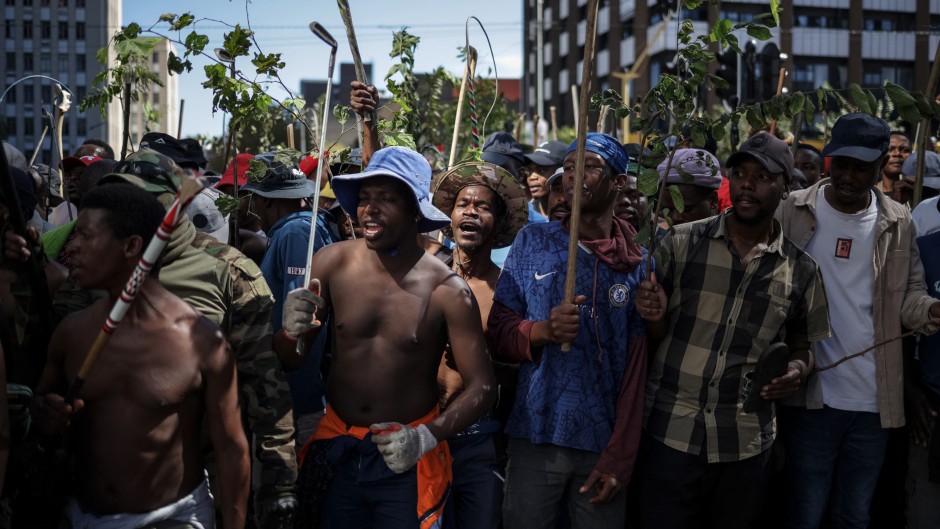
JOHANNESBURG - While scores of residents in various communities have made claims that migrants are taking jobs from locals, a Wits University researcher argues otherwise.
According to Associate Professor Justin Visagie, a survey and the resonance of anti-immigrant demonstrations show that migrants are not taking jobs.
His comments come amid widespread anti-immigration protests across the country and calls for undocumented migrants to leave South Africa.
READ | Mthatha protestors demand action on illegal immigration
Visagie argues that while the unemployment rate has fuelled frustration, he said blaming migrants risks obscuring the deeper problems driving mass unemployment.
He further added that analysing administrative tax data also supports this argument.
“South Africans are very real. We have an unemployment rate of 40%. If you include the discouraged work seekers, and social attitudes numbers show that as much as 70% of South Africans believe that foreigners are taking away local jobs."
Visagi acknowledges that the concerns are more towards the informal economy, where competition is often felt the most.
These concerns were clear in various reports by eNCA.
Previously, residents claimed that the growing number of foreign-owned businesses squeezes the local economy and limits opportunities for South Africans.
In another report, a business owner said that what is frustrating is that local businesses are expected to comply with regulations, while others allegedly operate outside the law.
READ | Questions over enforcement in spaza shop sector deepen
But for Dr Fikreyesus Daniel from the Ang Angga Association, which represents foreign spaza shop owners, the matter is far more complex than that.
Daniel said many Ethiopians who come to South Africa seek refuge as they escape political conflict and violence back home.
Drawing from Statistics SA survey in their quarterly labour force survey, which includes all households and also includes a migration module, Visagie estimates that foreign nationals make up 18% of workers in the informal sector.
“This might be higher than most would like for a particular sector, but I think it's important just to bear that number in mind, that it's still the smaller minority. And in addition, we are talking about jobs that are on the periphery that can often mean a life of working poverty."
And once again, foreigners can often come from abroad, bring skills, bring expertise and employ South Africans. And that's true of the formal economy as well as the informal economy," he said.