
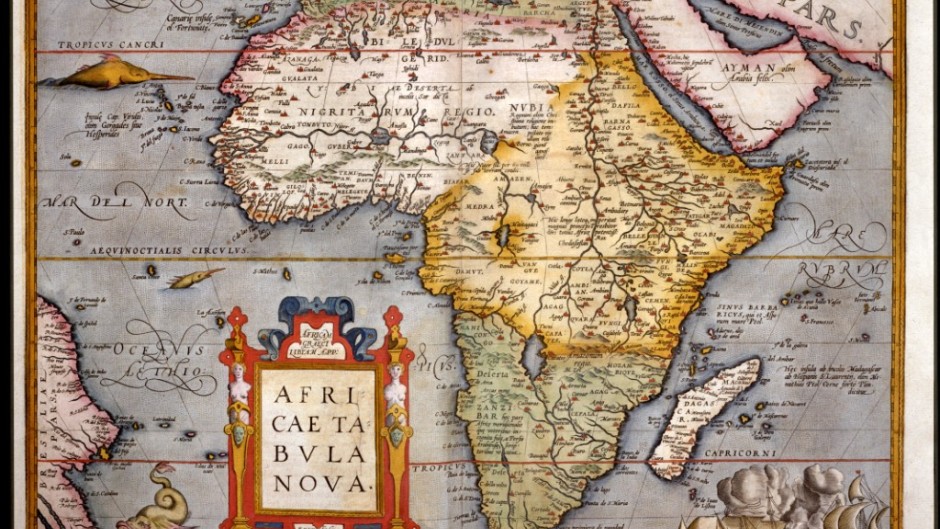
JOHANNESBURG - Africa’s problems have never been a result of its size, says researcher Thembisa Fakude.
“Its size is a new discussion that is supposed to keep us busy,” he says.
“In my view, the size comes with new responsibilities,” he adds.
The United Nations General Assembly has voted to encourage countries to replace the centuries-old Mercator projection with the Equal Earth map, which more accurately reflects the relative size of the world’s continents.
The resolution was backed by 164 countries, while the United States voted against it and six countries abstained.
The Mercator projection was created by Flemish cartographer Gerardus Mercator in 1569 and was designed primarily for maritime navigation.
While it accurately represented the shapes and angles needed by sailors, it distorted the relative size of land masses, particularly those closer to the poles.
As a result, Europe and North America appear much larger than they are relative to Africa and South America
Fakude says the discussion should also focus on how the new configuration could benefit the continent.
Africa has, for a long time, been exempt from participating fully in global matters, particularly financial matters, because of its economic circumstances.
“With the discovery of critical minerals that are important in the new business, particularly AI, electric vehicles, etc., Africa might find itself involved in carrying the burden,” says Fakude.
“There might be a trade-off between Africa and other countries, particularly when it comes to the contribution towards solving global matters,” he says.
Fakude says the continent should not celebrate just yet, cautioning that size does not always translate into influence.
He says many measures are calculated on a per-capita basis, based on the population of individual countries.
Fakude says the resizing of the continent could help Africa, but it is likely to create debates about a possible increase in what the continent contributes towards its share of global consumption.
He warns this could ultimately come at the expense of Africa’s natural resources.