
JOHANNESBURG - Iran has rejected US President Donald Trump’s claims that Tehran reached out to Washington for talks, saying negotiations cannot take place while attacks continue.
Tehran insists there can be no discussions “while bombs are dropping”, as Trump threatens further strikes until all US objectives are achieved.
Explosions were reported in Dubai and Bahrain on Monday, while there were unconfirmed reports of a fire at the US Embassy in Kuwait.
Meanwhile, Iran has widened its response, striking US and British-linked targets in Cyprus.
Trump has claimed that members of Iran’s military leadership are attempting to surrender to save their lives.
“They want immunity, they’re calling by the thousands,” he said during a Sunday update on what he referred to as “Operation Epic Fury”.
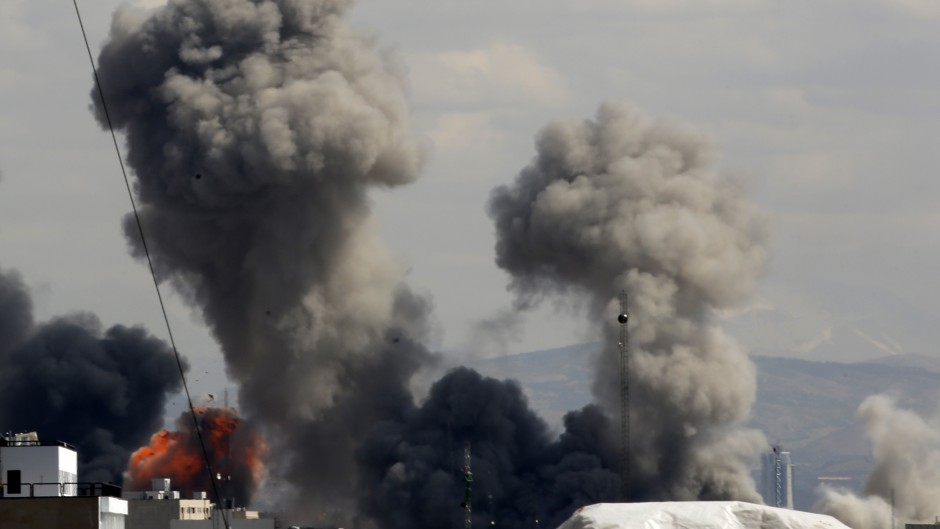
The operation saw the US and Israel launch coordinated strikes against Iran on Saturday. Israel’s Defence Minister, Israel Katz, said the attack was aimed at removing security threats.
Iranian state television later confirmed explosions in the east and north of the capital, Tehran.
Tensions remain high as both sides brace for further escalation. The US has significantly increased its military presence in the Middle East in recent weeks.
On Friday, President Trump expressed dissatisfaction with Iran over stalled nuclear negotiations in Geneva.
On Sunday, he said the US would avenge the deaths of American soldiers killed since the start of the conflict, describing Iran as a “state sponsor of terror”.
Trump has also alleged that Iran possesses nuclear weapons — a claim Tehran has consistently denied.
In a dramatic development, Iranian state television reported on Sunday that Supreme Leader Ayatollah Ali Khamenei had died.
It also reported the deaths of members of his immediate family. Trump had earlier posted on his Truth Social platform that Khamenei was dead, though independent confirmation remains limited.
Nuclear talks
The US and Iran have been engaged in intermittent talks over Tehran’s nuclear programme since last year.
In June, Israel launched what it described as a pre-emptive strike, alleging Iran was nearing the capability to develop a nuclear weapon.
READ: Iran's nuclear programme: From its origins to today's dispute
Western powers have long expressed concern over Iran’s uranium enrichment activities and the rapid expansion of its nuclear programme.
The 2015 Joint Comprehensive Plan of Action (JCPOA) placed restrictions on Iran’s nuclear activities in exchange for sanctions relief.
The agreement began to unravel after the US, under President Trump, withdrew in May 2018 and reimposed sanctions.
Wider regional impact
Israel has expanded its military operations beyond Iran, striking targets in Beirut after Hezbollah launched missiles and drones at an Israeli base.
The Strait of Hormuz has also been blockaded, sending oil prices higher amid fears of supply disruptions.
READ: We will not negotiate with US, says top Iranian official
Iran has extended missile and drone attacks beyond Israel, targeting assets across the region, including US and British-linked facilities in Cyprus.
Despite the escalation, an uneasy calm has reportedly returned to parts of the United Arab Emirates.
South Africa’s response
President Cyril Ramaphosa has expressed deep concern over the rising tensions, warning that the situation threatens both regional and global stability.
In a statement, the Presidency said the escalating conflict poses a serious risk to international peace and security, with potentially severe humanitarian, diplomatic and economic consequences.
READ: President Ramaphosa calls for dialogue as Middle East tensions escalate
Ramaphosa also referenced Article 51 of the UN Charter, which allows for self-defence only when a state has been subjected to an armed attack.
Government said anticipatory self-defence is not permitted under international law and cannot be based on assumption or speculation.
Meanwhile, former diplomat Ebrahim Rasool has warned that the US and Israel must not be allowed to flout international law.