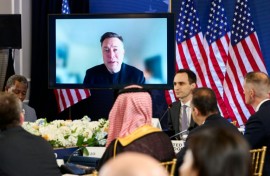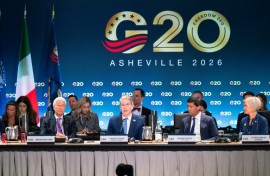
G20 trade ministers are set to open talks Wednesday in the United States, in meetings strained by President Donald Trump's tariffs as Washington targets partners regarding forced labor and overcapacity.
30 September 2026

I hope that the summit will generate ideas and programmes for increasing the access and success of women in a range of sectors and create a firm foundation for practical cooperation to address the concerns and interests of women.
This a good time in which to agree such a goal. It is 30 years since the Beijing Global Conference of Women.
Women should use the year to adopt refreshed objectives based on the progress of the past 30 years.
A range of evaluations by UN institutions, non-government organisations and academics indicate that there has been positive progress in advancing a gender agenda in many parts of the world.
In South Africa, the Constitutional protection of the right to equality, opened a wide range of opportunities and sectors.
For example, girls have access to education and now outnumber boys at secondary school and in universities and colleges.
Increased numbers of women are entering the previously male-dominated fields of mining, financial services, technology and communication, health sciences and senior academic ranks.
Despite these and other indicators of progress, there are many negative signs of continuing disadvantage for women and girls.
These include extensive gender-based violence, high levels of poverty for African women, inadequate access to financial resources for business development, and totally inadequate investment in rural development in a context in which women constitute the majority in rural areas.
The current geopolitical environment has intensified the threats to women’s progress, and it is vital for this forum to consider ways in which increased support can be given to restoring multilateralism and global cooperation in creating a better world.
The geopolitical environment has been rendered more threatening by the spectre of toxic masculinity that is associated with the great power battles for dominance.
The push for enhanced unipolarity is an offence to the essence of the G20 and it is in the interests of this summit that strong support for multipolarity is clearly articulated.
There are various ways in which women might signal commitment to multilateralism and unipolarity.
First, where women’s hard won rights face threat such as in reproductive rights, groupings such as this one should unite in providing support to women’s rights to bodily integrity.
Second, all of us know from the war on Gaza, the civil conflict in Sudan and the war in Ukraine that the impact of war on women is catastrophic.
The war crimes of rape, genocidal actions, and a lack of access to humanitarian aid all exacerbate the dismal position of women and reverse hard won victories of empowerment.
Women 20 should be advocates for the reconstruction of Gaza, freedom for Palestine and advance this by going beyond rhetoric and actively participating in forums that make decisions on these matters.
Third, women should also participate in emerging organisations of the South such as BRICS, the AU, the Non-Aligned Movement and other organisations articulating ideas progressive internationalism and development priorities.
Greater effort at collaboration and a focus on campaigning for world peace would lead to a powerful global influence of women activists and women leaders.
Fourth, women should strive to invest in women’s success. Active identification of budding entrepreneurs and collective financial and mentoring support for them would make a difference.
Fifth, increased investment in science and innovation for and with women would make a huge difference in women’s health status, ownership of patents and control of key productive sectors.
Sixth, recent global conflicts have strongly affirmed the need to urgently address deliberate reform of the United Nations, its mechanisms and structures.
Deliberation on this important matter has begun, but they tend to be male dominated and largely centred on access to Security Council membership and exercise of the veto.
The tragic events of Palestine, Sudan and the DRC do not enjoy currency in rethinking the United Nations, they have to if we are to create a world that protects the innocent and vulnerable.
For example, reform without the development of UN enforcement capacity would leave civilians constantly vulnerable to war crimes and genocide.
Seventh women in leadership must join growing calls for universal respect for international law especially with reference to democracy freedom and justice.
Respect for humanitarian law would be a key aspect of such demands as would human rights law.
Someone needs to take up the issues that threaten world peace and it is plausible for women to play this role.
All of this requires cooperation that can begin here in this summit.
Finally, women must begin aiming for the highest political office and be supported to succeed so that they lead in shaping progressive policy and ensuring effective action to implement strategic changes.
Women of the G20 have significant potential and should use that to articulate a concrete women’s agenda and to act on it.
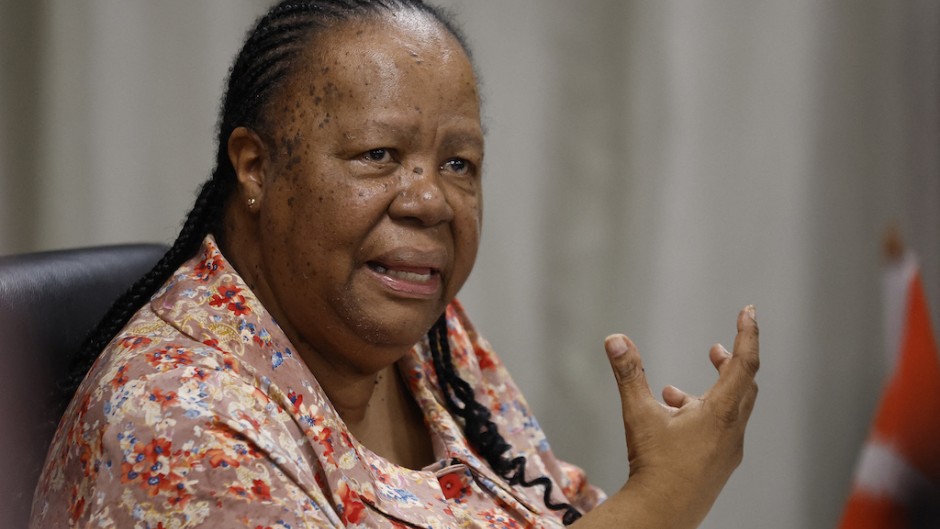
Dr Naledi Pandor is a former government minister for the Republic of South Africa. During October 2025, she addressed W20 delegate in Sandton, South Africa. This is an edited version of her speech.