
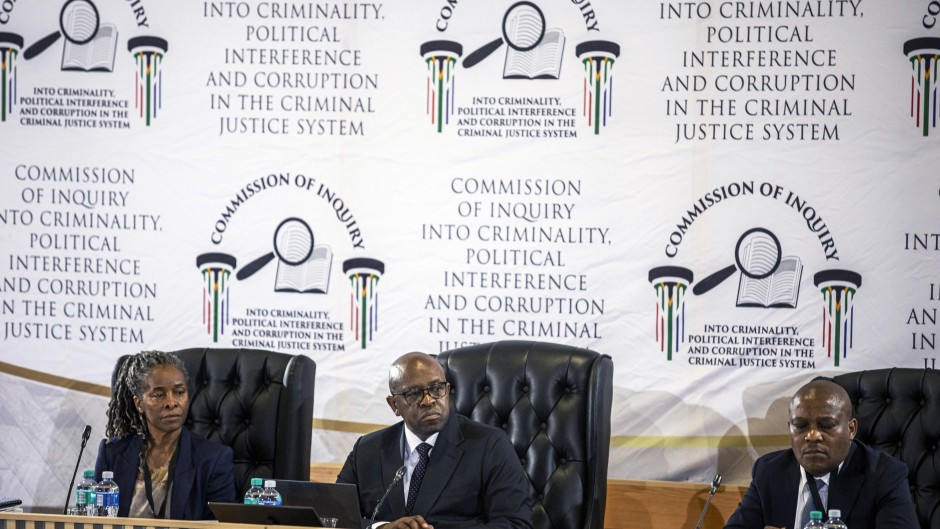
JOHANNESBURG - As the Madlanga Commission of Inquiry breaks for the Easter holiday until 7 April, the work done so far has shown progress.
This is according to Criminologist Kholofelo Rakubu who says that claims made by KwaZulu-Natal police commissioner Nhlanhla Mkhwanazi on allegations of criminality, political interference, and corruption in the criminal justice system have been slightly substantiated.
READ | SABC reporter Natasha Phiri suspended after allegations at Madlanga
Despite this it is still complicated by the magnitude of the evidence against the compromised or figures that are mentioned.
“Theallegations that he made, there has been explosive findings by the commission, because it has revealed troubling allegations of entrenched police corruption that substantiate his allegation.
“But the evidence presented so far remains contested, raising doubts about whether prosecution will follow or this is merely the beginning of a deeper accountability battle,” she said.
Rakubu argues that accountability battles in South Africa can take quite a long time.
This raises concerns whether momentum generated by the commission will translate to meaningful accountability and legal consequences.
“We appreciate the commission, because it has shaken the system, there is no doubt, but whether it sparks real accountability depends on the strength of evidence and the political will of law enforcement agencies," he said.
Right now, Rakubu said she notes the balance tilts toward uncertainty.
READ | Malema, Morodi implicated in tender rigging at Madlanga Commission
This is because while there have been suspensions across the board, suspensions show disruption whereas prosecution remains far from guaranteed.
According to Rakuba suspensions are mostly a symbolic gesture, because they disrupt and a more performative accountability - a way to signal responsiveness, without structural change.
“To just say, move away, you are on suspension, does not tell much. It's not an accountability mechanism. That is also called what you call a window dressing reform, because one will be on suspension for a particular time without prosecution, then suspension risk becoming a ritual of control rather than genuine justice,” she argues.