
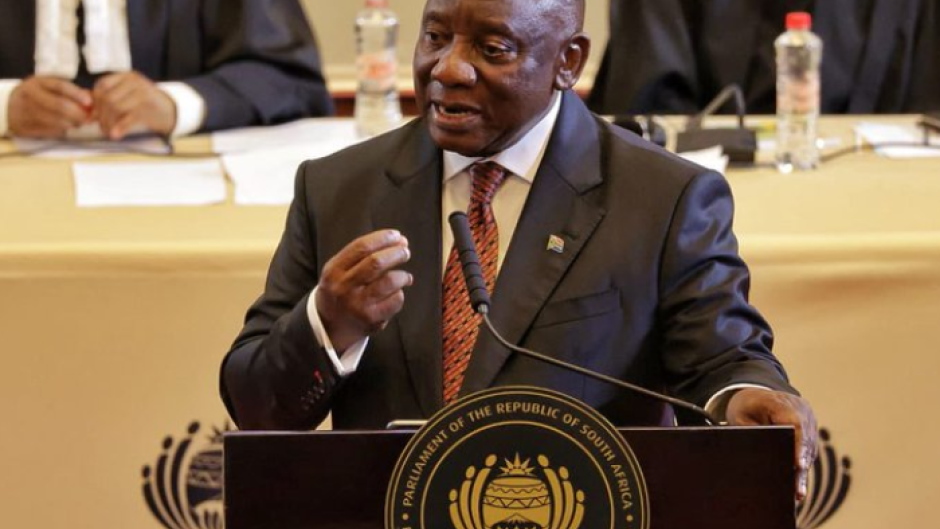
President Cyril Ramaphosa delivers the State of the Nation Address. GCIS
JOHANNESBURG - The Organisation Undoing Tax Abuse (OUTA) has expressed scepticism ahead of President Cyril Ramaphosa’s State of the Nation Address (SONA), warning that the speech is likely to prioritise political messaging over meaningful solutions to South Africa’s deep-rooted challenges.
OUTA CEO Wayne Duvenage said SONA addresses have historically focused on highlighting the governing ANC’s achievements while offering limited clarity on how government plans to unlock the country’s economic potential and improve prosperity for citizens.
"Over the years, South Africans have heard repeated rhetoric about stabilising state-owned entities, creating jobs, alleviating poverty, improving service delivery and strengthening law enforcement," Duvenage said.
"Yet there is little evidence of sustained implementation or impact."
Duvenage said SONA announcements are often followed by the creation of task teams, frameworks and pilot projects that fail to translate into real change, particularly at local government level.
Despite commitments to professionalise the public service, conduct lifestyle audits, protect whistleblowers and improve service delivery, he said progress has been minimal.
READ: SONA 2026 | Scepticism ahead of another promise-laden speech
OUTA also criticised government’s handling of leadership and governance issues in key institutions, saying there has been a pattern of delayed appointments and questionable reappointments.
Duvenage pointed to the Sector Education and Training Authorities (SETAs) as an example, arguing that government missed an opportunity to reform governance by appointing new boards and leadership after the expiry of five-year terms.
Instead, he said, rushed reappointments were made, including individuals linked to repeated governance failures and qualified audits.
He also questioned the process around leadership changes at the National Prosecuting Authority, as well as ongoing delays and extensions in boards such as SANRAL and the Road Traffic Management Corporation (RTMC).
“These patterns reflect a broader failure to act decisively against poor performance in state institutions,” Duvenage said.
READ: SONA 2026 | SA's water crisis worsening, warns WaterCAN
Duvenage said revelations at the Madlanga Commission have exposed serious weaknesses in South Africa’s criminal justice system, including law enforcement agencies and oversight structures.
While government is expected to reiterate commitments to restoring law and order during SONA, he warned that such promises risk becoming “lip service” without concrete reforms.
He called for stronger capacity and coordination across SARS, the NPA, the Hawks, the SIU and the courts, as well as targeted task teams to dismantle organised crime syndicates.
He also highlighted the ongoing impact of illicit trade in tobacco, alcohol and misclassified imports, which he said continues to undermine industries, destroy jobs and erode tax revenue.
Duvenage referenced last year’s attempted VAT increase, arguing that government only identified savings and strengthened revenue collection after political pressure.
"What South Africa needs is decisive action to cut waste, eliminate duplication, reform failing entities and address governance failures in state boards," he said.
He also called for a review of the SETA system, which he described as "deeply dysfunctional".
Duvenage warned that local government remains one of the most serious threats to service delivery and public trust, citing ongoing sewage pollution of rivers as an example of systemic failure.
He said meaningful partnerships between government, business and civil society could address such issues, but criticised the lack of decisive leadership from the presidency and Cabinet.
Duvenage concluded that government must rethink its role in the economy, arguing that it should focus on enabling private-sector growth rather than trying to act as a job creator.
He called for regulatory reform, reduced red tape, and a review of BBBEE policies, which he said have failed to meet their objectives.
He also urged government to divest from state-owned enterprises operating in competitive sectors, such as Denel and SAA, and to introduce private-sector equity partners in entities with mixed commercial and social mandates, including the Post Office and the SABC.
"As the President prepares to address the nation, South Africans will be looking beyond promises," Duvenage said.
"They will be asking whether government is finally prepared to act."