
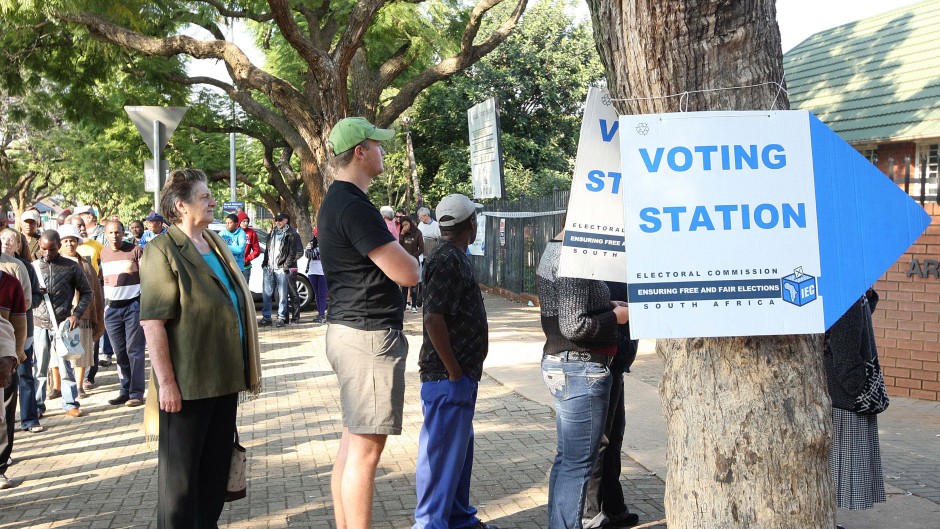
JOHANNESBURG - Preparations for the Local Government Elections on 4 November are in full swing, with political parties hitting the ground running.
During this time, political parties, leaders and local councillors will make many promises. Some fall within the scope of their mandates, while others do not.
A common promise made by political leaders, especially ward councillors soliciting votes, is that they, or their parties, can get people jobs. That is one of the most common misconceptions during election campaigns.
Apart from jobs, another persistent misconception is that ward councillors are responsible for allocating housing opportunities, distributing material benefits and directly resolving every service delivery challenge, according to South African Local Government Association (SALGA) spokesperson Motalatale Modiba.
READ: EXPLAINER | Why some South Africans will vote in a different ward in 2026
The constitutional and legislative framework governing local government establishes a significantly different role for ward councillors, Modiba said.
A ward councillor’s primary function is to represent communities within municipal governance structures, facilitate public participation, provide oversight, and serve as a communication bridge between communities and the municipality.
What does a ward councillor do?
According to Modiba, the role of a ward councillor must be understood within the broader objectives of local government contained in Section 152 of the Constitution.
"Municipalities are required to provide democratic and accountable government," said Modiba.
"They must also ensure sustainable service delivery, promote social and economic development, and encourage community participation," he added.
Ward councillors are the elected representatives responsible for ensuring these objectives are advanced at community level.
According to the Local Government: Municipal Structures Act 117 of 1998, ward councillors must:
- Represent the interests and concerns of residents in municipal councils.
- Chair ward committees.
- Facilitate public participation processes.
- Communicate council decisions to communities.
- Advocate for the needs of their wards during municipal decision-making processes.
The role, according to Modiba, is fundamentally representative, participatory and oversight-oriented.
Ward councillors cannot:
Employ individuals
Allocate municipal tenders
Appoint municipal staff
Directly instruct municipal officials.
"Many communities continue to measure councillor performance based on their ability to provide jobs, food parcels, housing opportunities or personal assistance," said Modiba.
"This creates conflict because residents expect them to exercise powers that they do not legally have."
Modiba said councillors must continuously educate communities about the difference between political representatives and municipal officials.
This will help manage expectations and strengthen accountability.
How do you find your ward councillor?
You can find your local councillor on the Independent Electoral Commission (IEC) website.
Municipal websites, Speaker's Offices, customer care centres and ward committee structures also provide councillor contact information.
According to the Municipal Systems Act 32 of 2000, municipalities are expected to create mechanisms through which residents can engage with elected representatives.
They should maintain publicly accessible council profiles with contact details, ward maps, office hours and communication platforms.
READ: Failing municipalities hurt SA economic growth - Reserve Bank
How does one become a ward councillor?
You must be a South African citizen.
He registered as a voter.
Qualify to stand for public office.
Must be duly nominated by a political party or stand as an independent candidate where applicable.
There is no legislative requirement for an educational qualification. However, knowledge of public administration, governance, legislation, budgeting and community engagement is beneficial.
Modiba said the absence of minimum competency requirements means many councillors enter office without sufficient understanding of municipal legislation, oversight responsibilities or financial governance.
Must a ward councillor live in the ward?
Contrary to popular belief, South African law does not require a ward councillor to permanently reside in the ward they represent.
"They must, however, maintain meaningful connection with the communities they serve," said Modiba.
They must:
Understand local conditions and service delivery challenges.
Remain visible and accessible.
Build trust with residents.
Respond rapidly to emerging issues.
If they move, their position is not automatically affected. Modiba said the consequences depend on the specific circumstances and applicable electoral and municipal legislation.
"A councillor who no longer lives within the ward may experience reduced visibility, weaker community relationships and diminished legitimacy in residents' eyes," he says.
Modiba said it is good practice for a ward councillor to ensure communication channels remain in place if they move to preserve accessibility.
What complaints should be escalated to a ward councillor?
Ward councillors should primarily be approached regarding issues that require political representation, escalation, oversight or facilitation.
Examples include:
Persistent water interruptions.
Refuse removal failures.
Sewer spillages.
Potholes and road maintenance.
Broken streetlights.
Illegal dumping.
Inadequate community consultation.
Delayed municipal responses.
Concerns regarding municipal projects.
Residents often expect councillors to resolve operational issues directly, but many of these fall under the responsibility of the municipal administration, led by the Municipal Manager.
However, ward councillors should monitor complaints, track municipal responses, and provide feedback to residents throughout the resolution process.
How do ward committees work?
Ward committees are established in terms of Sections 72–78 of the Municipal Structures Act to facilitate public participation at ward level.
A ward committee consists of the ward councillor, who serves as chairperson, and up to 10 community representatives.
The purpose of ward committees is not to make municipal decisions but to advise councillors, facilitate community engagement, and communicate community priorities to the municipality. Ward committees may identify service delivery concerns, mobilise participation in Integrated Development Plan (IDP) and budget processes, monitor local projects, and communicate municipal information to residents.
Ward committees often face several challenges, including:
Political interference.
Limited training and capacity.
Poor attendance at meetings.
Inadequate municipal support.
Lack of clarity regarding roles and responsibilities.
Delayed payment of stipends.
Weak reporting and feedback mechanisms.