
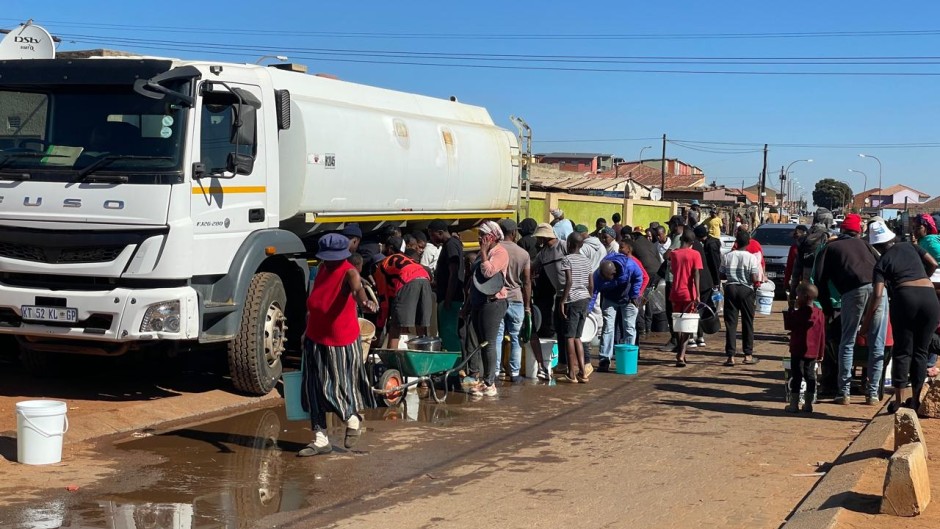
JOHANNESBURG - The fatal water tanker incident in Adams Mission, KwaZulu-Natal, has reignited concerns about South Africa's growing dependence on emergency water deliveries, with experts warning that water tankers have become a substitute for failing municipal infrastructure rather than a temporary solution.
Police are investigating the circumstances surrounding Monday's incident in which 38-year-old Celani Zungu was fatally run over by an eThekwini municipal water tanker during a dispute over water distribution.
While declining to comment on the specifics of the case, water and governance experts told eNCA the tragedy has highlighted broader challenges facing municipalities across the country.
The Water Research Commission said water tankers should be used as a short-term emergency intervention, not as a permanent means of supplying communities.
"When a municipality moves to water tankering as a permanent solution, it demonstrates a growing failure in water security and service delivery," the Commission said.
It warned that reliance on water tankers has increased significantly as municipal infrastructure has deteriorated.
According to the Commission, many municipalities have shifted from using water tankers as an emergency stopgap to making them part of routine service delivery, particularly in informal settlements and communities affected by repeated water outages.
The Commission attributed the trend to ageing infrastructure, poor maintenance, inadequate investment, financial constraints, governance failures and corruption.
It also cautioned that prolonged dependence on water tankers carries public health risks, saying water quality and storage are not always consistently monitored and managed.
The Commission said municipalities should focus on repairing and maintaining water infrastructure rather than spending public funds on repeated emergency water deliveries.
It also called for greater use of technology to improve water tanker distribution, including digital systems that notify communities of delivery schedules and allow municipalities to track tanker movements.
Meanwhile, the Organisation Undoing Tax Abuse (OUTA) said the tragedy reflects deeper failures in municipal planning and infrastructure management.
READ: Ramaphosa unveils national rescue plan to deal with water crisis
"It is a sad state of affairs that municipalities need to constantly rely on tankers to provide water when it should be piped directly to people's homes," OUTA said.
The organisation said prolonged reliance on water tankers points to poor maintenance, inadequate long-term planning and, in some cases, financial mismanagement.
OUTA also raised concerns about transparency in municipal procurement processes, saying questions remain around how water tanker contracts are managed in many municipalities.
While it stopped short of commenting on the Adams Mission incident itself, OUTA said municipalities should be held accountable if operational failures are found to have contributed to similar tragedies.
It argued that municipal managers should face disciplinary action where failures amount to breaches of the Municipal Finance Management Act.
Both organisations said South Africa needs to move away from reactive emergency interventions and invest in long-term solutions.
The Water Research Commission called for municipalities to professionalise water service delivery, ringfence budgets for water infrastructure, improve revenue collection and root out corruption.
OUTA said national and provincial government departments, including National Treasury and the Department of Cooperative Governance and Traditional Affairs, should strengthen oversight of municipalities to address persistent failures in water service delivery.