
MPUMALANGA - Authorities at one of SA’s premier tourist destinations, the Kruger National Park, are hopeful that a recycling pilot project will divert tonnes of waste destined for landfill and instead recycle it and incorporate it into the country’s circular economy.
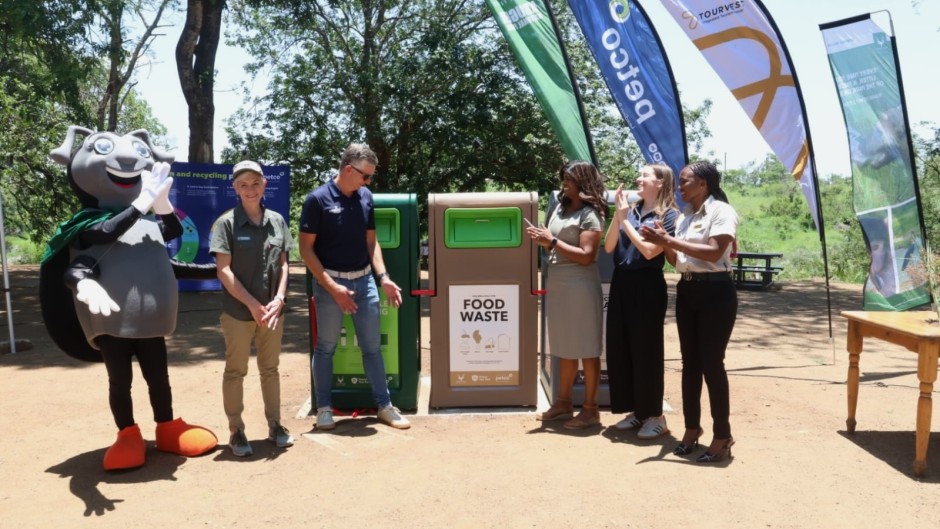
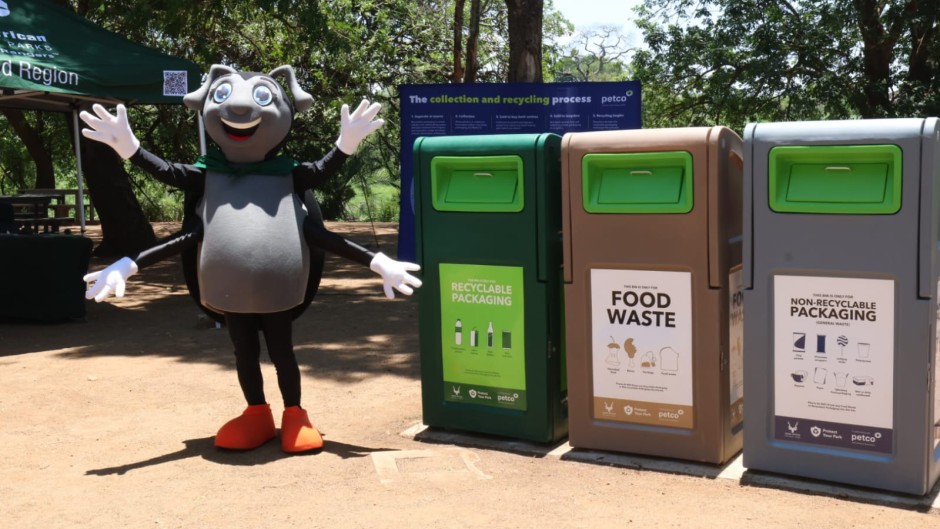
The pilot project, which is a collaborative effort between SANParks and producer responsibility organisation Petco, sees a new animal-proof, three-bin recycling system being implemented at the popular Tshokwane picnic site near Skukuza, in the southern Marula region of the park.
Over the recent festive season, more than 43 000 food and beverage items were sold at the Tshokwane site alone, and more than half a tonne of recyclable product packaging was recovered using the new bin system.
Because day visitors account for more than 70% of the Kruger National Park’s gate traffic, and make use of at least one picnic site on their travels, these sites are a hotspot for improving waste management within the park, said SANParks’ general manager for sustainable development and management, Dr Danny Govender.
She said the bins were colour-coded and labelled for ease of use – green for recyclable packaging, grey for non-recyclable waste, and brown for compostable materials such as food waste.
READ MORE | Discussion: SA's recycling sector continues to grow
With the park’s waste currently manually separated at 10 waste sites, Govender said this led to soiling of recyclables, inefficient recovery, and lost opportunity for items such as compostable material.
“Strong separation-at-source partnerships with organisations like Petco are key in ensuring that these valuable resources are circulated back into the economy,” she said.
Petco CEO Telly Chauke said the Kruger National Park was one of South Africa’s key natural assets and that it was vital to support the park on its journey to more sustainable waste management and to help build a circular economy for the country.
“If we can get the public helping us to separate waste at source – keeping compostables and non-recyclables out of the recycling stream, then those recyclables will be uncontaminated, have a much higher value for both collectors and recyclers, and can be turned into something new and useful.”
Chauke said Petco was proud to help action this practical and scalable, long-term solution that could help SANParks move toward a circular economy.
“South Africa has put a legislative framework in place to ensure that producers take responsibility for their packaging material, even after their product leaves a consumer’s hands. So, our role is to ensure that the packaging our members, who include some of the country’s major retailers and brand owners, have placed on the market is collected for recycling.
“That’s why the sponsorship of waste separation and recycling equipment on the ground in high-traffic public spaces, especially a pristine environment like the Kruger, is such a priority for Petco,” explained Chauke.
To put the wheels in motion, Petco reached out to manufacturer Pioneer Plastics about refining an existing baboon-proof bin system that would withstand the demanding conditions in the park.
Pioneer Plastics marketing director Gary Wiid said the large 240-litre wheelie bins were housed in tamper-proof casings and securely mounted on concrete slabs.
“These are designed to withstand the strength and persistence of large scavengers like hyenas and honey badgers that roam the unfenced picnic sites at night.”
He added that the housing was fabricated from LLDPE plastic, which would provide UV and impact resistance, dimensional stability in heat, and long-term durability for outdoor use.
Tourvest regional operations manager Henry Daschner said the organisation had been one of SANParks’ concession partners for 25 years, ensuring that all commercial activities within the park were managed in a way that aligned with conservation priorities.
READ MORE | Discussion | Gym weights made from recycled plastic
“Recycling and waste-management initiatives are central to this, as they help reduce environmental impact, preserve the natural ecosystem, and contribute to the long-term sustainability of the park,” said Daschner.
“This project is especially important to us because it strengthens our commitment to conservation, supports a cleaner and more resilient environment, and ensures that future generations can continue to enjoy the Kruger National Park. We look forward to using data on waste volumes and recovery rates to influence what we sell, how we package products, and how we continue to drive a truly circular economy across our operations.”
The project is set to be rolled out to a second Tourvest-operated site at Nkuhlu, overlooking the Sabie River, and a third site at Afsaal, operated by Tindlovu, further south towards the Malelane gate.